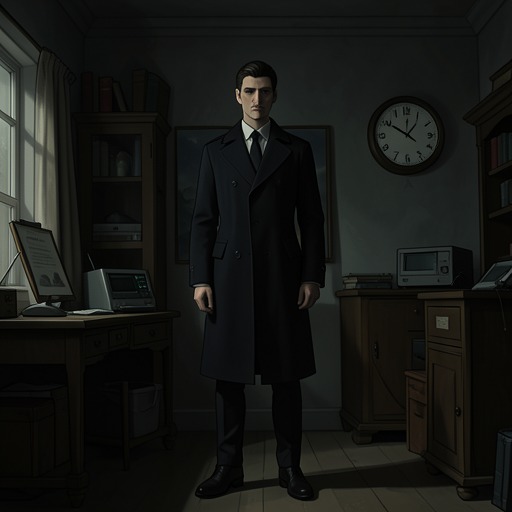
Elizabeth
Box Set: Samsons Sterbliche Geliebte & Samson's Lovely Mortal (Deutsch·Englisch) (Scanguards Vampire) (German Edition)Elizabeth is the lost love whose brief appearance in Samson’s remembered past gives personal meaning to his vampirism. A seventeen-year-old daughter of his employer, she is presented first as a young woman constrained by family expectations and an impending marriage, then as Samson’s chosen companion in an escape that ends in violence. Her death does not merely close an early romance: it becomes the wound through which Samson understands his new existence, his failure to protect the woman he loved, and the burden of believing that his supernatural state is a punishment.
Identity and Introduction
Elizabeth enters Samson’s history when he has already discovered that his sexual appetite can be turned into a livelihood. After struggling to find employment, he becomes a tutor in the household of a British officer, while the officer’s wife secretly seeks his sexual services. Word spreads among the bored wives of the area, bringing Samson a succession of opportunities and giving him the freedom to choose what he will do. That apparent abundance of choice ends when his attention settles on Elizabeth, the seventeen-year-old daughter of his latest employer.
The contrast is important to Samson’s recollection of her. Before Elizabeth, his relationships are described through appetite, opportunity, and employment; with her, his experience acquires the singularity of love. The narrative identifies her as the one remaining choice in his life, turning her from another person in his social environment into the decision around which his future will revolve.
Love and the Attempted Elopement
Samson discovers the depth of his feelings during a rainy day when he takes shelter with his horse in a stable. There he finds Elizabeth huddled in a corner and crying. She tells him that she is to be married in a fortnight, placing their attachment against a fixed social arrangement and the wishes of her family. Her position as a rich heiress intensifies the imbalance between them: Samson sees himself as penniless and without prospects, while Elizabeth belongs to a household capable of determining her future.
In the barn, Samson asks whether she trusts him and declares that he cannot allow her to marry Herman because he loves her. He proposes that they marry, leave that night, hide, and find a place where they can live together. Elizabeth accepts the danger of that choice in stages. She tells him that she loves him, returns at midnight wearing a dark cloak, and brings only a small satchel. Her arrival removes Samson’s fear that she has chosen obedience to her parents over an uncertain life with him. For a brief interval, the elopement gives him the future he believes he has lost the right to expect: the woman he loves is prepared to surrender security and status to remain with him.
Attack and Death
The escape lasts only an hour. Three men emerge suddenly and attack the couple before they have any opportunity to flee. Samson’s horse is killed first, its throat ripped open, and Samson must free himself from the fallen animal while Elizabeth cries out. The violence overturns the romantic movement of the scene with startling speed: the road toward a shared life becomes a trap, and Samson’s promise to protect Elizabeth is tested before the journey has properly begun.
Samson sees one attacker drinking from Elizabeth’s throat, with the man’s teeth lodged in her neck. He fights the other two men but cannot reach her or prevent her death. His inability to save her becomes inseparable from his rage. Determined to avenge her if he cannot rescue her, he fights with a ferocity he did not know he possessed. Even after fangs pierce his arm and his blood is drained, he continues struggling; his last remembered act in the encounter is biting off the attacker’s ear and spitting it out, with the metallic taste of the attacker’s blood in his mouth. Elizabeth’s dead body is the final image he carries from the attack.
From Bereavement to Vampirism
Samson wakes the next day in a shed without knowing how he arrived there. The wounds inflicted during the attack have disappeared, but sunlight burns his arm when a ray reaches him through the door. This physical contradiction—healing that should be impossible followed by a lethal reaction to daylight—leads him to recognize that he has been condemned to a life as a vampire. He interprets the transformation morally, deciding that he has become one of the bad guys and has been punished for his adultery and debauchery.
Elizabeth’s death therefore functions as the threshold between Samson’s human past and his supernatural existence. The attack supplies the immediate circumstances of his transformation, while his guilt supplies its meaning. He does not experience vampirism as a neutral change of species; he reads it as judgment arriving after the destruction of the one relationship he regarded as genuine. The lost elopement and the unexplained recovery in the shed become the two halves of the same origin story: love is violently removed, and a condemned immortal remains.
Memory, Secrecy, and Narrative Significance
Elizabeth remains present indirectly in Samson’s later life, especially through the secrecy surrounding his vampire identity. Delilah Sheridan notices that Samson’s eyes can flare red, first during an interruption by Ricky and later with unmistakable brightness, while his mouth reveals elongated fangs. She also connects the clues of his missing bathroom mirror, his inability to spend the day with her, his freedom from fatigue through an entire night, his apparent lack of human food, and his extraordinary strength with the conclusion that he is a vampire. These discoveries expose the fragile public identity Samson has built as a gentleman, business owner, protector, and lover.
The memory of Elizabeth gives that concealment an older emotional context. Samson’s history shows that his supernatural condition began with a failed attempt to protect a beloved woman, whereas his relationship with Delilah Sheridan repeatedly forces him to decide whether intimacy can survive the revelation of what he is. His past does not determine Delilah’s response, but it explains why love, protection, guilt, and the fear of irreversible loss are so tightly joined in his emotional life.
Elizabeth also provides a tragic counterpoint to Delilah’s later choice. Delilah is offered a blood bond in which she will remain human, continue to go into the sun and eat ordinary food, yet become Samson’s wife and mate for life. She exposes her neck and accepts the ritual without hesitation. Samson explains that the bond will unite their blood, sensations, and inner lives, leaving no secrets between them; the permanence that makes the decision frightening also distinguishes it from the earlier elopement, which was interrupted before Elizabeth and Samson could establish a shared life. Elizabeth’s story thus survives as both an origin tragedy and a measure of what Samson risks whenever he loves again.