Axus
Bride of AlvarAxus is the planet beyond the Bridge and Alvar’s world, a setting whose physical strangeness and political divisions turn Lucy Hammond’s promised marriage into a matter of interplanetary consequence. It first appears as a destination she can barely imagine, then becomes the place where Earth’s future, Underland’s succession, and the survival of competing peoples are brought into direct conflict.
Definition and First Arrival
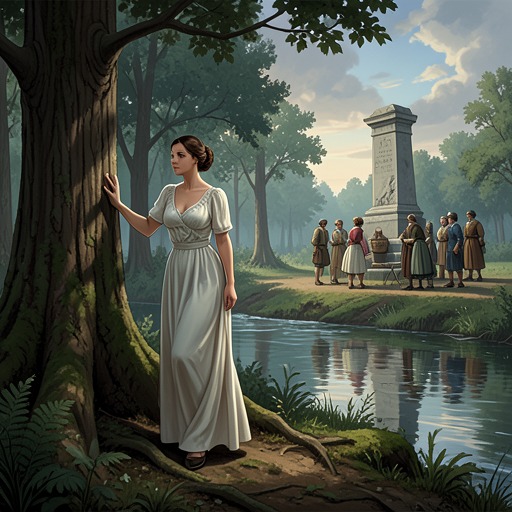
Axus is presented as sufficiently similar to Earth in gravity and atmosphere that Lucy Hammond can survive the transition, yet different enough to make crossing feel like entry into another order of reality. Alvar raises a crystal and opens a circular portal, a dark opening against the Bridge’s white expanse; together they pass through it and land on soft grass. Lucy realizes that she is no longer on Earth but on the grounds of Axus, Alvar’s world.
The first landscape establishes Axus through a mixture of alien beauty and physical continuity. Two moons shine above the field: one lavender and oval, the other white and comparable in size and shape to Earth’s moon. The clear sky is purple, the air feels lighter than Earth’s, and the breeze carries the scent of spices and morning dew. Alvar identifies the moons as Arlith and Vesp, names associated with goddesses of old. The scene gives Axus an atmosphere of wonder, but Lucy’s amazement is also the beginning of displacement: the world is beautiful precisely because it is no longer familiar.
Political and Treaty Setting
Axus is bound to Earth through a formal agreement made under oath to Elias, the God of Light, on October 10, 1993 on Earth and the twenty-third day of Havath, 2918 on Axus. The agreement is between Hannah Delaney and King Alvar of Underland and promises that Hannah’s unborn daughter will be betrothed to Alvar as his future wife and queen. Its stated purpose is to secure peace between Earth and the realms of Axus.
The agreement gives Axus more than a distant geographical identity. It makes the planet the destination of a political arrangement written before Lucy Hammond was born. Once the daughter comes of age, Alvar is entitled to retrieve Hannah and her daughter so that they may reside in Underland. Underland is obligated to provide their material and personal needs, protection from the Underland Guard, and instruction from the Institute of Underland in the customs and ways of its people. The signed document therefore connects Axus to questions of inheritance, consent, protection, cultural education, and the obligations of rulers across worlds.
Fletch explains that the Bridge created a continuing political danger as well as an opportunity. Some people on Axus wanted to leave their own world and begin new lives on Earth, and disagreements among Axus’s peoples remained capable of producing disorder. Alvar had saved Underland and most of Axus, but opponents still challenged him and sought power by stirring unrest. Maggort is identified as one such opponent, committed to the old ways of Underland during its darkest period and to a system built on slavery, selfishness, ruthlessness, and immorality comparable to Saul’s rule.
Peoples, Customs, and Violence
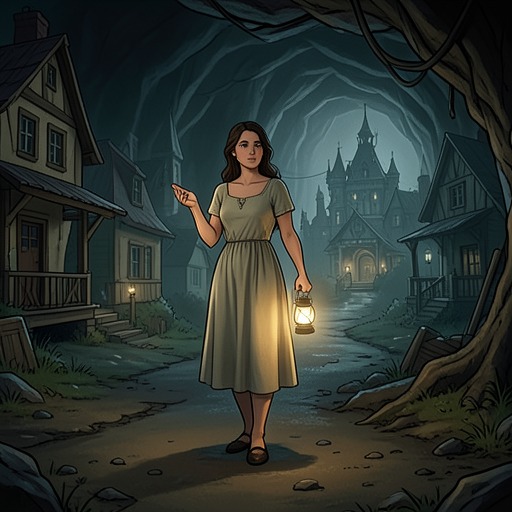
Axus contains sharply different societies rather than a single unified culture. Goblia, one of its subterranean cities, lies inside an enormous pit reached by narrow staircases carved into the stone. Its buildings are made of rock and mud, and a vast pool occupies the center. The absence of railings turns the architecture into a constant physical hazard: a slip on the stairs could mean a fall of hundreds of feet. Goblia’s setting makes its political isolation and danger tangible before its customs are fully explained.
The city is governed according to a severe hive order associated with Remora. Only one female is permitted to live in a gobli hive at a time, while most male drones die in infancy. Female babies are destroyed unless Remora chooses one to survive as a princess and eventual successor. Remora lays about ten eggs each week, which are treated as the future of the hive. Fletch describes this as a distorted revival of older ways after Remora appointed herself queen. Earlier Goblia had consisted of family clans and had been matriarchal, but not under the extreme arrangement in which a single female controls the entire population.
The history behind this order is inseparable from Axus’s era of enslavement. Saul helped install Remora as queen and promoted the old practices, while Gobli workers were enslaved in Saul’s mines. Remora’s appointment was presented as liberation, but it left the workers under another form of domination. Axus thus places spectacular landscapes and elaborate customs beside systems that reduce people to labor, breeding stock, political subjects, or disposable bodies.
The violence of Axus’s legal and social orders is also visible in the Star Wheel, the execution device used by the gobli. Alvar explains that criminals are torn apart limb by limb before the head is removed. This knowledge is not abstract for Lucy: the threatened execution of her friend makes the custom an immediate pressure on her decisions. Axus’s laws are therefore not merely background lore. They alter the stakes of movement, allegiance, and marriage, forcing Earth-born characters to negotiate rules whose moral assumptions differ radically from their own.
Underland’s Succession and Future
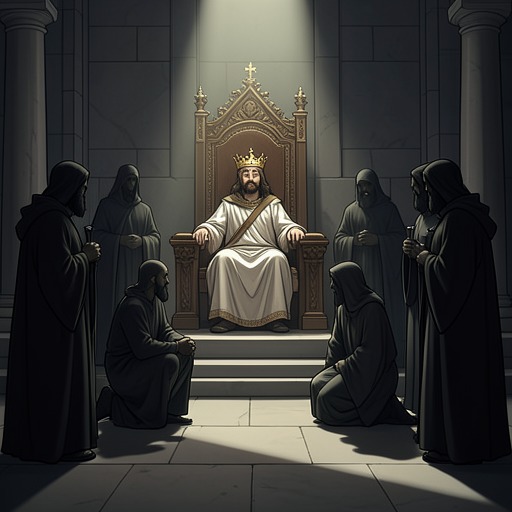
Axus is also the setting for a constitutional dispute over Alvar’s return to power. Sola Brightfeather states that when Alvar and Lucy’s heir reaches the traditional age of twenty-five, the council will judge whether that heir is worthy to succeed the king. Succession is therefore not presented as an automatic transfer of power, even within a royal family; it remains subject to institutional judgment and inherited tradition.
Sola supports Alvar’s restoration by arguing that he ruled for years without using his Cursed state to take advantage of the people around him, although he possessed the power to do so. Her vision of the future gives her confidence that Alvar can resume his duties and that sending him away would be worse for the realm. Lord Vessin remains sufficiently wary to insist that a weapon capable of killing a Cursed must be forged, but his softened expression as he rises suggests that the debate has shifted. Axus’s future is consequently suspended between trust in a ruler’s moral restraint and fear of the power embodied in his condition.
The planet’s political future is tied to Lucy’s family as well as to Alvar’s legitimacy. Sola’s prediction that Lucy and Alvar will have children makes the treaty’s original promise an active dynastic possibility rather than a completed historical arrangement. Their future heir would inherit not only a throne but the unresolved question of how Axus should balance royal authority, council oversight, inherited custom, and protection against extraordinary power.
Narrative Significance
Axus functions as a threshold world. Crossing into it moves Lucy Hammond from the recognizable social and legal framework of Earth into a planetary network of treaties, monarchies, councils, hives, religious traditions, enslavement histories, and lethal punishments. The Bridge supplies the physical passage, but Axus supplies the deeper transformation: once Lucy arrives, private identity becomes inseparable from public obligation.
The setting repeatedly contrasts beauty with danger. Its lavender moon, purple sky, lighter air, and fragrant atmosphere create an image of enchantment, while Goblia’s pit, the Star Wheel, the legacy of Saul’s slavery, and the threat of political disorder reveal a world whose loveliness does not guarantee safety. Axus is not a simple fantasy refuge or an uncomplicated alien frontier. It is a contested home in which peace treaties coexist with coercive customs and where restoration requires both personal trust and political safeguards.
For Lucy and Alvar, Axus becomes the place where separation between worlds is converted into relationship. The original agreement imagines peace through a future bride and queen; Lucy’s actual arrival tests whether such a promise can become a lived connection rather than merely a diplomatic instrument. The planet’s decisive narrative role lies in that tension. Axus is simultaneously homeland, treaty partner, battlefield of competing social orders, and the possible home of a new generation whose legitimacy may determine what the world becomes.