Elias faith
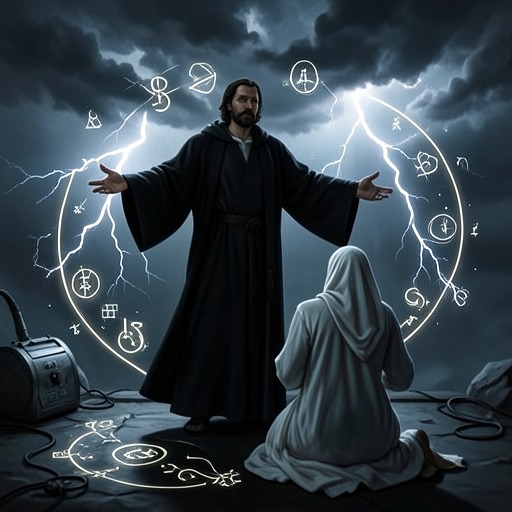
Bride of AlvarElias faith is the religion centered on Elias, identified as the God of Light, and it provides the novel with its clearest language for binding promises, moral responsibility, divine judgment, and possible redemption. It is not merely a private belief: the faith authorizes a marriage agreement between Earth and Axus, shapes Alvar’s conduct toward women and the powerless, condemns Saul’s violence and domination, and offers a standard by which rulers may be judged.
Sacred Authority and Binding Promises
Elias faith gives the Earth–Axus marriage agreement its solemn authority. The contract is made under oath to Elias and records the date as October 10, 1993, on Earth, and the twenty-third day of Havath, 2918, on Axus. Hannah Delaney promises that the daughter she carries will be betrothed to King Alvar as his future wife and queen, with the marriage intended to secure peace between Earth and the realms of Axus. The oath therefore links divine witness to political diplomacy and to the fate of an unborn child.
The faith’s authority is also associated with preservation of life. Hannah explains that Lucy Hammond was expected to die before birth and that she promised her daughter to Alvar after he offered the healing abilities of his people to save her. The resulting obligation is morally complicated: the promise protects Lucy’s life but also treats her future as something arranged before she can consent. Elias faith thus sanctifies an oath while leaving the narrative to expose the human cost of making such an oath on another person’s behalf.
Ethics of Equality and Mercy
Alvar’s private devotion to Elias separates his moral principles from the customs and rulers around him. When a desperate girl asks him to kill her, his physical response briefly awakens sexual desire, but he withdraws his hands rather than imitate Saul’s predatory lust. He understands Elias as teaching men to be loving and respectful toward women and to treat them as equals. Faith consequently appears not as abstract doctrine but as a discipline imposed on appetite and power: Alvar’s goodness is shown through restraint when he possesses the ability to harm.
This ethic also informs Alvar’s response to his own history. He confesses that he is the Cursed and that, before becoming ruler, he committed unforgivable acts while controlled by the Fe collar. Although the collar has been blessed by a noble sylph priestess so that it appears invisible, Alvar still experiences it as a daily reminder of enslavement and shame. He fears that Elias will refuse him paradise because of what he did, even while insisting that those actions were outside his control. His faith therefore creates both a moral vocabulary for self-judgment and the possibility that responsibility can be understood alongside coercion.
Judgment, Suffering, and Competing Religions
The novel contrasts Elias faith with religious systems that naturalize domination. In Goblia, Remora restores an extreme version of the old matriarchal order: only one female may live in a gobli hive, most male drones die in infancy, and female hatchlings are destroyed unless Remora selects one as a future princess. The system is justified through the religion of the Great Matriarch goddess, but its religious language accompanies reproductive control and political tyranny. Saul helped install Remora and promoted these customs, using them to weaken the last organized gobli city after enslaving its people in his mines.
Violence is likewise presented through competing claims about divine power. Gobli priests chant for the gods to destroy Alvar and demand that his Curse die with him while villagers spit at him, throw objects, and call for his death. Their invocation of the gods does not produce pity or justice; it gives collective fear the form of religious condemnation. The contrast is significant because Alvar’s own faith is associated with honoring the dead and protecting the vulnerable, whereas the public religious response to his Cursed identity turns spiritual language into an instrument of exclusion.
Saul rejects that entire order and replaces it with himself. When Alvar curses him and appeals for Elias to destroy him by fire, Saul answers that there are no gods, only Saul as the new god of Axus. His declaration transforms political absolutism into blasphemous theology: Saul does not merely rule by force but demands that force itself become the measure of divinity. Elias faith supplies the opposing claim that no human ruler is ultimate, even when that claim cannot immediately prevent enslavement or violence.
Paradise, Prophecy, and Political Legitimacy
Elias faith offers Alvar a future beyond historical suffering, but the promise is uncertain rather than comforting. Alvar hopes to see his dead wife, Triss, in paradise, yet doubts that he will enter it because he cannot die and because of the acts committed under the Fe collar. His belief in judgment prevents him from excusing himself completely, while his hope in paradise allows grief to remain connected to love rather than becoming a demand to restore the past. He recognizes that no repetition of memory can create new experiences with Triss and therefore tries to move toward a new life.
The faith also appears through prophecy and reassurance. Sola tells Alvar that he will experience joy again and eventually find the peace he longs for, even though he does not want to remarry because he fears bringing pain to another person. Her assurance links divine hope with emotional recovery rather than with conquest. Later, Sola supports Alvar’s restoration as king, arguing that he has ruled for years without using his Cursed state against his subjects and that the future shows no reason to reject him. Her vision gives religious authority to a political decision that might otherwise be governed entirely by fear.
When Saul’s return threatens to place Alvar’s body under hostile control, Alvar grants Lord Calbir permission to destroy him if necessary. Lord Calbir receives the king’s weapon as a symbol that command has passed to him and prays that Elias will grant Alvar passage to Paradise. Alvar’s willingness to authorize his own possible death turns kingship into sacrifice: he places the survival of his people above the preservation of his life. The scene makes Elias faith a measure of rule, defining legitimate authority through warning, responsibility, and voluntary self-surrender rather than possession of absolute power.
The Faith’s Narrative Significance
Elias faith mediates the novel’s central opposition between freedom and control. Saul’s power operates through enslavement, bodily domination, and the claim that the ruler is a god; the Elias-centered ethic insists that power must answer to a higher moral order. Alvar remains marked by violence and fears judgment, but his repeated choices toward restraint, equality, burial, protection, and possible sacrifice give faith a practical form. His belief does not erase guilt or magically resolve the consequences of the past. Instead, it makes moral change imaginable.
The faith’s influence is therefore deliberately double-edged. It can validate a peace treaty that determines Lucy Hammond’s future before her birth, yet it also gives Alvar a vocabulary for recognizing that women are not objects of appetite and that rulers are not entitled to unlimited control. It appears in public oaths, priestly chants, funeral intentions, visions of succession, and prayers for the dead, moving between sacred ritual and political life. Against the cruelty of Saul and the dehumanizing customs of Goblia, Elias faith defines the possibility that healing, authority, and love can be governed by obligations greater than desire or force.