Gobli
Bride of AlvarGobli are a species of Axus whose appearance, social organization, and political history are central to the book’s examination of prejudice and power. Lucy Hammond initially encounters them through the visual language of fantasy monsters, but her understanding changes as Fletch explains that their disturbing bodies and oppressive customs are not timeless natural facts: they are consequences of inbreeding, enslavement, and rulers who deliberately revived brutal “old ways.”
Appearance and First Impressions
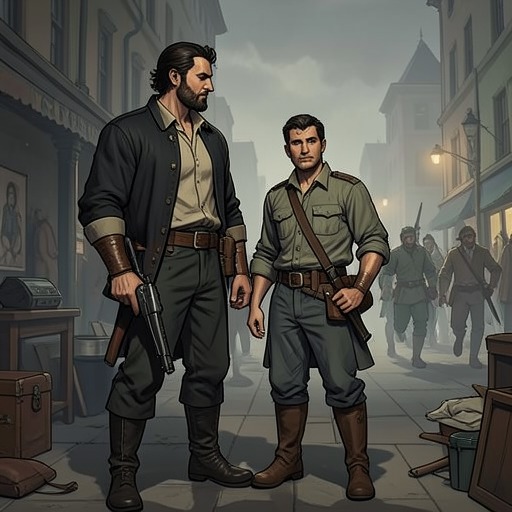
Lucy’s first significant meeting with a gobli occurs at the gates of the Underland city, where Alvar introduces Fletch as his chief of the house. Fletch is short and stout, with long pointed ears, wart-covered skin, a large hooked nose, beady black eyes, and dozens of pointed teeth. He wears a smart tunic and belt, presenting himself as a formally dressed official rather than a wild creature. Even so, Lucy instinctively tries not to lean away from him because fictional depictions have trained her to associate beings of his appearance with villains. Her discomfort becomes self-conscious reflection on whether such an automatic reaction makes her inherently racist toward the peoples of Axus.
The contrast between Fletch’s actual position and Lucy’s stereotype is immediate. Alvar describes him as a dear friend, a person of great power, and the regent who governs whenever Alvar is away. Fletch speaks with authority at the city gates, questions Alvar about the abduction attempt involving Lucy, and immediately situates her arrival within the political tensions of Axus. The scene therefore makes appearance an unreliable guide to moral character: the figure Lucy reads as a gremlin-like threat is in fact a trusted administrator and ally.
Goblia’s Social Structure
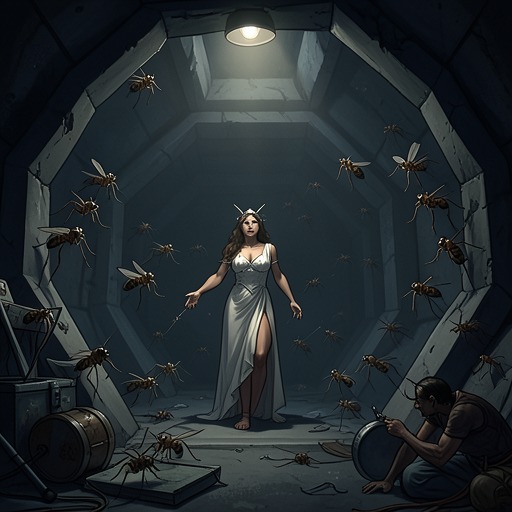
Fletch’s later account presents Goblia as a hive society organized around a single reproductive female. Emily Hall compares the structure to an ant colony, except that both males and females serve as workers. All males are required to mate with the gobli queen so that the next generation can be produced, while worker females are infertile and cannot have children. The queen issues orders to the entire hive and possesses overwhelming authority over the population.
When Lucy descends into Goblia, the physical diversity of its inhabitants becomes more extreme than Fletch’s appearance suggested. She sees gobli with humps, enormous eyes, missing eyes, boils, warts, missing limbs, and additional limbs. Fletch explains that these conditions result from inbreeding. Goblia permits only one living female in a hive at a time, an “old-ways” custom that concentrates reproduction and succession in the queen’s body.
The system is also violently selective. Most male drones have very short lives and do not survive beyond infancy. Female babies are destroyed unless the reigning queen chooses to preserve one as a princess who may rule after her. Remora lays approximately ten eggs each week, and Fletch identifies those eggs as the future of the hive. Reproduction is thus both the biological foundation of Gobli society and the instrument through which its ruler controls continuity.
Slavery and Political Corruption
Fletch distinguishes Goblia’s former society from the system Lucy witnesses. Goblia was once organized through family clans and retained a matriarchal structure, but it did not reduce the entire population to a single surviving female. The present order was restored by Remora after she appointed herself queen, turning an older cultural principle into an extreme and destructive hierarchy.
Saul played a decisive role in this transformation. According to Fletch, Saul helped install Remora as queen and promoted the customs that now govern Goblia. Fletch suspects that Saul did so to weaken the last remaining organized gobli city. Under Saul’s rule, gobli were enslaved and forced to work in his mines; Remora’s appointment was presented as liberation, but it did not free the workers from exploitation. She became the only ruler left over from Saul’s reign, preserving his political design after his direct control had ended.
Fletch’s description exposes the difference between formal emancipation and actual freedom. Replacing an external tyrant with a local ruler does not undo slavery when the same labor system and coercive hierarchy remain intact. Goblia’s grotesque social order is therefore linked to deliberate political engineering. Its bodily abnormalities, reproductive violence, and impoverished communal life all bear the marks of a society weakened and controlled for the benefit of rulers.
Gobli in the Wider Conflict
The gobli are not a single undifferentiated threat. Fletch tells Lucy that Alvar’s return has relieved Underland of the immediate danger of taking Earth after the discovery of the Bridge. There are still disagreements among the peoples of Axus, however, and political stability remains incomplete. Those who challenge Alvar attempt to provoke disorder in pursuit of power, and Maggort is identified as one of them. Fletch associates Maggort with the old Underland methods built on slavery and calls those methods selfish, ruthless, and immoral in the manner of Saul.
This political context makes Fletch an important counterexample within Gobli representation. He is a gobli official who supports Alvar’s rule and condemns the inherited system that harmed his people. His loyalty does not erase the violence of Goblia’s history, but it prevents the species from being reduced to the hive’s ruling structure. The narrative gives a gobli voice to the historical explanation of oppression rather than allowing humans or royal authorities to define Gobli society from outside.
Monstrous Bodies and Reclaimed Meaning
Gobli bodies are repeatedly used to create fear, but the book gradually separates physical monstrosity from moral evil. Lucy’s first response is shaped by cinematic and literary stereotypes. In Goblia, the scale and variety of bodily difference intensify her revulsion, yet Fletch’s hand-tugging gesture and explanatory guidance place him beside her as a protector and interpreter. His body remains visibly strange, but his conduct makes the reader reconsider the assumptions attached to it.
The wider story reinforces this reversal through the treatment of other marked bodies. Cursed people appear normal except that their eyes turn red when stressed; Alvar reveals that Lucy has Cursed blood; and Alvar’s own transformation displays red eyes, wounds that heal almost immediately, and a monstrous form that terrifies his people. When Lord Vessin shoots Alvar in the chest, Alvar’s body changes publicly before the crowd, turning a stigmatized physical sign into a demonstration of power and truth. The same narrative logic applies to Gobli: bodily difference may provoke fear, but the political meaning assigned to the body is produced by social judgment and power.
Gobli consequently occupy an unstable position between creature and citizen, stereotype and historical people. Their appearance is used to stage horror, while their speech and history disclose exploitation, cultural destruction, and resistance. Through Fletch and the account of Goblia, the narrative asks readers to look beyond the body that first commands attention and to recognize the systems that have made a population appear monstrous.