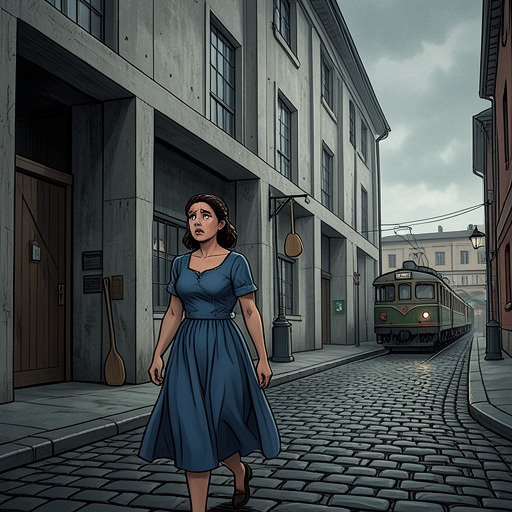
Hannah Delaney
Bride of AlvarHannah Delaney is Lucy Hammond’s mother and the originator of the promise that binds Lucy to Alvar. Faced with the death of her unborn child, Hannah accepts Alvar’s healing intervention in exchange for Lucy’s future as his wife and queen. The decision preserves Lucy’s life and helps establish peace between Earth and Axus, but it also turns motherhood into a source of inherited obligation: Lucy reaches adulthood carrying a contract she never chose, while Hannah must confront the consequences of having made that choice for her.
Identity and Background
Hannah is presented primarily through Lucy’s memories and through the revelations she makes when Lucy’s suppressed history returns. She is the human woman who encountered Alvar on Earth while carrying Lucy. The agreement records that she and King Alvar of Underland entered the arrangement under oath to Elias, dated October 10, 1993, on Earth, and the twenty-third day of Havath, 2918, in Axus. It states that the female child Hannah carried would be betrothed to Alvar as his future wife and queen, securing a peace treaty between Earth and the realms of Axus.
The contract also grants Alvar the right to return after the child reaches marriageable age and retrieve both Hannah and her daughter for residence in Underland. In return, Underland is to provide their material and personal needs, protection from the Underland Guard, and instruction from the Institute of Underland in the customs of its people. Hannah’s signature, alongside Alvar’s, makes the promise more than a family recollection. It is a cross-world political instrument whose language gives a private medical emergency the force of a dynastic and diplomatic settlement.
The Bargain That Saves Lucy
Hannah tells Lucy that Alvar needed an Earth-human bride to maintain peace with their world. Some people of Axus were hostile toward humans, and Alvar’s authority over his kingdom and its treaty relationships was strong enough to deter an attack on Earth. Hannah therefore understands the marriage not simply as a personal arrangement but as a defense of both worlds. She insists that rejecting Lucy’s status as Alvar’s chosen bride would be a grave insult to him and his people and could provoke a war that Earth would probably lose.
The immediate cause of the bargain, however, is more intimate and desperate. Hannah explains that Lucy was going to die in the womb. Alvar could save the child through abilities his people possessed, including healing, and Hannah promised that the rescued girl would become his. The later account specifies that Alvar infused Cursed blood while the baby remained within Hannah and used healing magic to preserve her life. Father Ryland was informed how to assist with the procedure. Hannah’s decision thus rests on a consequential calculation: surrender Lucy’s future to prevent her death in the present.
That calculation also explains why the promise becomes so difficult for Lucy to reject. Hannah did not merely arrange a conventional engagement for an adult daughter. She made the agreement before Lucy was born, when Lucy had no voice and no ability to consent. By the time Lucy learns the truth, the bargain has been transformed into a claim over her adulthood, body, marriage, and political identity.
Motherhood, Secrecy, and Coercion
When Hannah finally tells Lucy that Alvar is entitled to her, she does so while avoiding Lucy’s eyes and staring at her folded hands. The gesture conveys the burden of a decision she knows Lucy will experience as betrayal. Hannah says that she had explained parts of the situation repeatedly while Lucy was growing up, but Lucy remembers those explanations as a reality imposed on her rather than one she accepted. The scene places maternal protection and maternal control in direct conflict: Hannah saved Lucy’s life, yet the same act becomes the mechanism by which Lucy’s freedom is constrained.
Hannah’s reasoning is also shaped by fear. She emphasizes that Earth cannot safely refuse the arrangement because Axus might attack, and she believes Axus would win. Her warning makes the marriage appear compulsory even before Alvar arrives. Lucy’s existing engagement to Mike therefore cannot function as an alternative in Hannah’s eyes. Hannah says Lucy has been Alvar’s chosen bride for many years and that the agreement applies to her alone, while Lucy faces the impossibility of explaining the arrangement to Mike and her friends.
The consequences are visible in Lucy’s divided response to Mike. Mike represents the stable life Lucy wants after a difficult childhood: he is her college sweetheart, fiancé, and promise of a fresh start. Their relationship is described as comfortable friendship rather than passionate love, and Lucy eventually recognizes that she wants him as a friend rather than a lover. Even so, her choice is not made in a vacuum. Hannah’s earlier promise has already narrowed the field in which Lucy can decide what marriage means.
Conflict With Alvar and the Stakes of the Treaty
Hannah’s bargain is repeatedly converted into immediate political pressure. After Emily Hall is threatened with execution by Remora’s forces, Alvar tells Lucy that sealing their marriage will make the killing of Earth humans a crime against Underland and give him the authority to order Emily’s release. He says the wedding must take place before the enemy discovers that they have the wrong bride. Lucy agrees to marry him that night to save her friend, while explicitly refusing sex. Alvar accepts the boundary but says he must spend the night with her to create the appearance required by an old law of Axus.
The episode reveals how Hannah’s original agreement operates in practice. Its language promises peace, protection, and provision, but its enforcement occurs through threat, urgency, political imbalance, and the danger of violence. Lucy can formally say yes to the wedding, yet her available choices are shaped by Emily’s life, the threat of war, and the claim that Hannah already made on her behalf. Hannah is therefore not the only force limiting Lucy’s autonomy; she is the first link in a chain that later institutions and emergencies tighten.
Hannah also helps prepare the ceremonial transition into this imposed role. After Alvar leaves Lucy’s room, Hannah arrives with Leeza and the wedding dress Alvar bought on Earth. At the ceremony, a priest asks Lucy and Alvar to seal their union with a kiss. Lucy meets Alvar’s kiss partly to appear legitimate before possible spies for Remora, showing that the public ritual is inseparable from security and diplomacy. Hannah’s original bargain has reached its visible endpoint: a private promise made during pregnancy becomes a public marriage ceremony watched by the political world it was meant to stabilize.
Later Reckoning and Narrative Significance
Much later, Hannah turns her anger toward Alvar when the promised marriage fails to prevent disaster. She tells him that she promised her daughter because she believed he could save both worlds, but now sees that Lucy has no control over events and that the marriage did not avert catastrophe. Her accusation is severe because it recognizes the gap between the idealized purpose of the treaty and its human cost. The arrangement was supposed to protect Earth and Axus; instead, Lucy has been pulled into war, abduction, and dynastic danger.
Alvar answers by explaining the plan Hannah did not fully understand. He had traveled to Earth while trying to ensure that Saul, the former tyrant king, could not return. Alvar had arranged for Saul to be arrested by Earth authorities, but knew the imprisonment could last only so long. He therefore needed a fail-safe that would further cut Axus off from Earth. Lucy’s impending death provided the means: transfusing his blood would save the child, and marrying the adult woman she became would secure the treaty and isolate Axus from Earth. A reliable oracle later identified Lucy as the deciding factor in whether Saul would rule again, making her continued presence in Axus essential to its survival.
Hannah’s importance lies in this unresolved contradiction. She is neither simply a villainous parent nor an unambiguous protector. Her choice is an act of rescue, but it also establishes a system in which Lucy’s life is treated as payment for peace. Her later confrontation with Alvar shows that she eventually recognizes the limits of the bargain’s promised protection, while Lucy’s own rejection of victimhood complicates the outcome further. Lucy tells Alvar that she does not want to return to Earth yet and wants to see the peaceful, restored Axus he has built, refusing to let Saul or the Curse define him. Hannah’s decision begins the chain that places Lucy in Axus, but Lucy ultimately gives the inherited contract a meaning Hannah could never determine for her: not merely obedience to a promise, but a conscious choice about where she belongs and whom she will become.