Lucy Hammond
Bride of AlvarLucy Hammond is the central threshold figure of the story: an Earth woman whose childhood secret becomes a binding political obligation, whose unwanted marriage becomes a source of genuine emotional discovery, and whose bodily connection to the Cursed turns her into the Fireblood celebrated as Queen Lucy. Her decisive significance lies in the way she converts inherited promises and imposed identities into conscious choices. The story repeatedly places her between worlds, between friendship and romance, between legal consent and coercion, and between ordinary humanity and supernatural power.
Identity and Early Background
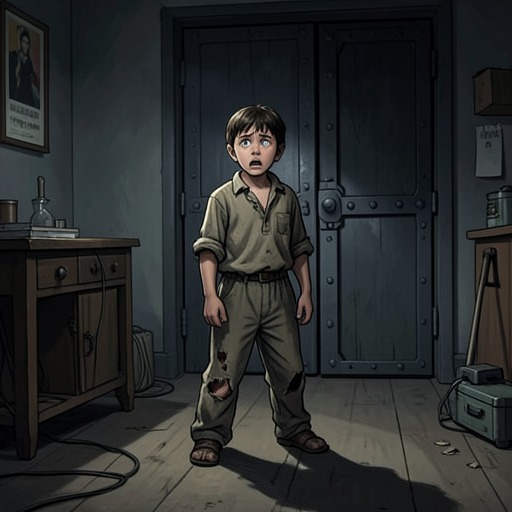
At eight, Lucy Hammond first shares the secret that shapes her life. In the basement of Emily Hall's family home during a cold December evening, she tells Emily that her mother has promised that she will someday save the world by marrying a king named Alvar. Lucy understands the claim through the language of fairy tales: Alvar is said to rule another magical world, and a portal connects that world to Earth. The confidence is both childish and consequential, because what appears to be imaginative play is later confirmed as a real interworld agreement.
Lucy grows up with her mother in a one-bedroom apartment, contrasting her modest home with the upscale suburban colonial where Emily lives. That contrast helps explain why Lucy later hungers for stability and resists the worldview imposed on her. As an adult, she tries to place the past behind her by building a quiet life with Mike Jones. Mike is her fiancé and, in her own assessment, a promise of a fresh start after what she regards as the madness of her upbringing. Their relationship offers a comfortable arrangement and solid friendship rather than passionate love, and Lucy initially interprets that stability as an escape from her mother's influence.
The childhood promise returns as a legal and political demand. Lucy's mother tells her that Alvar needed an Earth-human bride to preserve peace between Earth and Axus, and that she promised Lucy specifically in exchange for Alvar saving Lucy from dying in the womb. The written agreement is dated October 10, 1993, on Earth, and the twenty-third day of Havath, 2918, in Axus. Signed by Hannah Delaney and Alvar, it betroths the unborn girl to the king as his future wife and queen, establishes the marriage as a peace treaty between Earth and Axus, and grants Underland the right to retrieve Hannah and her daughter once Lucy comes of age. It also promises their material needs, protection by the Underland Guard, and instruction from the Institute of Underland in Underland's customs.
Resistance, Marriage, and the Limits of Consent
Lucy does not experience the agreement as a romantic destiny. She argues that she cannot be Alvar's bride because she is already engaged to Mike Jones, but her mother insists that she is Alvar's chosen bride and that rejecting the arrangement would be a grave insult capable of causing war. Lucy's apparent options are therefore narrowed by forces she did not create: a childhood promise made before she could consent, a treaty whose consequences are international, and the threat that Axus might defeat Earth if the arrangement collapses.
Her resistance is also intimate rather than merely political. Lucy recognizes that she does not want sex with Mike, despite their physical familiarity and engagement. She wants him as a friend, not as a lover, and understands that this makes marriage to him questionable. The realization exposes the instability beneath the supposedly safe alternative she has chosen. Mike represents security and a route out of her past, but not the passionate attachment that Lucy gradually discovers elsewhere.
Alvar's arrival turns the treaty into immediate danger. Emily Hall is endangered because the wrong bride has been identified, and Alvar tells Lucy that sealing their marriage is the only way to make killing an Earth human a crime under Underland law and to force Remora to avoid war. Lucy agrees under pressure because Emily's life is at stake, while explicitly refusing sexual access. Alvar accepts that boundary and explains that he must spend the night with her only to satisfy an old law and create the public appearance that he is treating her as his wife. The episode makes Lucy's consent visibly conditional: she chooses the ceremony as a rescue strategy, but the political and legal systems around her determine the cost of refusal.
The ceremony nonetheless produces an unexpected emotional disturbance. The priest asks the couple to seal the union with a kiss, and Lucy meets Alvar's soft kiss in order to appear legitimate before the assembled witnesses and possible spies. Her response exceeds performance: she finds the kiss desirable and feels that lingering over it would be blissful. The moment does not erase the coercive circumstances, but it complicates Lucy's resistance by giving the imposed relationship a bodily and emotional reality she had not planned for.
Alvar later presents himself as a possible provider of a conventional arrangement. He claims that his wealth, power, and reputation as a just ruler could give Lucy anything she wants, and he points out that she is attracted to him. Lucy rejects the implication that her interest is financial, but her anger also reveals that attraction has become impossible for her to deny. Her conflict is not simply whether to obey or rebel; it is whether an arrangement born in diplomacy can become a relationship chosen for its own emotional truth.
The Cursed Revelation and Lucy's Expanding Knowledge
Lucy discovers that she has Cursed blood even though she was born on Earth. Alvar's revelation humiliates and frightens her, forcing her to reconsider the boundary she had used to define herself: Earth-born, ordinary, and separate from the supernatural violence of Axus. The disclosure links her physically to the history she has tried to reject and anticipates the later emergence of her Fireblood identity.
Knowledge repeatedly changes Lucy's position. She learns that Alvar's political conduct cannot be separated from the violence inflicted on him by Saul, and that his authority is shaped by the danger of his own transformation. Alvar describes himself as a ruined, Cursed shell and doubts that he can become good enough for her. Lucy refuses that self-definition. She embraces him despite his bewilderment and insists that Saul and the Curse do not have the right to determine what he is. Her judgment is based not on Alvar's claims about himself but on what she has seen of his actions and memories: the restoration of Axus, the cooperation of its peoples and races, and the end of the warring conditions that preceded Saul's rule.
Lucy therefore becomes an interpreter of Alvar's moral history. She does not deny the violence around him or the fact that he has been hardened by it, but she distinguishes the damage he has suffered from the good he has deliberately accomplished. This distinction is central to her own development. She moves from reacting to the stories told by her mother and Alvar toward evaluating evidence, memories, and consequences for herself.
Fireblood, Sacrifice, and Direct Action
Lucy earns the title Fireblood through action rather than inheritance alone. During the rescue crisis involving Alvar, Saul, the key to the Fe collar, and a fire that Alvar can unleash in his transformed state, she seizes a moment of distraction. With her ankles still tied and Saul pulling her hair, she grabs the key from his hand and uses her body weight to break the chain around his neck. She then takes a shard of glass, cuts her palm deeply, and covers the key with her blood, recalling from Alvar's memories that blood had bound the key and collar together. Her plan is desperate but specific: she calls on Alvar to fill the place with fire.
The scene defines Lucy as an active participant in the conflict rather than a protected treaty object. She uses pain, memory, improvisation, and trust in Alvar's power to alter the balance of the confrontation. Her knowledge of blood exchange becomes practical resistance, while her willingness to injure herself gives the political symbol of the Fireblood a physical cost. The title Queen Lucy, Fireblood, slayer of the tyrant, and rescuer of Axus later reflects the public meaning attached to these choices.
Her willingness to sacrifice is also tied to Emily Hall. At a critical point, Lucy forces her left hand into heat that does not burn her and watches the flames around her fingers while thanking Emily through tears. The gesture is colored by grief and by Lucy's recognition that Emily may not have been the ideal friend, even though Emily wanted to go home. Lucy's compassion survives disappointment. She does not need to idealize Emily to acknowledge the value of what Emily has done and the pain of losing her.
Relationships and Chosen Belonging
Lucy and Mike Jones embody the difference between safety and desire. Mike is the dependable figure she selects when attempting to rebel against the unstable story of her childhood, and their engagement promises an orderly Earth life. Yet Lucy realizes that she wants friendship rather than sexual intimacy with him. When the crystal begins to glow and Mike understands that Lucy's account of the other world is not madness, he releases her emotionally. He tells her that she belongs with whoever made her passionate, recognizing that she never felt that passion with him. His acceptance enables Lucy to leave the relationship without pretending that comfort was the same as love.
Lucy and Alvar begin with asymmetrical power. He is the king who invokes a treaty made before her birth, retrieves her from Earth, and uses marriage as a means of protecting Emily and preventing war. Lucy challenges him openly, withholds sex, doubts his motives, and refuses to let political necessity dictate her inner response. Alvar's promise not to violate her becomes important because it marks a limit within an otherwise coercive situation, but it does not make the original arrangement freely chosen. Lucy's later attachment gains force precisely because it develops through confrontation, negotiation, and recognition rather than simple acceptance of prophecy.
When Alvar says he wants Lucy's happiness and does not want to ruin her as Saul ruined him, Lucy rejects his attempt to withdraw from her life. She says that she does not want to play any part with him ever, and that she is not ready to return to Earth. Instead, she wants to see the Axus he has created through peace and restoration. Her decision is a declaration of continued presence: she chooses to witness his world and judge it directly, while also refusing to let the Curse or Saul's abuse define either of them.
Change, Ending, and Narrative Role
Lucy changes from a person trying to escape a humiliating childhood narrative into a woman who accepts the complexity of belonging. At first, the promised marriage signifies the loss of autonomy and the return of what she calls her mother's madness. Later, the same marriage becomes a site where Lucy tests the difference between obligation and choice. She never simply forgets the coercion, but she takes control of the meanings attached to it by setting sexual boundaries, demanding truthful answers, and acting decisively when lives are at risk.
Her public identity expands faster than her private certainty. By the end of the supplied arc, her people call her Queen Lucy, the Fireblood, the slayer of the tyrant, and the rescuer of Axus. Alvar tells her that she could make a wonderful queen but asks her to distance herself from him as remaining human becomes increasingly difficult. Lucy refuses to be comforted by titles or protected by silence. She demands the truth about what will happen to him and whether he is giving up, insisting that being hurt by the answer is not a reason to withhold it.
That final stance completes Lucy's movement from passive subject of a treaty to moral and political agent. She is still exposed to the consequences of Alvar's condition, the laws of Axus, and the history created by Saul, but she insists on facing those consequences with knowledge. Her defining power is therefore not only her resistance to fire or her Cursed blood. It is her refusal to let inherited contracts, romantic comfort, public praise, or another person's self-condemnation decide what she can see, whom she can love, and what kind of queen she will become.