Saul’s First Defeat and Exile Through the Bridge
Bride of AlvarSaul’s First Defeat and Exile Through the Bridge is the decisive but incomplete victory over Saul’s rule of Axus. Alvar succeeds in forcing the tyrant through the Bridge and into Lucy Hammond’s world, yet the act functions as exile rather than annihilation. Saul’s continued existence on Earth leaves the realms of Axus and Earth vulnerable, while Alvar must live with the knowledge that the weapon used to defeat Saul also made him part of Saul’s crimes.
Causes and Background
The defeat grows out of Saul’s domination of Axus and his use of coercive magic. Saul placed a Fe collar on Alvar, and the device made Alvar a slave to Saul’s will. Once the collar was activated, Alvar could no longer control his own body; he transformed from man to Cursed and back again while Saul used him as an instrument of violence. The collar therefore turned Alvar’s body into a political weapon, binding the future king’s identity to the machinery of Saul’s tyranny.
The consequences of that enslavement were catastrophic. Alvar remembers the taste of innocent blood and the destruction of a town in which every man but one was killed. Saul left the survivor alive to spread his name and warn other villages that submission would purchase safety. Burning homes and bodies in the streets made Saul’s authority visible as terror, while Alvar’s forced participation left a moral wound that outlasted Saul’s immediate reign.
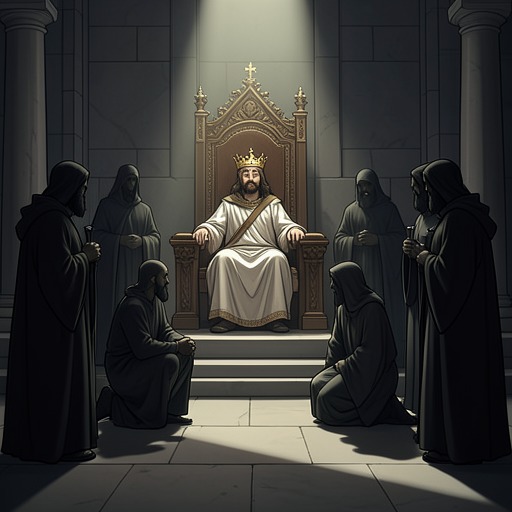
Saul’s ideology intensified the threat. He rejected the existence of gods and presented himself as the new god of Axus, replacing religious and communal order with personal absolutism. His violence was not merely private cruelty; it was a method of government. The account of the Star Wheel, on which Gobli criminals were torn apart limb by limb before decapitation, shows the wider culture of exemplary punishment associated with the world Saul helped shape. Fletch later explains that Saul enslaved Goblia’s people in his mines and installed Remora as queen, enabling the return of an extreme hive order in which female infants were destroyed unless Remora chose one to become a princess.
Course of the Exile
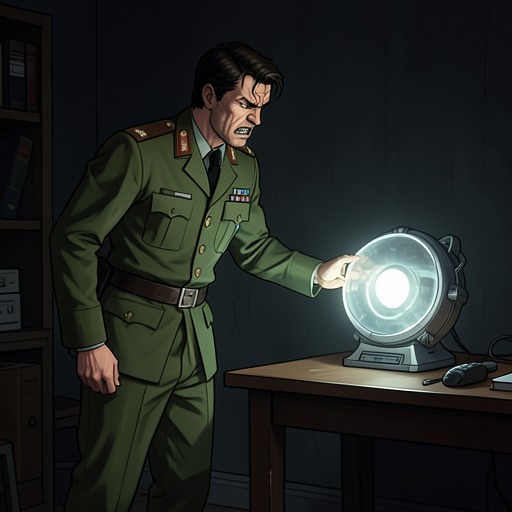
Alvar’s method of defeating Saul was to throw him through the Bridge into Earth. Alvar explains that this was the only available means of overcoming him: without arlite, Saul could not return. The Bridge thus becomes more than a passage between worlds. It is a strategic boundary, a prison door, and a temporary substitute for a final victory. Saul is removed from Axus, but the danger is displaced rather than resolved.
The exile changes the political balance immediately. With Saul absent, Alvar can rule, but he cannot regard the victory as secure. He knows that Saul may return, and that such a return could destroy both Axus and Earth. The triumph of banishment therefore contains its own reversal: the tyrant has been defeated, yet the conditions of his eventual return remain imaginable. The event’s value shift moves from oppression toward liberation, then back toward threatened uncertainty.
Alvar’s personal relation to the event is inseparable from shame. He tells Lucy Hammond that he is the Cursed Saul used to gain power and admits that, before becoming ruler, he did unforgivable things. He insists that the acts occurred outside his control because the Fe collar controlled him, but he does not treat that explanation as emotional absolution. The collar remains, invisibly blessed by a sylph priestess, as a daily reminder that he was enslaved. Exile therefore saves Axus while leaving Alvar unable to experience victory as innocence restored.
Political and Personal Aftermath
The threat returns to public life when Fletch reports that Queen Remora plans to attack Earth and that Gobli spies have discovered the Bridge and are assessing Earth’s defenses. The report makes Saul’s exile newly dangerous. If Remora’s attack succeeds, Saul could return when his prison sentence ends. Alvar’s earlier triumph consequently becomes the source of a continuing strategic emergency rather than a closed chapter.
Alvar responds to this prospect with despair. In the Underland Palace conference room, he remembers the hope and triumph that followed Saul’s banishment, but now longs for death and cannot be killed. He fears ruling people who will always despise him and wonders whether he will eventually become feral like other Cursed beings condemned to live for eternity. His inability to die transforms the aftermath of exile into an existential punishment: Saul is confined elsewhere, while Alvar remains permanently exposed to memory, judgment, and the possibility of renewed possession.
The event also determines Alvar’s later attempt to build a future rather than merely defend the past. Sola tells him that Hannah Delaney carries a child who is dying and that he must cross the Bridge while it remains open, infusing the unborn child with Cursed blood so Father Ryland can use healing magic to save it. She presents the journey as the beginning of Alvar’s marriage and heirs, but Alvar refuses the prospect of remarriage because he fears killing another woman. His refusal shows how the first defeat has shaped his understanding of power: survival and dynastic continuity no longer appear as uncomplicated rewards when every intimate bond may become vulnerable to the curse and its violence.
Later Revelation and Final Resolution
The political meaning of Saul’s exile is revisited when Alvar publicly reveals that he is a Cursed. Lord Calbir recalls that Saul placed a Fe collar on Calbir’s daughter and that, after she was recovered from Saul’s harem, her soul had been destroyed by actions performed without choice. She killed herself three months later. Calbir’s testimony creates a public parallel between his daughter’s suffering and Alvar’s enslavement, giving social language to the distinction between voluntary atrocity and forced action.
The revelation does not produce immediate universal forgiveness. A nobleman argues that Alvar’s Cursed identity makes him unfit to rule and claims that his flying in the skies above Underland City had terrorized the people. Alvar nevertheless accepts the possibility that his own subjects may destroy him. When Lord Calbir offers to lead the army against him, Alvar grants permission without flinching and gives Calbir his weapon as a symbol of the transfer of command. He warns that Saul may have lost some skill while imprisoned on Earth, but he does not ask the people to trust him blindly; he tells them to find safety, keep its location from him, and prepare for battle.
Saul’s first defeat finally becomes complete only when Lucy Hammond sees the burnt remains of a body and identifies Saul as dead. Alvar’s response is relief, and Lucy declares that it is over forever. This later death closes the uncertainty created by the Bridge exile, converting provisional imprisonment into destruction. Yet the earlier banishment remains crucial because it bought the time in which resistance, confession, and preparation became possible.
Narrative Significance
The event is a hybrid of escape, pursuit, and sacrifice rather than a simple heroic triumph. Alvar acts as the threshold figure who expels the tyrant across the boundary between Axus and Earth, but he cannot return unchanged: the crossing saves his kingdom while preserving the evidence of his own coerced participation in its suffering. The Bridge’s function is therefore structurally double. It carries Saul away from power and later becomes the route through which Alvar’s future, including his connection with Hannah Delaney and Lucy Hammond, can be formed.
The exile also establishes the book’s central contrast between punishment and restoration. Saul’s rule treats bodies as instruments, populations as material to be terrorized, and political order as personal ownership. Alvar’s response gradually moves toward warning, consent, public accountability, and institutional succession. Even after Saul’s death, Lord Vessin argues that Underland must forge a weapon capable of killing a Cursed so that the kingdom will never again be defenseless. The first defeat thus does not erase the need for political safeguards; it teaches the survivors that defeating a tyrant is only the beginning of rebuilding a world that can resist his return.