Saul's reign
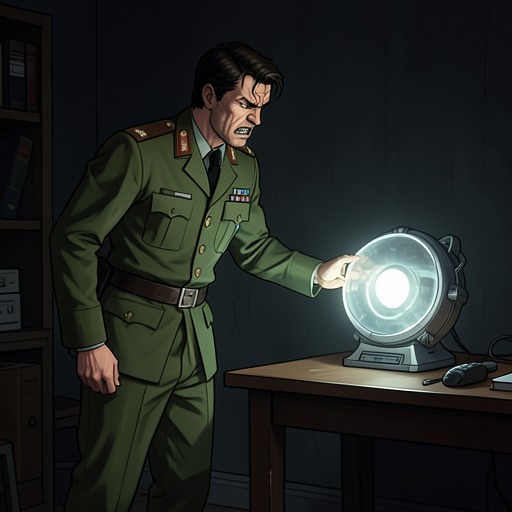
Bride of AlvarSaul's reign is the defining traumatic era against which the later history of Axus and Underland is measured. It is remembered not as ordinary royal rule but as a system of conquest, enslavement, ideological terror, and violence whose consequences persist after Saul's defeat. The period also explains why Alvar's restoration as king remains morally and politically difficult: he helped save Axus, yet Saul had forced him to become an instrument of the regime's brutality.
Origins and Political Order
Fletch describes Saul's order as the model followed by Maggort's faction: an old Underland system built on the backs of slaves and characterized by selfishness, ruthlessness, and immorality. Maggort's continuing challenge to Alvar therefore represents more than a personal dispute. It is an attempt to revive the political assumptions of Saul's reign during a period when Axus remains unstable despite its liberation. The past survives as an organized claim to power, not merely as a memory of one tyrant.
The later history of technology also preserves a separate institutional consequence of the era's wider historical crises. Grey explains that a cyber war contributed to technology bans, after which the peoples of Axus fell backward in time and revived some earlier customs. Arlite and the development of sky waves eventually transformed communication and travel, but this recovery is presented against a history in which dangerous systems had to be restricted. Saul's reign thus belongs to a broader pattern of political and technological rupture: Axus repeatedly responds to catastrophe by imposing limits, even when those limits carry their own social costs.
Before Saul became the ruler remembered by his victims, he had served as a knight for Umar, king of Underland. Saul recalled that Umar had granted him a title and enough coin to support him for the rest of his life. This background establishes a sharp contrast between an earlier position within royal service and the later figure who claimed absolute authority. The reign's violence is therefore not portrayed as an unavoidable condition of Saul's birth or station, but as a radical transformation of power into personal domination.
Conquest, Enslavement, and Terror
Saul's rule depended on the Fe collar, a device that converted control over the body into control over the will. Lord Calbir later recalls that Saul placed a Fe collar on his daughter. When she was recovered from Saul's harem after his banishment, she had been so damaged that, in Calbir's account, there was nothing left of her soul. She had performed acts without choice or resistance, remained haunted and terrified by them, and killed herself three months after returning home. Her death gives Saul's reign a legacy that cannot be measured only by battlefield casualties: its violence continues inside survivors after physical captivity ends.
Alvar's experience reveals the same mechanism on a larger political scale. Saul used the Fe collar to turn him into a weapon, stripping away his emotional response until he could carry out violence without visible feeling. Alvar later remembers being unable to escape the taste of innocent blood, while an entire town lies dead except for one surviving man. Saul orders that survivor to tell other villages about the massacre and to repeat Saul's name, promising that those who submit will live. The scene makes terror a deliberate instrument of government. The dead punish one community; the survivor is made to carry the warning to every community beyond it.
Saul's rhetoric also turns political submission into a religious claim. He declares that there are no gods and presents himself as the new god of Axus. This is not simply arrogance in private speech. It is an effort to replace every independent moral authority with the ruler's will, making obedience appear to be the only law left. The burning homes and bodies scattered through the streets provide the material proof of that doctrine: Saul's divinity is asserted through organized destruction.
The regime's violence reaches into intimate relations as well. Saul treats members of his harem as possessions and reacts with paranoia when he believes that Arena has attracted Alvar's attention. He seizes Alvar by the Fe collar and accuses him of sleeping with his favorite concubine, although Alvar denies it. By linking sexual possession, surveillance, and magical coercion, the episode shows that Saul's tyranny operates both in public campaigns and in private spaces. No relationship remains outside the ruler's suspicion, and no denial can be safely made by someone whose body is already controlled.
The Star Wheel, the gobli method of execution, becomes another remembered emblem of this culture of violence. Alvar explains that criminals are torn apart limb by limb before their heads are removed. Lucy's horror at the description contrasts with Alvar's restrained delivery, suggesting how prolonged exposure to Saul's order has normalized the language of mutilation for those compelled to serve it. The contrast does not absolve Alvar; instead, it exposes the psychological damage of a reign that makes violence both spectacle and routine.
Resistance and the Threat of Return
Even after Saul has been banished, his reign continues to structure political decisions. Fletch warns Alvar that Queen Remora plans to attack Earth and that gobli spies have already been sent to assess its defenses. The danger is intensified by the possibility that Saul could return when his prison sentence ends. The Bridge, initially a route between worlds, consequently becomes a strategic vulnerability: it allows escape, invasion, and the possible restoration of the tyrant's influence.
Alvar's response to this legacy is complicated by his own history. During Saul's reign, he believes there is nothing he can do for anyone, including himself, and that he exists only as the power-mad ruler's killing weapon. His private recognition that Axus may have nothing left if Saul continues to use his body shows that resistance begins as moral awareness before it becomes political action. Alvar understands both his victimhood and his participation, and that double position prevents the past from being reduced to a simple story of innocent subjects and an external villain.
The most public confrontation with Saul's legacy occurs when Alvar reveals that he is a Cursed. A nobleman argues that a Cursed has no right to rule and claims that Alvar terrorized the people after Saul's rule ended by taking his true form and flying over the city. The accusation shows how thoroughly the old regime has distorted the meaning of authority: even Alvar's attempt to protect the kingdom is interpreted through inherited fear. A sylph noble, by contrast, recognizes that Alvar's information offers the people a chance to flee, while Lord Calbir accepts the immediate necessity of preparing for battle.
Calbir's position carries the memory of personal loss but does not end in private revenge. He tells the assembly about his daughter's enslavement and death, then offers to lead the army against Alvar if that is what public safety requires. Alvar grants permission with all his heart, gives Calbir his weapon as a symbol of transferred command, and instructs the people to seek safety without revealing its location. He hopes that Saul's time on Earth has weakened Saul's ability to use Alvar's body for killing, but he does not guarantee victory. The episode marks a movement away from the solitary logic of Saul's reign: authority is temporarily surrendered, danger is openly named, and survival becomes a collective responsibility.
Aftermath and Historical Meaning
Saul's reign ends decisively when Saul dies in the confrontation that leaves the room damaged and his body burned. Lucy identifies the remains as Saul's, and Alvar responds with relief when told that Saul is dead. The exchange gives the end of the reign both physical and emotional finality. The tyrant is not merely defeated politically; the body through which his return was threatened is destroyed, allowing the survivors to believe that the cycle has ended forever.
Yet the aftermath cannot be clean. The dead townspeople, Calbir's daughter, Alvar's coerced violence, and the continuing fear of the Cursed all remain part of the political present. Saul's methods have left behind factions that defend the old ways, institutions shaped by emergency restrictions, and subjects who disagree about whether Alvar's power represents salvation or another form of danger. The end of the ruler therefore does not erase the order he created. It begins the harder work of deciding what must be remembered, condemned, repaired, or rebuilt.
The later treatment of Vessin provides a revealing contrast with Saul's rule. After Vessin's attempted assault on Lucy, guards take him away to a dungeon, while Lucy's immediate concern is that Alvar is present and that Vessin is gone. The response is still coercive, but it is directed through confinement rather than the spectacular, indiscriminate terror associated with Saul. The distinction suggests an emerging attempt to separate punishment from the tyrant's arbitrary ownership of bodies, even though the society remains marked by the violence it is trying to overcome.
Saul's reign is therefore both a historical period and a living political inheritance. Its central lesson is that domination survives through more than one ruler: it persists in devices such as the Fe collar, in customs defended as tradition, in fear of bodily difference, and in the damaged memories of those who were forced to obey. Alvar's victory matters because it destroys Saul and rejects the old order, but the reign's true measure lies in what follows—the difficult effort to govern without reproducing the coercion that once made Axus obey.