The Earth–Axus marriage agreement
Bride of AlvarThe Earth–Axus marriage agreement is the material document that converts a private promise made before Lucy Hammond’s birth into an interworld political obligation. Signed by Hannah Delaney and Alvar, it declares Lucy the future wife and queen of Underland and makes her marriage the proposed safeguard against war between Earth and the realms of Axus. Its force drives the central conflict: Lucy understands herself as an adult with the right to choose a partner, while the agreement treats her as the fulfillment of a diplomatic bargain made before she could consent.
Origin and Terms
The agreement originates in a crisis during Hannah Delaney’s pregnancy. Hannah tells Lucy that Alvar needed an Earth-human bride to preserve peace with his world, and that Lucy was expected to become his chosen queen. According to Hannah’s account, Lucy was likely to die in the womb, so Hannah promised her unborn child to Alvar in exchange for saving her life. The agreement therefore joins rescue, debt, maternity, religion, and diplomacy in a single transaction: Lucy’s survival is presented as inseparable from the future obligation imposed upon her.
The surviving document is a yellowed sheet written in bold black ink. It is sworn to Elias, the God of Light, and bears two dates: October 10, 1993, on Earth, and the twenty-third day of Havath, 2918, on Axus. It identifies the parties as Hannah Delaney and King Alvar of Underland and states that the female child Hannah carries will be betrothed to the king as his future wife and queen. The stated purpose is to secure a peace treaty between Earth and the realms of Axus, giving the paper both sacred authority and international significance.
The agreement also specifies what happens after the child reaches marriageable age. Alvar is entitled to return and retrieve Hannah and her daughter so that they may reside in Underland. In return, Underland promises to provide their material and personal needs, protection from the Underland Guard, and instruction from the Institute of Underland in the ways and customs of its people. The contract thus presents relocation and royal marriage as a protected arrangement, but its language of entitlement makes clear that Lucy’s movement is being claimed rather than freely negotiated.
Lucy’s Encounter with the Contract
Lucy learns the agreement only after she has built an alternative life around Mike Jones. Mike, her fiancé, represents the stability she lacked as a child and the possibility of a quiet marriage and children with a regular partner. Their relationship is explicitly described as a solid friendship and comfortable arrangement rather than a passionate love affair, yet Lucy initially treats that stability as her chosen escape from her past. The agreement ruptures that plan by revealing that her mother had already promised her to another man and another world.
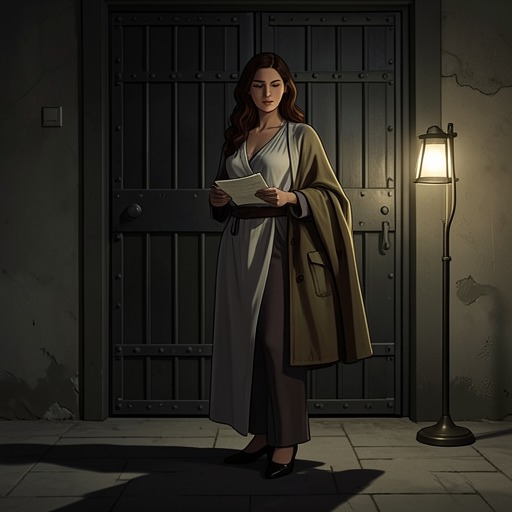
When Alvar appears beside Lucy on the curb, he gives her the original document and identifies it as the agreement. Hannah’s signature and Alvar’s signature appear at the bottom, making the family secret materially undeniable. Lucy folds the paper and puts it in her pocket, a small action that registers both possession and burden: she now carries the proof of the bargain that has governed her life without her knowledge. The document is no longer an abstract story told by her mother; it is a physical object that can be read, retained, and used to press a claim against her future.
Lucy rejects the idea that her engagement to Mike can be dismissed as irrelevant. She argues that she is already taken, but Hannah insists that she cannot be taken because she has been Alvar’s chosen bride for many years. Hannah further warns that telling Alvar he must choose someone else would be an insult to him and his people, potentially causing war between Earth and Axus. The agreement therefore turns romantic refusal into a geopolitical threat, narrowing Lucy’s apparent choices through consequences she did not create.
Enforcement Through Marriage
The contract’s political logic becomes immediate when Emily Hall is endangered. Alvar explains that some forces in Axus are hostile to humans and that his marriage to Lucy would make the killing of Earth humans a crime against Underland. Because Remora does not want war with Alvar, he argues that the wedding must occur before she discovers that the wrong bride has been taken. Marriage functions here not primarily as intimacy but as jurisdiction: once the union is sealed, Alvar can invoke his authority to order Emily’s freedom and have her brought to Underland City.
Lucy agrees to marry Alvar under this pressure while expressly refusing sex. She states that she is marrying him to save her friend, not consenting to become his lover. Alvar accepts the boundary, but says that he must spend the night with her so that the appearance of a marital union will be credible under an old law respected throughout Axus. The distinction between ceremony, public appearance, cohabitation, and sexual consent exposes the agreement’s unstable legal and bodily dimensions. Lucy can resist one demand, yet the surrounding institutions continue to dictate where she must be, what she must display, and how the marriage must be recognized.
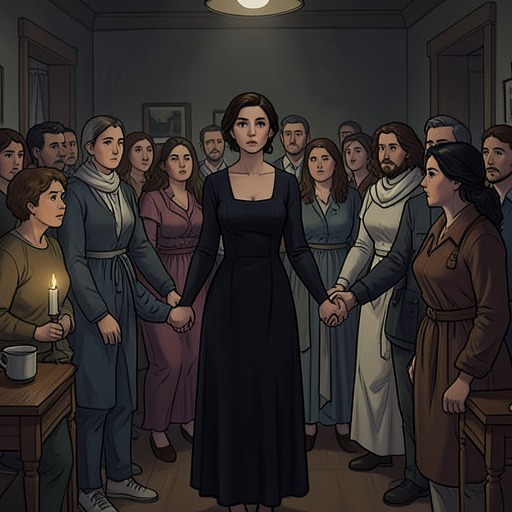
At the ceremony, the priest asks the couple to seal their union with a kiss before the gathered witnesses. Lucy meets Alvar’s soft kiss because she wants to appear legitimate and guard against spies for Remora. The public ritual therefore gives the old paper a new performative force: a document signed before Lucy’s birth is converted into a visible marriage witnessed by the political community. Her physical response complicates the scene, but it does not erase the coercive circumstances under which the ceremony takes place.
Power, Choice, and Consequences
Alvar presents the agreement as a possible basis for a mutually beneficial arrangement. He emphasizes that he is wealthy, powerful, and a just ruler who can give Lucy anything she wants, while also observing that she is attracted to him. His proposal reveals how material security and political protection are used to make the inherited contract appear desirable. Lucy resents the implication that accepting those benefits would make her opportunistic, resisting the reduction of her decision to wealth or royal privilege.
The agreement also conflicts with Lucy’s emerging understanding of her own desire. Before the wedding, she recognizes that she should defy Alvar by sleeping with Mike, yet does not want sex with Mike; she wants to remain his friend rather than become his lover. That realization makes the contract more than an external obstacle. It forces Lucy to distinguish the life she selected for safety from the relationship she actually desires, even as the circumstances surrounding Alvar make any apparent choice ethically and politically compromised.
Its consequences extend beyond the initial wedding. Lucy later refuses to treat Alvar only as an instrument of her fate or as a role imposed by the agreement. She embraces him, says that she is not ready to return to Earth, and declares that she wants to see the peaceful, restored Axus he has made. She separates Alvar from the Curse and from Saul’s violence, insisting that those forces do not have to define him. In this movement, the contract’s original political purpose is reinterpreted through personal recognition: a bargain intended to prevent war becomes the starting point for Lucy’s judgment of Alvar’s character and his rule.
The document’s dynastic implications remain active in the succession debate. Sola Brightfeather explains that Lucy and Alvar will have children and that, once their heir reaches the age of twenty-five, the council will judge whether that heir is worthy to succeed Alvar. She supports Alvar’s restoration as king, arguing that he ruled for years without using his Cursed state against his subjects and that Axus would be better served by his return. The marriage agreement thus reaches beyond the couple into reproduction, inheritance, council authority, and the continuity of Underland’s government.
Narrative Significance
As an object, the agreement makes invisible history visible. Hannah’s concealed promise, Alvar’s claim, Lucy’s endangered infancy, and the peace between worlds are condensed into a dated sheet bearing signatures. Its physical age contrasts with the immediacy of its effects: ink placed on paper in 1993 on Earth and in 2918 on Axus still governs Lucy’s present. The document’s apparent permanence is precisely what Lucy must challenge as she asserts that a promise made on her behalf cannot wholly determine her identity.
The agreement also exposes the tension between law and legitimacy across worlds. It invokes Elias, royal authority, diplomatic necessity, protection, and the customs of Axus, but it does not supply Lucy’s consent. Its enforcement depends on the threat of war, the danger to Emily, the authority of a wedding ceremony, and the expectation that marital appearance must satisfy an old law. The story repeatedly distinguishes what the contract declares from what Lucy wants, making the paper a symbol of both interworld peace and the personal cost assigned to the woman chosen to secure it.