Underground King Succession Tradition
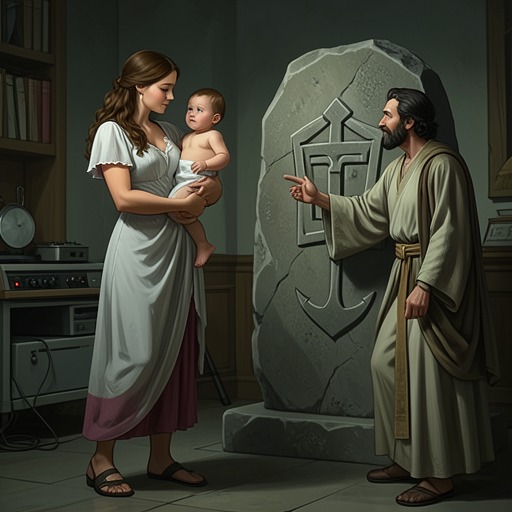
Bride of AlvarThe Underland Succession Tradition is the hereditary rule that structures the future transfer of the Underland throne. Its decisive requirement is that an heir must reach the age of twenty-five before the Underland Council judges whether that heir is worthy to succeed the reigning king and queen. In the debate over Alvar’s return, this rule transforms an abstract fear of Cursed inheritance into a formal political process: the realm may accept Alvar and Lucy while reserving the right to evaluate their successor according to established tradition.
Definition and Political Function
The tradition treats succession as both hereditary and conditional. Lord Vessin objects that, if Alvar remains king, the royal heirs could inherit his Cursed nature and become unpredictable or corrupted by their abilities. His objection is not merely personal distrust; it challenges whether the monarchy can safely reproduce itself. The succession tradition answers that concern by placing the next generation under institutional review rather than allowing descent alone to determine the crown.
The rule therefore limits the power of the royal family without abolishing lineage as the basis of government. The heir may be born into the ruling house, but adulthood does not automatically confer the throne. At twenty-five, the heir must face the council’s judgment, which makes succession a public question involving the kingdom rather than a private decision made by Alvar and Lucy.
Operation of the Rule
Sola explains the procedure during the council’s dispute over Alvar and Lucy. Once their heir reaches twenty-five, the council will decide whether that person is worthy to succeed them. The age threshold gives the realm time to distinguish inherited identity from political fitness and to judge the heir after the person has reached the traditional point of succession review.
The rule is invoked in direct response to the fear that a Cursed child might inherit the throne. Lord Vessin argues that the kingdom cannot allow its heirs to become like Alvar, whom he calls unpredictable and vulnerable to corruption. Sola counters that Alvar has ruled for years without using his Cursed state to exploit the council or the people, despite possessing the ability to do so. Her defense links the tradition to observed conduct: the council is not asked to ignore danger, but to assess whether danger has actually become tyranny.
The Heirs of Alvar and Lucy
Sola predicts that Alvar and Lucy will have two children. One will resemble Lucy, while the other will resemble Alvar and have his red eyes. This prediction makes the succession tradition immediately relevant rather than hypothetical, because the prospective royal line includes both a non-Cursed child and a child who may visibly carry Alvar’s condition.
Sola states that a non-Cursed heir will eventually take the throne after Alvar and Lucy. Her declaration directly answers Lord Vessin’s demand that the next ruler not reproduce the danger he associates with Alvar. Yet her prediction does not erase the age-of-twenty-five judgment. Even with a non-Cursed successor expected, the tradition remains the mechanism by which the heir’s worthiness will be formally determined.
Lord Vessin accepts this arrangement reluctantly. He says that, if Sola has spoken truthfully about the couple producing a child without harmful effects, Alvar and Lucy may resume the throne, while also insisting that such a child should be born soon. His response reveals the political pressure placed on the succession rule: acceptance of the current rulers is tied to confidence that the next generation will stabilize the monarchy.
Debate and Consequences
The tradition becomes central to the Underland Succession Debate after Alvar publicly acknowledges that his kingship has been a facade and exposes the threat posed by Saul’s return. The kingdom must decide whether a Cursed ruler can continue to protect Underland, and the prospect of future heirs gives that decision a dynastic dimension. Lord Calbir supports Alvar, declaring that he has always loved the king and will continue serving him if Alvar remains on the throne. Lord Vessin instead demands safeguards for the royal line.
Sola’s support is decisive because she rules the Skylands, is Lucy’s friend, and is trusted for her ability to see the future. She pledges allegiance to Lucy and Alvar as Underland’s rulers and predicts that their children will not bring the feared succession disaster. Her testimony reassures the political gathering that restoring Alvar need not mean surrendering the kingdom permanently to Cursed rule.
The debate does not eliminate anxiety. Lord Vessin still proposes forging a weapon capable of killing a Cursed, arguing that Underland must never again be defenseless. Sola replies that such a weapon may be difficult or impossible to create, but she understands the desire for protection and supports the concern. The succession tradition thus works alongside, rather than replaces, defensive measures: institutional judgment may govern inheritance, while the council still seeks a means to confront supernatural danger.
Narrative Significance
The Underland Succession Tradition converts a crisis of identity into a crisis of governance. Alvar is simultaneously king, husband, father-to-be, and Cursed figure, so the question of succession tests whether Underland can distinguish a person’s condition from that person’s capacity to rule. The age of twenty-five and the council’s judgment provide a secularizing structure around a problem that is otherwise described through blood, magic, corruption, and monstrosity.
The rule also places the royal family within a ritual sequence of continuity. Lucy and Alvar may be restored to power, but their reign is framed as a bridge to a future judgment rather than an unconditional settlement. Their children are expected to inherit the political burden of their parents’ identities, while the council retains authority to decide whether inheritance should become sovereignty. In that sense, the tradition preserves lineage while demanding accountability, making the future heir the point at which Underland’s fear of the Cursed and its need for a legitimate monarchy must finally meet.