Wedding of Lucy Hammond and Alvar
Bride of AlvarWedding of Lucy Hammond and Alvar is the decisive ceremony through which an old Earth–Axus peace agreement becomes a lived political and intimate reality. Held with almost no preparation after Alvar brings Lucy’s mother across the Bridge and learns that Emily Hall faces execution, the wedding binds Lucy to Alvar as queen while Lucy is still struggling to distinguish duty, fear, attraction, and love. Its public ritual gives legitimacy to the alliance, but its emotional force comes from the contradiction between Lucy’s restricted choices and the unmistakable desire she experiences when Alvar kisses her.
Contract and Urgent Circumstances
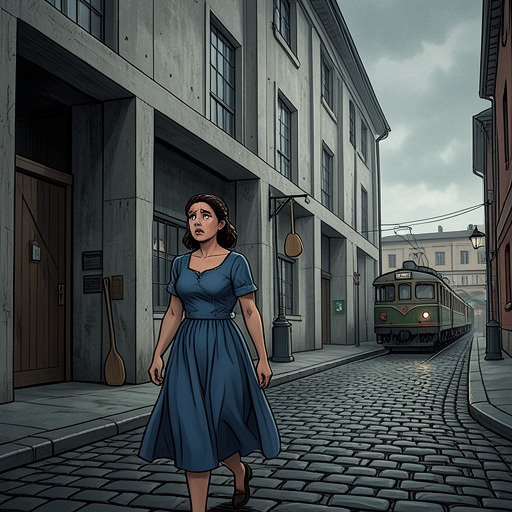
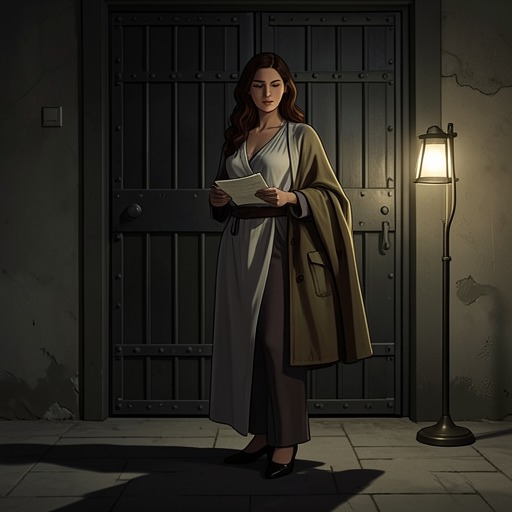
The marriage has been prepared long before Lucy understands it. A yellowed agreement, dated October 10, 1993 on Earth and the twenty-third day of Havath, 2918 on Axus, records an oath to Elias, the God of Light, between Hannah Delaney and King Alvar of Underland. It promises that Hannah’s unborn daughter will be betrothed to Alvar as his future wife and queen, securing peace between Earth and the realms of Axus. Once the daughter reaches marriageable age, Alvar is entitled to retrieve Hannah and her daughter for residence in Underland, with their material and personal needs supplied, protection from the Underland Guard, and instruction from the Institute of Underland in local customs. Hannah’s signature and Alvar’s signature make Lucy’s future appear to have been settled before she could consent to it. The immediate cause of the wedding is more coercive still. Alvar tells Lucy that he brought her mother across the Bridge because the ceremony is that night. Emily Hall’s fate supplies the pressure behind the compressed schedule: unless Lucy proceeds, her friend may be subjected to Gobli execution. The method is the Star Wheel, on which criminals are torn apart limb by limb before their heads are removed. The wedding therefore begins under a double burden. It fulfills a diplomatic contract, yet it is also presented as the price of preventing a brutal death, leaving Lucy little time to think, plan, or say farewell.
Ceremony in Underland
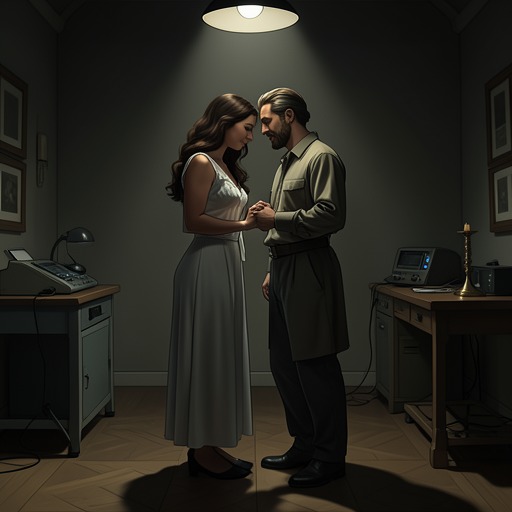
The ceremony takes place in a chapel-like space reached by stairs, where Lucy’s mother holds the train of her wedding dress as Fletch leads her forward. Hundreds of witnesses fill the room, their whispers and muttering forming a low rumble before the wedding begins. The assembly is unusually diverse: humans sit beside sylphs, a few gobli, and deer-featured, cloven-toed people resembling fauns. The gathering turns the marriage into a social and interspecies spectacle rather than a private exchange between two people. Alvar presides at the front of the chapel as the master of the room. He wears a white doublet and white slacks that glow in arlite, a visual contrast to the danger and secrecy surrounding the event. A lovely melody rises from the gathered voices while Lucy is directed down the aisle by her mother and sylph attendants. The brightness of the clothing, music, and formal setting gives the ceremony a sacred appearance, even though the circumstances beneath it include threat, political calculation, and the fear that Remora may have spies among the witnesses. A human priest stands above Alvar on a small platform, raises his arms in apparent blessing, and gives Alvar a gold goblet. Alvar drinks first, then passes the goblet to Lucy and quietly instructs her to drink the remainder. Lucy complies because there is no meaningful alternative. The exchange functions as the ceremony’s shared act, joining them before the assembled population while also emphasizing how closely ritual participation is tied to obedience. The priest then asks the couple to seal the union with a kiss in front of everyone gathered. Lucy decides to meet Alvar’s kiss so that the marriage will appear legitimate, particularly in case witnesses are secretly connected to Remora. Yet the gesture exceeds its political purpose. When Alvar leans in and kisses her softly, Lucy closes her eyes and feels an overwhelming desire to linger, experiencing his lips as both deeply pleasurable and disturbingly right. She withdraws with him only after the witnesses applaud, leaving the public performance charged with a private response she cannot comfortably deny.
Political and Social Stakes
The wedding publicly establishes Lucy as Alvar’s wife and queen and provides the visible form of the Earth–Axus alliance described in the earlier agreement. Its importance is therefore not limited to romance. The witnesses represent the populations and cultures that Alvar must govern, and their applause confirms that the union has been received as a completed public act. Immediately afterward, Alvar tells Lucy that they will eat together for the first time as man and wife and that the witnesses will follow them to the dining hall. The first shared meal extends the ceremony from sacred space into royal and communal life. The broader political world makes the wedding’s claims to order especially fragile. Goblia has been reshaped by Saul and Remora into a violent matriarchal hive system in which Remora is the sole surviving adult female, lays about ten eggs each week, and decides whether any female offspring will survive as a future princess. Most male drones die in infancy, while the old clan structure has been intensified into a system built around one ruling mother. Against that background, the wedding’s language of peace, succession, and royal continuity is shadowed by the knowledge that marriage and reproduction can be used as instruments of governance. That tension later becomes explicit when the question of succession returns. Sola Brightfeather explains that an heir will traditionally be judged by the council at the age of twenty-five to determine whether the heir is worthy to succeed Alvar. Her support for Alvar’s restoration as king also confirms that the wedding has consequences for the future structure of Underland, not merely for Lucy’s present status. The ceremony creates the dynastic relationship through which questions of legitimacy, inheritance, and political security will later be argued.
Lucy and Alvar’s Relationship
Before the wedding, Lucy’s emotional position is divided. Mike Jones, her fiancé on Earth, represents a stable escape from the troubled childhood she wants to leave behind. Their relationship is described as a comfortable friendship rather than a passionate love affair, and Lucy recognizes that she wants to remain Mike’s friend rather than become his lover. Her resistance to sex with Mike exposes the inadequacy of treating their engagement as a secure route into ordinary domestic life. The Underland marriage is forced upon her, but it also reveals that the choice she believed would give her stability was not emotionally sufficient. Alvar tries to frame the marriage as an arrangement that can become acceptable without violating Lucy. He promises that he will make her love him and will never do anything to make her feel violated. He points to his wealth, power, and reputation as a just ruler, proposing that he can provide anything she wants and asking whether she is attracted to him. Lucy resents the implication that security and luxury could purchase her affection, yet the wedding kiss confirms that attraction exists independently of his argument. The ceremony thus converts an abstract promise of protection into a physical and emotional encounter that neither of them can treat as purely contractual. Alvar’s later self-understanding further complicates the marriage. He tells Lucy that he had expected a business arrangement, not the kind of feeling that has developed between them, and says that he does not want to ruin her as he has been ruined. He describes himself as nothing but a Cursed shell of a human being, linking his reluctance to claim an ordinary future with the damage Saul inflicted on him. His fear makes the wedding’s apparent triumph unstable: Alvar wants Lucy’s happiness and freedom even while the marriage is central to the political order he is trying to preserve.
Aftermath and Narrative Significance
The wedding’s immediate result is a value reversal. Lucy enters it with fear, numbness, and the urgent need to protect Emily Hall; she leaves it publicly bound to Alvar and privately shaken by genuine desire. The ceremony does not erase coercion, and Lucy’s participation cannot be understood as uncomplicated consent, because the treaty predates her birth and Emily’s threatened execution narrows her alternatives. At the same time, the kiss prevents the event from remaining a simple transaction. A performance intended to reassure possible spies becomes the first public sign that Lucy and Alvar’s relationship may contain something neither political necessity nor material comfort can fully explain. The ceremony also initiates Lucy’s transformation from an Earth woman seeking a quiet life into a figure whose body, marriage, and future carry interworld consequences. The agreement makes her a diplomatic resource; the wedding makes her queen; the prospect of an heir places her within Underland’s succession system. Yet later developments challenge the idea that she is merely being transferred between male authorities. When Alvar publicly warns Underland that Saul is returning and admits that his own kingship has been a facade, the marriage becomes part of a larger confrontation with concealed identity and political responsibility. Lucy’s presence at the front bench, emotionally drawn to support him, indicates that she has become involved in the truth Alvar must reveal rather than remaining only its legal instrument. The contrast with Earth completes the ceremony’s emotional arc. When Lucy returns to Mike Jones, he accepts that she has found passion elsewhere and recognizes that she was never like that with him. His response releases her from the stable but emotionally limited future she had chosen. The wedding consequently marks not the end of Lucy’s uncertainty but the point at which the difference between friendship, arrangement, obligation, and passion becomes impossible to ignore. Its public ritual establishes a queen and a treaty; its private contradiction begins the relationship that will ultimately matter more than the contract that created it.