Billy Darcy
Bridget Jones: Mad About the BoyBilly Darcy, the son of Bridget Jones and Mark Darcy, is seen through moments in which childhood’s small victories and hurts unfold alongside the family’s profound bereavement. His father’s death is part of the story’s defining absence, but Billy is not reduced to that loss: his disappointment at school and his exuberant, slightly chaotic encounter with head lice give him a distinct life in the present.
Identity and Family
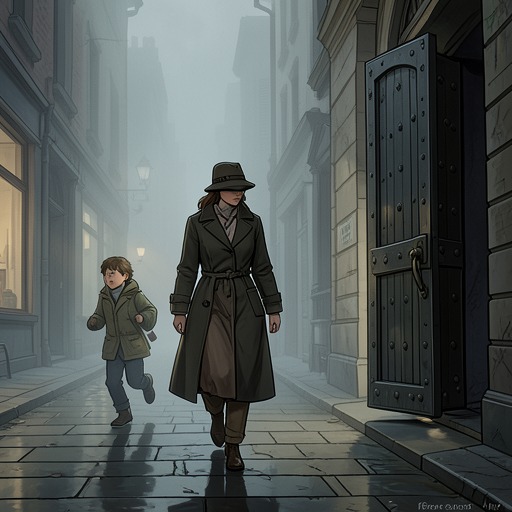
A news report following Mark Darcy’s death identifies Billy as his son, aged two, and Mabel Darcy as his daughter, then three months old. Those ages place Billy at the threshold of understanding what has happened: he is old enough to miss his father and express that loss, but still a very young child. Five years later, Bridget’s recollection of the first aftermath holds on to one particular image of him running through the house and saying that he had lost Dada. The child’s plain formulation gives the family’s bereavement its immediate, domestic scale: the loss is not an abstract public event to him, but the disappearance of his father.
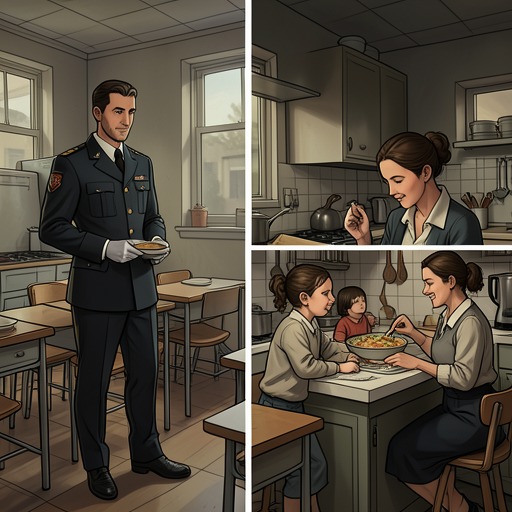
Billy grows up within Bridget’s effort to keep the household moving while carrying grief. Her memories include tending to the children and trying to hold things together after Mark’s death. Billy and Mabel are not merely reminders of what Mark has left behind; they are children whose needs continue to arrive in the middle of Bridget’s mourning. The school-day details elsewhere in the diary show that care remains practical and repetitive: pickups, meals, baths, and the particular troubles each child brings home.
Grief and the Memory of Mark
Billy’s early cry that he has lost his father recurs in Bridget’s recollection of the day she learned Mark had died. Jeremy and Magda arrive with a policeman; Bridget remembers running instinctively to the children and holding them as they ask what is wrong. The recollection does not give Billy an adult explanation of death. Instead, it preserves his own language and confusion, showing how the news enters family life through the child’s attempt to name an absence.
Bridget’s later letter to Mark makes clear what that absence means for Billy’s future as she imagines it. She worries about how he will understand how to be a man without his father, and regrets that Mark cannot share the children’s ordinary growing-up moments. This is Bridget’s fear, not a judgment about Billy’s abilities or his eventual development. The distinction matters: the novel shows the weight of what he has lost while leaving his future open, rather than claiming that his father’s absence determines who he will become.
School and the Measure of Achievement
In a school pickup scene, Billy approaches Bridget in his little blazer, with his dark hair tousled and his shirt hanging out, and tells her that he has not been selected for chess. Bridget hugs him furtively and tries to reassure him that being chosen or winning matters less than who he is. Her response offers comfort by separating his worth from a school result; it also reveals how quickly a parent can try to soften a child’s disappointment.
Mr Wallaker answers from the opposite emphasis. He insists that selection does matter, because Billy has to practise and earn it, and criticizes what he sees as entitlement among the mothers at the school. The exchange does not resolve the difference between reassurance and discipline. Instead, Billy’s hurt brings the competing adult ideas into the same moment: Bridget protects him from treating one rejection as a verdict on himself, while Mr Wallaker argues that effort and achievement have consequences. The scene gives Billy’s disappointment enough force to expose that disagreement, without making him responsible for it.
Sibling Life and the Head-Lice Episode
A later domestic episode gives Billy a more playful, physical presence. While bathing and combing the children, Bridget finds two actual insects and seven eggs in his hair, including a conspicuous group of five eggs behind one ear. The nit comb makes the discovery visible, and Billy treats the count as a triumph, waving the comb and proudly announcing that he has seven. The detail turns an unpleasant infestation into a child’s game of counting and display.
Mabel has no lice and is upset that she has nothing to find. Billy responds by putting three of his own eggs into her hair, which means Bridget has to comb Mabel all over again. Bridget describes the gesture as sweet, so the act reads as an affectionate effort to give his sister a share in his excitement, even as it creates more work. The episode captures a child’s generosity without making it solemn: Billy shares what he has, but what he shares is precisely the problem the family is trying to remove.
Narrative Role
Billy’s characterization is built from brief, concrete incidents rather than from an extended account of his private thoughts. The diary form keeps him close to Bridget’s attention: a child left visibly distressed by a chess decision, remembered in the rawest instant of bereavement, or delighted by the evidence on a nit comb. These different scenes resist a single description of him. He can be vulnerable to rejection, exuberant about a small discovery, and tender toward his sister.
Together, the episodes place childhood beside adult grief without collapsing one into the other. Bridget’s memory of Billy searching for his father shows the scale of the family’s loss; his school disappointment and mischief show that life continues in particulars that cannot be postponed until grief is finished. Billy’s significance lies in that double presence: he is both a child profoundly affected by Mark’s death and a growing person whose days still contain their own small stakes, pleasures, and acts of care.