Born-Again Virgin
Bridget Jones: Mad About the BoyBorn-Again Virgin names Bridget Jones’s sense that widowhood has cut her off from sex and from the possibility of being desired. The phrase is funny because it borrows the language of spiritual conversion for an involuntary, secular condition; its deeper force lies in how readily Bridget Jones turns grief, childcare, and dissatisfaction with her body into a verdict on her entire future. Across the diary, that verdict is challenged, briefly softened, and then revived.
Meaning and First Use
The expression enters a conversation with Jude, who tells Tom that Bridget Jones has become a Born-Again Virgin and insists that her friends must act. Bridget Jones herself describes the situation in absolute terms: she says she wants no one else, but also believes she is non-viable, asexual, and certain never to attract anyone again. Looking at her stomach beneath her black top, she takes her body as confirmation of that belief.
Her description expands from personal insecurity into a sense of exclusion. The surrounding world seems saturated with sexual images: couples on beaches and in parks, suggestive advertising, and condoms displayed in a chemist. Bridget Jones sees this as a whole sphere of pleasure to which she no longer belongs. Calling herself a Born-Again Virgin makes that absence sound like a new identity, even though it is bound up with bereavement and fear rather than a chosen rejection of sex.
She also presents abstinence as part of becoming an old woman, in a melodramatic hope that her friends will contradict her. The joke exposes the distance between what she says and what she wants to hear: the label sounds resigned, but the conversation is also a bid for reassurance that she remains desirable. It is not simply a report of sexual inactivity; it gives a name to the humiliating possibility that she has become invisible to desire.
The Competing Explanations
Bridget Jones does not explain her abstinence only through grief or body image. She argues that sex would be unfair to the children, that there is too much to do, and that men require too much attention. Those practical objections make the expression more complicated: the condition she describes as a permanent loss is also entangled with the real work of raising children and the limits on her time and energy.
Talitha refuses to treat Bridget Jones’s withdrawal as harmless. Drawing on her own history of three marriages and a succession of besotted partners, she argues that a mother’s needs matter too, and warns that prolonged sexual frustration will make Bridget Jones wither and grow bitter. Her intervention recasts sexual self-confidence not as a frivolous distraction from motherhood but as something that could affect how Bridget Jones feels about herself and her life with the children.
Talitha’s proposed remedy is pointedly cosmetic. She advocates changing the visible signposts of age: rejecting the fat associated with middle age, treating wrinkles as unnecessary, and acquiring a glossy head of hair by whatever means. Tom punctures the beauty prescription by joking about hair purchased from impoverished Indian virgins. The exchange exposes the awkwardness of treating sexual viability as something that can be recovered through products and appearance, even as Bridget Jones is surrounded by advice to remake herself.
Brief Signs of Renewal
An early-morning entry supplies the expression with a small, vivid counter-image. After the children have left and the house falls silent, Bridget Jones lies naked in a cool white bed, doing nothing. She describes the feeling as a spell breaking and imagines spring reaching withered winter branches, with leaves and blossoms opening everywhere. The language turns sexual possibility into seasonal renewal, but the moment begins not with a lover or a sexual encounter: it begins with quiet, rest, and a changed feeling in her own body.
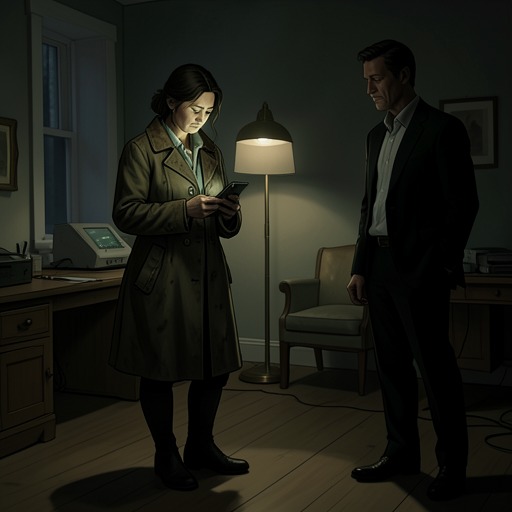
A text-message alert then sets that renewed feeling in motion. Bridget Jones wonders whether it might be Talitha or the man she has been texting, perhaps even a message asking her out, and concludes that she is sexually viable. The sender is instead the Infants Branch. The sequence makes the confidence real as an emotion but fragile as an expectation: the alert briefly seems to promise contact, then returns her to the ordinary demands of family life. It does not establish that she has resumed a sexual relationship.
Her surroundings reinforce the pressure to make desirability visible. On reading a story about Jessica Biel disappointing in a less-than-sexy pantsuit, Bridget Jones asks whether women are now judged by how far their clothes depart from sexiness. She envies the imagined ease of Red Carpet Girls, then consults Grazia and concludes that her own style is outdated: skinny jeans, ballet pumps, a buttoned-up shirt, blazer, large handbag, and sunglasses become the prescribed uniform for the school run. The comedy comes from the collision between that makeover ideal and her daily role as a mother picking up Billy and Mabel. A moment of fashion anxiety cannot resolve the larger question the expression poses.
Appearance as a Proposed Cure
The same logic leads Bridget Jones to Botox. On June 18, 2013, she records a weight of 136 pounds, including a pound of botulism, and describes going down into a basement off Harley Street with the dread of someone entering a back-street abortionist. Talitha has reassured her that Botox is like going to the dentist, but Bridget Jones remains afraid of looking strange and tries to replace an unsettling mental image of Mr Wallaker’s wife with Talitha’s.
The procedure belongs to the same effort to alter the visible signs of age that Talitha has recommended. Its comic accounting of botulism as part of Bridget Jones’s weight makes self-improvement sound both bodily and bureaucratic: even the attempt to become more desirable is entered into the diary as a measurable addition. The episode does not show that cosmetic treatment restores her sexual life. Rather, it records how readily concern about being a Born-Again Virgin can be redirected into a project of changing the face and body that she believes have made her undesirable.
Recurrence and Irony
By June 22, Tom reverses the label, joking that Bridget Jones is no longer a Born-Again Virgin but a Born-Again Nymphomaniac with a frozen face. The joke follows a period in which the friends have consumed 47 units of alcohol between them, and it exaggerates the contrast between sexual abstinence and an imagined excess. Talitha adds that Bridget Jones’s face now looks good that the drooling has stopped. Their banter makes the phrase flexible enough to accommodate a brief change in how Bridget Jones is seen, while leaving unresolved whether her underlying loneliness or sexual circumstances have changed.
The diary’s later return to the expression is more decisive. On November 22, Bridget Jones records that it has been five months since any sexual experience whatsoever and calls herself a Born-Again Virgin again. The entry inventories neglect across her appearance and routines: she has not waxed, exercised, exfoliated, manicured, meditated, refreshed her roots, or blow-dried her hair, and she says she has been eating to compensate. The recurrence makes the phrase less like a single comic label than a measure of how her self-assessment rises and falls with her sense of sexual possibility.
The expression therefore holds several pressures together without resolving them. It begins as a description of widowhood and grief, absorbs Bridget Jones’s anxieties about age and weight, and is contradicted for a time by the return of hope and attention to appearance. Its final recurrence shows that feeling sexually viable and having a sexual experience are not the same thing. The diary’s shifts in tone—from barren exclusion, to springlike awakening, to cosmetic bravado, to renewed abstinence—give the phrase its continuing irony: the identity sounds absolute, but Bridget Jones’s own account keeps changing.