Bridget Jones–Roxster relationship
Bridget Jones: Mad About the BoyThe Bridget Jones–Roxster relationship marks Bridget Jones’s return to sexual and romantic intimacy after years of widowhood, but it never settles into a simple story of recovery. Its pleasures are immediate and often comic: late-night food, shared jokes, sex, and a steady stream of messages. Its strain is equally concrete. Bridget worries about the age difference and her children’s involvement; Roxster becomes uncertain about what a committed relationship might require. Their later reconnection restores contact without resolving whether the two want the same future.
Beginning and Early Intimacy
Roxster enters Bridget’s life through social media: he has met Talitha on television and followed the trail from Talitha’s Twitter account to Bridget’s. His real name is Roxby McDuff, and he works for an environmental charity. When Bridget questions whether he simply follows older women, he rejects the predatory implication of the label and says he likes older women because they know what they are doing and have more to say for themselves. His answer briefly reverses the expected power dynamic: Bridget has approached the encounter with the suspicion that she is being hunted, while Roxster presents his attraction as deliberate and respectful.
The relationship soon becomes more than a flirtation. When Talitha jokes about Roxster’s thirtieth birthday and a party invitation that excludes children, Bridget protests that he will be thirty by then. Her own caveat—that she and Roxster may not still be together—is half practical reservation, half recognition that their new attachment has no guaranteed duration. Talitha’s teasing acceptance of the younger boyfriend makes their age difference a social spectacle even as Bridget and Roxster are still discovering what they mean to each other.
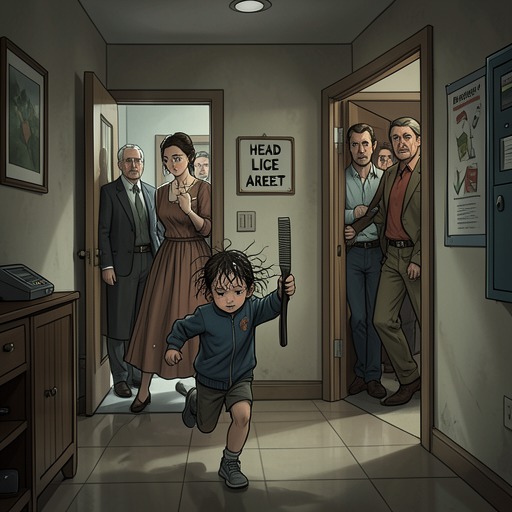
Their intimacy develops through practical arrangements as well as desire. After Bridget apologizes by text over the head-lice problem, Roxster offers to come over immediately, although he is in Camden. He arrives late with a Waitrose shepherd’s pie, baked beans, and Jamaican ginger cake. Their sexual confidence is accompanied by silliness: an overblown remark during sex makes them both collapse into laughter, and they have to begin again. For responsible sex, they agree to comb one another’s hair. Roxster treats the nits cheerfully, pretending to find and eat them while kissing the back of Bridget’s neck; Bridget, reluctant to put on reading glasses lest they emphasize her age, combs his thick hair without being able to see properly. Desire here does not erase embarrassment. It makes room for it.
A Private Adult Life and Its Boundaries
The relationship lasts beyond its first night. By 20 April, Bridget counts eleven weeks and one day since it began. She describes it as surprisingly easy emotionally, even though its practical arrangements are awkward. Roxster shares a home with three other young men, and Bridget does not want to enter that domestic setting or introduce him to Billy and Mabel too soon. Nor does she want her children to find her in bed with him. The couple therefore make use of a hook on the bedroom door and keep their meetings separate from Bridget’s family life.
That separation is not the same as emotional exclusion. Roxster has not met the children, but they become part of the couple’s ongoing conversation and texts, alongside school drop-offs, meals, and updates about Roxster’s work. They meet in pubs and small restaurants, go to films and walk on Hampstead Heath, and have sex. Bridget particularly values having an adult life that is distinct from parenting, and the relationship gives her the experience of being cared for as well as desired. Its intimacy is thus built across two registers: private physical closeness and the ordinary digital commentary of two lives being kept in touch.
The boundaries become visible during a rare breakfast together. Chloe, Bridget’s nanny, is taking the children to school, allowing Bridget and Roxster to eat at home. Bridget considers it better that Roxster still not meet Chloe or the children, so he hides in the bedroom until the school run is over. As he eats muesli, he suddenly spits out a mouthful: tiny insects are moving in the bowl and drowning in the milk. The episode extends the lice anxiety into the couple’s domestic routine, but also shows how unfamiliar Roxster remains with Bridget’s household. Even their opportunity to share breakfast is carefully timed around the children’s absence.
Age, Widowhood, and Social Judgment
The age gap is not only a private source of self-consciousness; other people repeatedly frame it for Bridget. At a gathering, Cosmo argues that she cannot wear widow’s weeds forever, while Woney describes the difficulty faced by middle-aged women who find themselves single. Cosmo then contrasts men’s supposed freedom to seek younger partners with the diminished prospects of older women. His remarks turn Bridget’s relationship into evidence in a wider, gendered argument about desirability, aging, and who is allowed to choose.
Bridget’s own reflections make that pressure explicit. She sketches a dating economy in which women in their twenties have abundant sexual attention, while men in their thirties gain an advantage as their careers develop and women face a biologically driven clock. The newspaper article she sees, The Tragic Fate of the Toy Boy, gives the same prejudice a sensational public form: it casts older women as predatory cougars and younger men as sources of sex and uncomplicated companionship. Against that script, Roxster’s stated preference and his rejection of the hunting metaphor matter. They do not abolish the social stereotype, but they complicate its assumption that an older woman must be the pursuer and a younger man merely the prize.
Bridget’s vulnerability also has a history beyond dating. Five years after Mark Darcy’s death, she recalls the shock of the news, the children’s confusion, and the effort of keeping daily life going while grieving. She describes practical care—school fees, bills, nappies, and meals—as what made survival possible when therapeutic ideas of a secure base could not make her feel secure herself. That account clarifies why a relationship that offers pleasure and care can matter without becoming a replacement for Mark or a cure for bereavement. Roxster enters a life already organized around the children and the work of continuing after loss.
Breakup and Reconnection
The relationship does break. When Roxster later explains the night he ended it, he says he had been alone eating chicken korma, poppadoms, and lager rather than meeting colleagues. He had become confused and felt crowded by the prospect of being a proper boyfriend and perhaps a father figure. In his account, Bridget seemed fine with the breakup, almost relieved, until her later rant about farting left him unsure what to do. The split exposes a mismatch in how they read one another: his anxiety about what commitment might entail meets her outward display of being untroubled.
After three weeks, six days, and fifteen hours, Roxster sends a message explaining that he had been joking in an earlier exchange, apologizing for the breakup night, and saying that he misses Bridget. He attributes his behavior to confusion and being drunk, and tells her that she is younger-looking and younger-behaved than any woman he has met. Bridget cannot immediately decide whether he is asking to resume the relationship or whether she wants to do so. The numerical precision of his delay gives the message an emotional weight that its joking tone tries to soften.
Their texting starts again. Bridget notes the warnings: Talitha thinks taking back someone who has dumped her is unwise, Tom cautions against a connection that is all messages and no follow-through, and professional advice asks what Bridget wants beyond texts and occasional sex. Roxster explains that he had felt overwhelmed by the prospect of becoming a boyfriend and possible father figure; Bridget’s initial appearance of relief had left him uncertain, and her later outburst had confused him further. Nonetheless, he is cheerful and affectionate, and they arrange to walk on Hampstead Heath. The relationship’s ending point in the evidence is therefore a renewed meeting, not a settled commitment. Its defining tension remains intact: closeness comes easily, while the shape and responsibilities of a shared future are harder for them to establish.