Bridget Jones–Scott Wallaker relationship
Bridget Jones: Mad About the BoyBridget Jones–Scott Wallaker relationship develops from an uneasy, observant connection between a widowed mother and her children’s capable schoolteacher into a partnership that brings Bridget Jones and Scott Wallaker, known as Mr Wallaker, and their children together. Its significance lies not only in the romance’s delayed fulfilment, but in the way it answers the loneliness that has marked Bridget’s life since Mark Darcy’s death: the ending is a household, a dependable adult presence, and a renewed sense of safety rather than romance alone.
Identity and Background
Bridget’s relationship with Mr Wallaker begins in the conditions of her widowhood and single parenthood. Five years after Mark’s death, she remembers the first shock of loss, the children’s confusion, and the practical work of keeping life moving. Bereavement counsellors helped the children with manageable versions of the truth, while Bridget’s own survival depended on continuing through nappies, meals, bills, and school routines. Her maxim of keeping going describes the emotional ground from which a later relationship must grow: she is caring for Billy Darcy and Mabel Darcy while still living with grief.
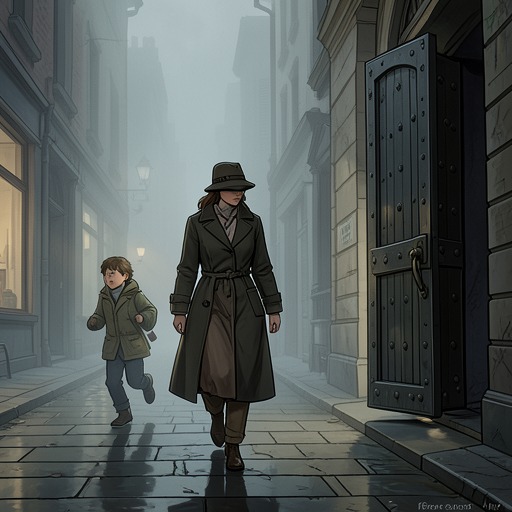
Mr Wallaker first appears as a school figure who notices when Bridget is struggling. At a school gathering, he approaches while she is managing a picnic basket and a bassoon, offers help, and asks whether anyone is there to sit with her. Later, when she objects to his repeated questions about whether she is all right, he explains that he recognizes when someone is foundering while pretending not to be. His concern is direct rather than ceremonious, and Bridget’s irritation sits alongside her awareness of his attention.
Attraction and Competing Relationships
Bridget’s romantic life initially moves in another direction. She meets Roxster through Talitha and Twitter; he says he likes older women, and the two begin a relationship that lasts eleven weeks and one day before Bridget records its duration. They build a private adult life of pubs, restaurants, films, walks on Hampstead Heath, sex, and continuous texting. Roxster has not yet met the children, but they already form part of their exchanges. This relationship is a meaningful interval, not a simple obstacle: it lets Bridget experience herself as a woman with a life beyond parenting, even as her responsibilities make the future of the couple complicated.
Mr Wallaker’s attraction becomes most visible in moments when Bridget is exposed or overwhelmed. At a school occasion, she watches other parents together and imagines the family life she might have shared with Mark; Mr Wallaker arrives to help with the things she is carrying. Their connection is not yet openly romantic, and his practical attentiveness contrasts with Bridget’s private longing for her lost marriage. When she and Roxster embrace during their final separation, Mr Wallaker witnesses them without comment and walks away. Bridget is left with confusion and regret, while his silent departure marks a change in their previously charged but restrained encounters.
Distance, Misreading, and Reconnection
After that encounter, the apparent possibility between Bridget and Mr Wallaker recedes. By September, Bridget hears that he is not married, and the news prompts other people to try to pair him with their single friends. She admits that her heart still lifts when she sees him, but he no longer teases her or appears on walks on the Heath. She concludes that the magic has gone and blames herself. His growing responsibilities at the school make him more visible and admired, while Bridget feels increasingly excluded from the attention surrounding him.
The separation is not resolved by a smooth confession. Mr Wallaker later comforts Bridget when she is crying, holding her while reassuring her that no one was hurt and that things would be all right. At the Christmas carol singing, he strides after her carrying the enormous bassoon, tells the watching stragglers that he is taking her carol singing, and invites her to the pub. There, he asks about the younger man he saw her with on the Heath. Bridget asks about Miranda; Mr Wallaker clarifies that Miranda is his brother’s stepdaughter and that she had merely encountered him while shopping. His remark that Bridget is the one attached to a very young man exposes how each has been reading the other’s situation from incomplete evidence.
Mutual Recognition and Commitment
At the carol gathering, the teasing turns into an unmistakable declaration of desire. When Bridget tries to explain away what she thinks may be mistletoe, Mr Wallaker tells her it is not a biology lesson, touches her cheek, and kisses her. The shift is decisive: the attraction that had circulated through looks, interventions, and missed opportunities becomes physical and mutual. Their intimacy continues through the night, but the relationship deepens further at dawn, when they share soup by the fire and Mr Wallaker tells Bridget what happened in Afghanistan. He describes an accident and mistaken attack that killed women and children, the aftermath he encountered, and his decision that he had done his part and was through. Bridget responds by holding and stroking his head. Care now moves both ways: he has repeatedly recognized her distress, and she offers tenderness in response to his account of trauma.
The relationship’s public culmination is their wedding ceremony in the chapel, with the school choir singing and Mr Wallaker’s sons, Matt and Fred, playing clarinet and piano. The surrounding celebration is crowded with the comic disorder of their friends and family, but Bridget’s private understanding is clear: she believes Mark would have wanted them not to remain alone and would have been glad that, if Bridget found someone, it was Mr Wallaker. Her memory of Mark remains part of the new union rather than being erased by it.
Shared Family and Narrative Significance
By the conclusion, Bridget says that she has not two children but four. Billy has older boys to play Xbox with, and Mr Wallaker’s presence settles him without extended negotiation; Mabel, who had been too young to know her father after Mark’s death, now has a father in this world who treats her like a princess. Bridget describes herself as safe, cared for, and no longer lonely. The couple live together in a large, untidy house near Hampstead Heath, where the children can walk to school and the household manages with one car. These everyday arrangements give the relationship its lasting measure: not merely passion, but shared logistics, care, and belonging.
The closing reference to weekends at Capthorpe House, where Bridget and Mr Wallaker revisit an earlier scene in the bushes with the children asleep and a better ending, turns recurrence into a quiet emblem of the relationship’s change. What once seemed uncertain and interrupted can now be remembered from within a secure partnership. The romance does not replace Bridget’s grief for Mark; it gives her and the children a life in which loss is no longer the only structure holding the family together.