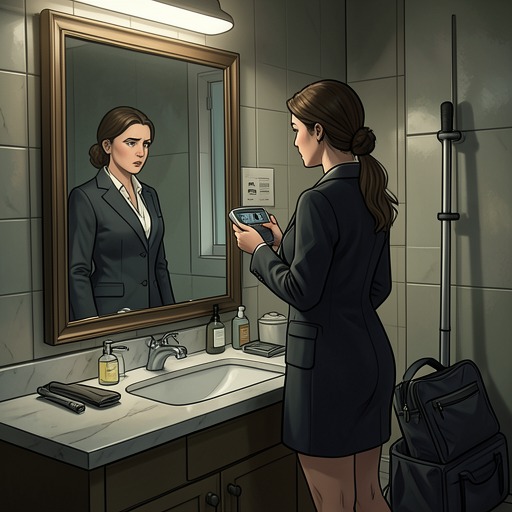
Bridget Jones’s weight and body-image struggle
Bridget Jones: Mad About the BoyBridget Jones’s weight and body-image struggle is not a single makeover with a clean ending: it begins amid widowhood and a sense of sexual exclusion, becomes a closely monitored medical project, and continues in the form of scrutiny about fashion, age, and cosmetic treatment. The diary’s weights and dress sizes mark real change, but its recurring attention to how a woman is seen makes clear that bodily transformation does not silence the pressures surrounding appearance.
Body Image and the Sense of Exclusion
In a conversation with Jude and Tom, Bridget describes herself as non-viable, asexual, and unlikely ever to be desired again. Looking at her stomach beneath a black top, she connects the body she sees to her identity as a widow and to a feared future as a little old lady. The surrounding world seems saturated with sexual images and gestures, from advertising to couples in public, while she feels shut out of that world. Her declaration that she will not fight this condition is melodramatic, but it also exposes how readily grief, age, weight, and sexual worth have become entangled in her self-image.
Talitha proposes a different response: Bridget has lost or mislaid her sexual self, and her friends should help her find it. Her beauty advice treats youth as a matter of changing visible signposts: fat, wrinkles, and hair become targets for alteration, with shiny hair presented as one means of turning back the clock. Tom’s interruption about the source of hair extensions punctures the polished prescription, bringing its costs and compromises into view. The exchange introduces a recurring tension in Bridget’s story: appearance is presented as something an individual can manage, even as the standard she is asked to meet is commercially manufactured and difficult to escape.
The Clinic and the Work of Weight Loss
The move toward medical weight loss begins in May 2012 with a back spasm. After Bridget has slammed her laptop shut while checking Twitter, an osteopath attributes the injury not to the computer but to years of lifting children, and advises her to bend from the legs. The consultation also turns to her stomach and age. The osteopath recommends working the stomach and losing fat, referring her to the obesity clinic at St Catherine’s Hospital. Bridget reacts indignantly to the clinic’s name, insisting that she has only a bit of baby fat; the recommendation nonetheless converts a diffuse dissatisfaction into a specific course of treatment.
The next day, the clinic is unsure whether Bridget is sufficiently obese to qualify. For the first time in her life, she finds herself exaggerating her weight to improve her chances of acceptance. That reversal captures the awkwardness of being assessed against a medical category that she resists but wants access to. At the clinic, the process includes blood tests, an ECG, and consultations. Staff briefly classify her as a geriatric mother, another label that makes age and motherhood part of the medical encounter.
The clinic’s approach shifts attention from a number on the scale to dress size and the proportion of fat to muscle. Bridget records the explanation that crash dieting without weight training can reduce muscle as well as weight, leaving a person lighter but proportionally fatter. She is instructed to go to the gym and replace meals with protein products, including chocolate puddings and bars, alongside a small evening portion of protein and vegetables. The diary also registers how easily the plan goes wrong: on 24 May, Bridget reports consuming 28 protein bars and 37 puddings while replacing no meals, and estimates an average of 4,798 calories a day. The nurse has to clarify that the products are meant to replace meals, not accompany them.
Measurements, Discipline, and Change
By 28 June, Bridget records a weight of 159 pounds and a loss of 16 pounds. She is surprised that this attempt is working when hundreds of earlier diets had failed or lasted only five days. She credits the weekly weigh-ins and fat-to-muscle measurements with making it harder to rationalize a different diet whenever a tempting food appears. The clinic’s repeated checks provide an external structure that her previous efforts lacked. Fitting into a dress she wore before pregnancy, even though it is tent-shaped, gives the measured change an immediate and emotionally potent form.
On 23 August, the diary records 135 pounds, 40 pounds lost, and three dress sizes down. The clinic says Bridget has reached a healthy weight and should move to maintenance; losing more would be for aesthetic reasons rather than medical need. Her return to H&M, where she fits a size 10, makes the milestone concrete. The distinction between health and aesthetics matters: the clinic marks a point at which further loss is unnecessary, while the surrounding culture continues to offer new reasons to monitor and revise appearance.
The Social Gaze and the Next Makeover
Weight loss changes how Bridget believes other people treat her. When Daniel sees her dressed up, he notices the diet, and Bridget reflects that people behave differently toward women they perceive as fat and toward women who are dressed up. Her observation widens the problem beyond private dissatisfaction: appearance affects social treatment, while access to contemporary beauty practices lets a woman look dramatically different from one half-hour to the next. The possibility of such transformation does not make the standard easier to satisfy. Bridget imagines a world in which ordinary people are short, green, and fat while advertising celebrates tall, thin, airbrushed figures, turning the gap between lived bodies and ideal images into a pointedly absurd spectacle.
That comparison reappears in the diary’s attention to fashion. In May 2013, an online story criticizing Jessica Biel’s pantsuit prompts Bridget to question how women are judged by their distance from sexiness. She complains that celebrity culture offers red-carpet women as role models, then admits that she wishes she could be one. After reading Grazia, she concludes that her own style is outdated and decides she should wear skinny jeans, ballet pumps, a buttoned-up shirt, a blazer, an enormous handbag, and sunglasses for the school run. The list turns an ordinary task into a performance of celebrity polish, showing how quickly media advice becomes a personal checklist.
Cosmetic Treatment and the Persistence of Scrutiny
In June 2013, the diary returns to bodily alteration through Botox. Talitha recommends it as something ordinary, comparing it to a dental visit, but Bridget goes down to a basement off Harley Street feeling instead as if she were heading to a back-street abortionist. She worries about looking weird and tries to replace the image of Mr Wallaker’s wife with Talitha’s reassurance. The contrast between the casual sales pitch and Bridget’s apprehension keeps cosmetic treatment from reading as an effortless solution. Her recorded weight is 136 pounds, with a joking extra pound attributed to botulism; even after the clinic’s healthy-weight milestone, her body remains subject to fresh measurement and possible correction.
Across these episodes, the numbers describe substantial change, but they do not supply a final measure of confidence. Clinic monitoring helps Bridget lose weight, while her reactions to social treatment, advertising, fashion advice, and Botox show how appearance continues to be assessed from several directions. The struggle is therefore both practical and cultural: it concerns what Bridget eats and weighs, but also the persistent demand that a woman appear desirable, current, and youthful.