Bridget Jones’s widowhood and bereavement
Bridget Jones: Mad About the BoyBridget Jones’s widowhood and bereavement are not a single passage from loss to recovery but a continuing condition woven through parenting, memory, and the possibility of new intimacy. Five years after Mark Darcy is killed in Darfur, grief still surfaces in ordinary moments; at the same time, caring for Billy and Mabel keeps Bridget moving when she feels unable to go on.
The Loss and Its Aftermath
Mark, a British human rights lawyer, is killed when the armoured vehicle in which he is travelling strikes a landmine in Darfur, Sudan. A newspaper cutting Bridget later takes from her box of photographs and clippings records that Anton Daviniere, a Swiss representative of the UN Human Rights Council, also dies in the incident. The report describes Mark’s work in victim representation and conflict resolution, his support for Amnesty International, and his intervention to secure the release of British aid workers held hostage for seven months. It also records what the sudden loss leaves behind: a widow, a two-year-old son, William, and a three-month-old daughter, Mabel.
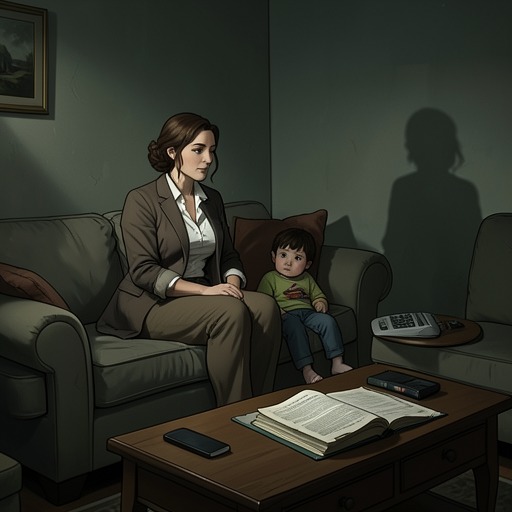
Bridget’s recollection of the first aftermath is fragmented by shock: Billy running through the house saying he has lost his father, Jeremy and Magda arriving with a policeman, and the children asking what is wrong as she holds them. Mark’s face appears on television beneath the dates 1956–2008. The memories blur into the practical work that follows, including his friends sorting the will and death duties. Bridget wakes from dreams in which Mark is still alive, then has to face the day’s care of the children before finding a private moment to cry.
Mark has arranged the family’s finances and insurance, so Bridget does not have to find work immediately. The family leaves their large house in Holland Park for a smaller home in Chalk Farm. That security eases practical pressures but does not resolve the loss: Bridget describes herself as an empty shell, living as a mother and widow while feeling that her former self has disappeared.
Grief Within the Work of Parenting
The demands of raising young children shape how Bridget grieves. Counsellors and therapists offer guidance on explaining the death to Billy and, later, Mabel, but Bridget finds the abstract language of a carefully managed grieving process less useful than the immediate challenge of changing a nappy while microwaving a fish finger. Keeping the family functioning becomes the main task. Her recurring principle, Keep Buggering On, expresses both determination and the lack of any option to stop.
The children are not simply reminders of Mark’s absence; their growth also keeps him present in the family’s story. Bridget remembers Mark and Billy spending hours on complicated puzzles, a shared pleasure that makes later milestones bittersweet. At a Christmas gathering, Mabel tells Bridget that the moon follows her, and points out an owl. The scene gives Bridget’s attention a new focus in the middle of a night spent among memories, but it does not erase the grief surrounding them.
The children’s Father’s Day cards bring that loss sharply back into the present. When Billy tells Bridget that he and Mabel have made cards, she pulls the car over, turns off the engine, and rubs her eyes before looking at them. Their simple announcement makes the absent father part of an immediate family ritual, rather than only a memory Bridget encounters alone.
Memory, Guilt, and Continuing Attachment
Bridget’s grief repeatedly returns through physical and domestic memories: Mark’s arm across her shoulder as he slept, the feel of his suit, his attention to work, and the time he spent doing puzzles with Billy. She fears that every happy event in the children’s lives will remain tinged with sadness. At the same time, she resists the idea that loving them should require her to forget him or stop missing their life together.
A night spent among old photographs and newspaper cuttings turns recollection into an attempt at direct address. Bridget writes to Mark about her loneliness and the help she wants from him, including comfort, advice, and reassurance. The letter moves between longing for their physical and emotional intimacy and the practical knowledge that he made financial provision for the family. She recognizes that he went to Sudan to help free hostages and had tried to make the mission safe, even as she wishes they could have shared the children’s lives together. Her repeated regret about what might have happened is something she tries to interrupt, not a conclusion she can simply reach once and for all.
New Intimacy and the Return of Grief
Beginning a relationship with Roxster does not make Bridget feel that Mark has ceased to matter. Before Roxster has seen her in daylight, she is struck by guilt and panic, as though moving toward a new relationship means stepping away from what had been safe. The reaction shows that bereavement is entangled with the prospect of becoming a woman in a life that continues after Mark.
By April, Bridget has been seeing Roxster for eleven weeks. Their relationship gives her a separate adult life of pubs, restaurants, films, walks on the Heath, sex, and constant messages about the details of their days. Yet her diary still tallies the minutes spent thinking about Mark, loss, death, and life without him alongside worries about Roxster, childcare, and work. After a night awake without a message from Roxster, she is overwhelmed by all of these concerns at once. The dates and figures make the strain concrete: six nits found on Billy, no screenplay preparation for a Monday meeting, and no sleep. Grief is one current in an overfull life, not a problem kept in a separate compartment.
At Christmas, memories bring earlier versions of Bridget’s life into the present: childhood services with her parents in Grafton Underwood, her father’s last Christmas before he died, the first Christmas she and Mark took Billy to church, and Billy’s first nursery Nativity play after Mark’s death. She recalls how cruel it seemed that Christmas should arrive at all that first year. When Mabel holds her hand and asks her not to cry, Bridget wipes her tears and joins in. The gesture does not signify that sorrow has ended; it shows grief and participation occupying the same moment. Across these scenes, widowhood remains an ongoing relationship to Mark, carried through the children, remembered rituals, and the life Bridget continues to make without him.