Daniel Cleaver
Bridget Jones: Mad About the BoyDaniel Cleaver occupies an uneasy place in Bridget Jones’s life: he is at once her former lover, a willing helper after Mark Darcy’s death, and a man whose appetites and unreliability repeatedly make him unsafe to depend on. His charm can turn babysitting into flirtation and a hospital visit into laughter, but the novel refuses to treat charm as proof of recovery or good judgment.
Identity and History
Bridget describes Daniel as her former Emotional Fuckwit boyfriend and Mark’s former arch-enemy. Their history is marked by years of bitter one-upmanship. The relationship between the two men changes after Billy Darcy arrives: they make peace, and Daniel becomes godfather to Bridget’s children. That reconciliation gives him a continuing family role even after his romantic connection with Bridget has ended.
His place in the family is real, but his performance of responsibility is uneven. When Bridget calls him in September 2012, he greets her with familiar sexual banter, asks what she is wearing, and asks after his godchildren. The ease of the exchange shows that flirtation remains part of their shared language; the reference to the children shows that his connection to them is not merely a pretext for pursuing Bridget.
Charm, Care, and Unreliability
Daniel does make an effort to help Bridget after Mark’s death. Yet his version of help is often careless. On one occasion he keeps the children overnight to impress a woman by boasting that he has godchildren, then drops them at school three hours late. When Bridget later collects Mabel, she finds her hair arranged in an elaborate chignon. The apparent evidence of professional styling turns out to have a much less polished explanation: Daniel brushed Mabel’s hair with a fork that had maple syrup on it, and a teacher repaired the result.
The episode condenses Daniel’s contradictory appeal. He is willing to take the children in, and the morning ends with Mabel’s hair transformed into an amusing story rather than a lasting injury. But the lateness and improvised grooming reveal how little his good intentions guarantee competent care. His armfuls of unsuitable presents—among them toy guns, semi-naked dolls, sweets, doughnuts, and a concealed DVD—make the same point in another register: generosity arrives in a conspicuously Daniel-shaped package, entertaining but poorly judged.
A later night of babysitting brings that combination of family intimacy and sexual confusion closer to Bridget. The basement is strewn with toys, pizza cartons, sweet wrappers, and an overturned tub of melted chocolate ice cream; the children are asleep and safe, but Daniel is nowhere that Bridget expects him to be. She finds him in her bed, half-naked. His suggestive response to her thigh-high boots rekindles the attraction between them, and, once he has dressed, Bridget comes close to acting on it. A phone call interrupts the moment: Daniel speaks affectionately and erotically to another woman, complains about work, and promises to return to her shortly. The call punctures the fantasy before it can become a renewed relationship. His desire is immediate, but so is the evidence that his attention is already elsewhere.
Daniel’s effect on Bridget also intersects with her anxieties about appearance. When he sees her dressed up, he remarks on how much weight she has lost; Bridget reflects on how differently people treat women according to whether they are fat or made up. The scene does not make Daniel the cause of those pressures, but his casual appraisal gives them a personal edge. His flirtation offers validation while also placing Bridget’s body under judgment, a small example of the instability in the attention he provides.
Addiction and Hospitalization
Daniel’s addictive tendencies have worsened with age. Before the crisis that brings him into hospital, people have worried about his increasingly outrageous behaviour at dinner parties, while several glamorous women have tried to fix him. He has previously been sent to a treatment facility in Arizona and returned looking fresh-faced and somewhat sheepish. To those around him, he seemed well; that apparent recovery proves fragile.
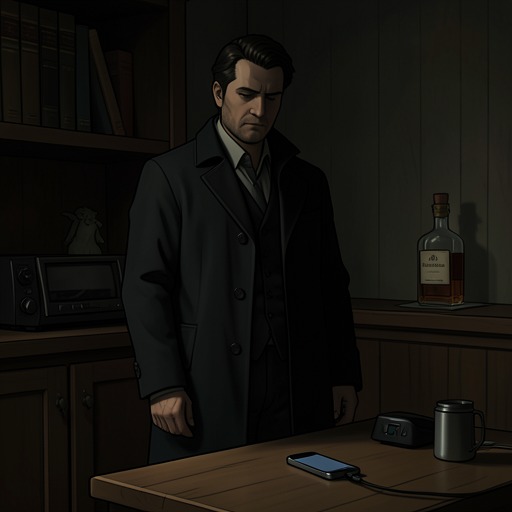
A breakup with his latest glamorous partner precipitates a binge. Over a single weekend Daniel drinks through the contents of his 1930s cocktail cabinet. His cleaning lady finds him in a terrible condition on Monday morning, and he is admitted to the drink and drugs ward at St Catherine’s Hospital. Bridget learns the news from Talitha and is immediately shaken by the thought that she recently left Billy Darcy and Mabel Darcy in Daniel’s care. The revelation recasts his earlier comic incompetence as part of a more serious pattern: the man entrusted with the children has been concealing a capacity for dangerous excess.
Bridget visits him in the locked ward. She brings newspapers and a card bearing a duck and a message about staying afloat, then adds an insult and an expression of enduring love. The mixture is characteristic of their relationship: affection does not erase the old sexual familiarity, and anger does not cancel the bond. Bridget is wary of enabling him, yet imagines that the people visiting him may simply scold him. Her visit offers something other than a reprimand, without suggesting that she can cure him.
At first, the person in the hospital bed is absent, and Bridget mistakes Daniel’s bag and coat for evidence that he may have fled. Then a dishevelled figure in hospital pyjamas appears, unshaven, wild-haired, and marked by a black eye. His familiar rueful humour returns as he explains that, during the binge, he mistook a bottle of Fairy Liquid for crème de menthe and drank it. The absurd mistake makes them both laugh, but his breathing soon turns to choking and bubbles appear at his mouth. A nurse intervenes. The scene swings from comic confession to visible medical danger without allowing the joke to make the danger disappear.
When Daniel reads Bridget’s card, he briefly looks close to tears before pushing it back onto the table. A glamorous blonde then appears. The passage leaves the emotional meaning of his reaction unresolved: he receives Bridget’s tenderness, but the narrative does not show him accepting it openly or turning it into a commitment.
Release, Relapse into Old Behaviour, and Narrative Role
After rehab, Daniel arrives at Bridget’s house carrying an overnight bag and says that he does not want to be alone. He asks to spend time in human company and promises that he will not try to sleep with Chloe. His arrival takes place during an emotionally exposed evening in which Bridget, her mother, and Chloe are sharing painful experiences around the kitchen table, while the children move in and out of the room. Daniel becomes part of the gathering with apparent ease. He is very good at the Xbox, helps Chloe see herself as glamorous and deserving of better treatment, and prompts Bridget’s mother to reconsider a man she had dismissed as excessively sexual.
That moment of sociability does not amount to reliable change. At the end of the evening, Daniel puts his hand up Chloe’s skirt to her underwear, directly violating the boundary he had promised to respect. The act sharply revises the warmth of the evening: the same charm that made him a welcome presence has also helped him occupy a vulnerable social space, and his promise proves worthless when tested. The episode does not establish that his recovery has failed in every respect, but it shows that release from rehab has not made him trustworthy in his conduct toward others.
Daniel’s character is built through these reversals rather than through a simple opposition between good and bad. He can be funny, affectionate, attentive to Bridget’s children, and genuinely capable of easing a painful room. He can also be sexually opportunistic, careless with the children, and overwhelmed by addiction. The recurring movement from comic excess to consequence—late school drop-offs, the disastrous babysitting night, the hospital crisis, and the breach of Chloe’s boundary—keeps his charm from becoming an alibi. He remains important to Bridget not because the story resolves his contradictions, but because it shows how affection and attraction can survive alongside clear evidence of harm.