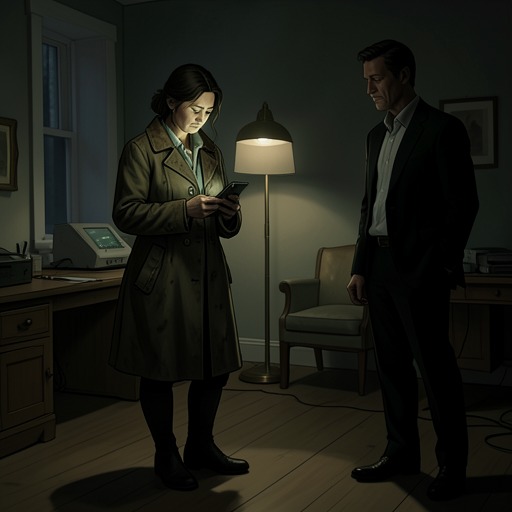
Do Not Obsess or Fantasize
Bridget Jones: Mad About the BoyDo Not Obsess or Fantasize is one of Bridget Jones’s dating rules, meant to keep romantic hope from outrunning the evidence of what is actually happening. Its repeated appearance in her thoughts gives it the force of a self-correction: attraction can send her imagining a shared future before a relationship has even taken shape, while silence after a date can turn a small uncertainty into a problem she cannot stop examining.
The rule and its companions
Bridget derives the rule from a diligent study of dating advice. She reads widely, marks up books, and searches for common principles as if comparing the teachings of the world’s great religions. The resulting list combines instructions about communication, composure, timing, and expectations. Do Not Obsess or Fantasize appears alongside the injunction to respond to what is actually going on rather than what she wishes were going on, and to retain some vestige of objectivity. It is not an isolated maxim so much as part of a system intended to prevent anticipation from masquerading as knowledge.
The rule is also explicitly repeated in a narrower form: Do Not Obsess or Fantasize When Driving. That recurrence matters because Bridget’s tendency is not confined to an abstract fear of romance. It can occupy attention in the middle of ordinary responsibilities. The dating principles advise restraint, but Bridget admits that her knowledge is theoretical, developed at a distance from the act of living by it. Their polished certainty therefore sits in comic tension with the uncertain, unplanned experience they are supposed to govern.
Andy and the imagined future
At lunch with Andy, Bridget recognizes the danger almost as soon as attraction takes hold. She notices his pale brown eyes, feels herself becoming intensely aroused, and tells herself not to get carried away or leap to conclusions. The warning does not prevent her from projecting far beyond the meal. She imagines Sunday-morning sex, breakfast with all the children, moving in together, selling both homes, and finding a house from which the children could walk to school. Her fantasy even reaches the practical detail of having one car and no longer needing to worry about parking permits.
The sequence turns the rule into a small drama of disproportion. While Bridget is mentally organizing a joint household, Andy asks whether she wants coffee. The ordinary question brings her back to the actual scale of the encounter, but it does not settle what the encounter means. Later, she reconsiders his response when she asked whether they should see each other again: because he said “Sure,” rather than refusing, she wonders whether that means yes. She then turns the absence of a suggested next meeting and the absence of a text into further grounds for anxious interpretation. The rule identifies the gap between an observable fact and a desired conclusion, but Bridget keeps trying to close that gap by thinking harder.
The imagined future is strikingly domestic as well as erotic. Bridget does not stop at attraction; she rapidly supplies the children, homes, school journey, and parking arrangement that would make a shared life possible. Those concrete details give the fantasy its comic momentum, while also showing why the instruction is difficult to follow: the thought is already building a whole structure of belonging from a lunch and an ambiguous answer.
Advice against lived experience
Bridget’s dating code is a collection of borrowed rules, not proof that she can reliably obey them. Its demand for objectivity meets the force of attraction, and its insistence on attending to present evidence meets her hunger to interpret what has not yet been said. The result is not simply that the advice fails; rather, the list makes her self-awareness visible. She can identify the point at which she is imagining too much, even as she continues to imagine.
That distinction also separates romantic fantasy from the painful memories that surface when Bridget recalls Mark Darcy’s death. Five years later, the memories of the police at the door, Billy running through the house, and Mark’s face on television remain vivid and difficult to contain. Bridget describes trying to block out thoughts of their last moments and the questions beginning with “If only,” while the demands of caring for Billy and Mabel require her to keep going. The dating rule is not presented as a solution to bereavement: these recollections are not chosen romantic projections but grief that returns amid the work of motherhood. The contrast clarifies the limited scope of the maxim. It can name a habit of speculative thinking; it cannot make every painful thought voluntary or manageable.
The limits of keeping composure
Other scenes likewise show emotional control under pressure as precarious rather than guaranteed. At the residents’ hard-hat celebration, the cry of “Hard Hats Off!” and the elderly residents’ tossed helmets coincide with Billy’s distress that he has missed the activity. His stress turns into anger directed at Bridget, and she answers with an angry threat of her own before Bridget’s Mother rebukes her. The scene offers a sharp domestic counterpoint to the neat, self-monitoring tone of the dating rules: in a crowded moment of child care and frustration, composure breaks down in both directions.
When Roxster explains that their relationship is not going anywhere, citing their age difference, her children, and his own unsettled life, Bridget immediately adopts a bright, reassuring manner and tells him that he is right and that they have both learned and grown. Her response is not itself an instance of romantic fantasizing; it shows another strategy for managing difficult feeling, turning a painful ending into an upbeat account of mutual benefit. Later, when Bridget’s Mother criticizes her, Bridget bursts into tears; her mother then cries too while urging her to pull herself together. These moments do not cancel the usefulness of Do Not Obsess or Fantasize. They place it among Bridget’s attempts to manage an emotional life that cannot always be made orderly by rules, whether the pressure comes from imagined futures, bereavement, a breakup, or the everyday strain of raising children.