Father’s Day
Bridget Jones: Mad About the BoyFather’s Day is a recurring calendar occasion made newly intimate in Bridget Jones’s family: in the 2013 diary, the children’s handmade cards turn Mark Darcy’s absence into something they can address, share, and send. Their request to post the cards brings grief into an ordinary journey home, while photographs and family conversation let Bridget help Billy Darcy and Mabel Darcy maintain a relationship with the father they cannot grow up beside.
Place in the Diary
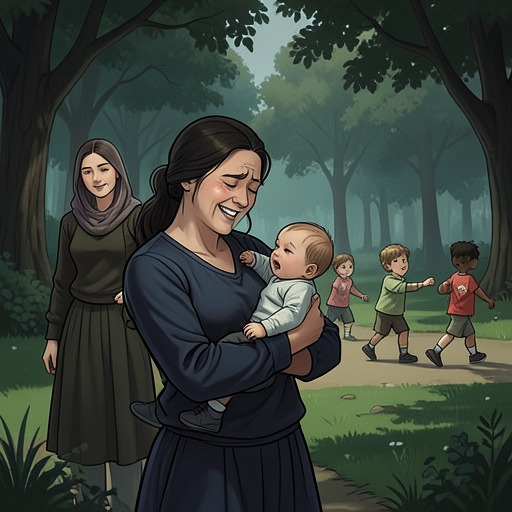
The scene belongs to the diary’s 2013 present, after the narrative has introduced extracts from the previous year as the history that led to Bridget’s current circumstances. In the account of the drive home, Billy reminds Bridget that Father’s Day is on Sunday and says that the children have made cards; Mabel adds that she has made one too. The approaching date is thus introduced through the children rather than as an abstract reflection on bereavement. Their preparations give the occasion an immediate, domestic shape.
The diary’s wider chronology makes the reminder carry accumulated weight. Mark was killed in Darfur, leaving Bridget a widow and the children without the daily presence of their father. The children’s cards do not erase that loss or resolve it. Instead, the approaching Sunday makes the absence newly visible in a family practice normally organized around a living father. The scene’s emotional turn comes when Bridget stops the car, wipes her face, and asks to see what they have made.
The Cards and the Request
The cards express the children’s ideas of family in different forms. Mabel’s picture shows a mother and father with a little girl and boy. Billy draws a boy playing a game with his father, places the image inside a heart, and writes “Daddy.” These are not interchangeable tokens: Mabel pictures the whole family unit, while Billy’s image focuses on an activity shared by father and son. Both drawings make the absent parent central to the occasion.
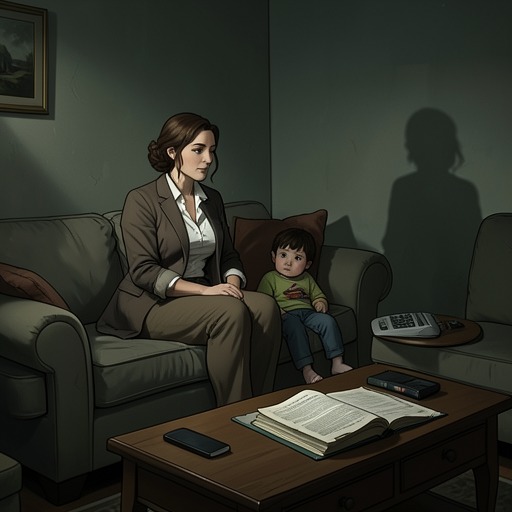
Mabel then asks, “Can we post dem to Daddy?” The request changes the cards from private pictures into messages addressed to Mark. Bridget does not dismiss the idea as childish or try to redirect the children away from their father. When they get home, she brings out photographs of them with him, and they talk about Daddy. She tells them she is sure he knows what they are doing and is still loving them. Afterward, they go out and post the cards together.
Addressing Mark Across the Loss
The photographs make memory concrete. In one, Billy wears a little suit like Mark’s and stands in the same pose, with one hand in his trouser pocket; in another, Mark holds newborn Mabel in her onesie. The images preserve both resemblance and touch: Billy’s matching pose connects father and son, while the photograph of Mark holding Mabel records a closeness she was too young to remember. Looking at them gives the family shared material for talking about someone whose absence would otherwise divide Bridget’s memories from the children’s limited experience.
Mabel addresses her card “Daddy. Heaven. Space.” The child’s practical, expansive address turns the act of mailing into a small imaginative bridge between home and the father who has died. Bridget, meanwhile, feels guilty that the address may traumatize the postman. That comic self-reproach sits beside a sincere effort to make room for the children’s way of understanding death. The card can be posted even though the story supplies no ordinary destination for it; the act matters as an expression of continuing attachment, not as a claim that loss can be reversed.
Family Ritual and Continuing Grief
Father’s Day sits within a wider pattern in which family occasions bring Mark’s absence back into the present. At Christmas, Bridget’s memories move from childhood celebrations to the first Christmas after Mark’s death, when she could scarcely believe the holiday was happening at all. The contrast clarifies what the Father’s Day scene does differently: here grief is not only Bridget’s private recollection. Billy and Mabel participate in its expression, and Bridget responds by helping them remember their father together.
The scene therefore presents remembrance as an action repeated through ordinary objects and choices: drawings, photographs, a conversation, and posted cards. Its tenderness does not depend on a sudden consolation. Mark remains dead, and the children’s wish to send him something makes that fact poignant; at the same time, Bridget’s willingness to look at the photographs and speak of his love gives the children a continuing place for him in their family life. Father’s Day becomes less a resolution of bereavement than a date on which the family finds a way to address it together.