Greenlight Productions
Bridget Jones: Mad About the BoyGreenlight Productions is the film company that takes an option on Bridget’s screenplay, giving her a professional opening while making clear that development is not the same as a film being made. In the meetings that follow, its executives praise aspects of the script but press her to make its humor more apparent. The company’s role is therefore both enabling and editorial: it offers a route into the industry, while testing how far Bridget can preserve her intended tragedy within a commercial process.
The Option and the First Opening
Before Greenlight’s interest, Bridget’s agent, Brian, had sent the screenplay to two production companies, and both had declined it. When he finally calls with news that Greenlight wants an option, Bridget is rushing to prepare food and get Mabel to school. She postpones asking what the call is about, choosing to keep the school run on time; the professional possibility arrives in the middle of the ordinary demands that repeatedly compete for her attention.
Brian explains that an option means Greenlight will pay a small amount for development, not that the company has decided to make the screenplay into a film. He also arranges an exploratory meeting for Monday at noon. The distinction matters: the option creates a chance to develop the project, but leaves its eventual production uncertain. Bridget’s first response is to wonder whether the meeting is an interview, a question that captures how unfamiliar she is with the business process she is entering.
Brian also advises her that the company will not want a difficult first-time writer and that she should find a way to go along with what it wants. This is Brian’s guidance, not a stated Greenlight rule, but it frames the coming discussions as a negotiation with unequal leverage. Bridget has secured access to the room; she has not yet secured control over what happens to her script there.
The Company and the Screenplay
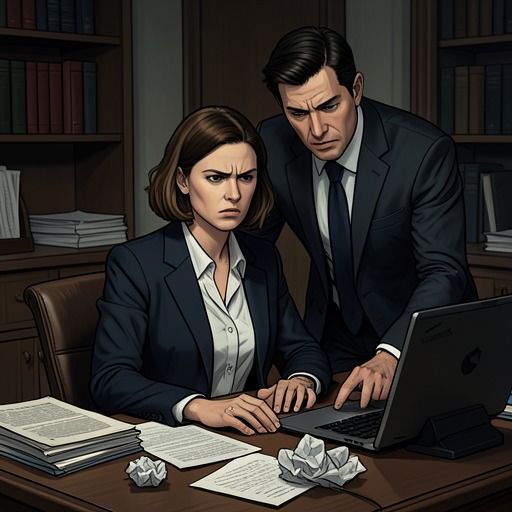
At a later meeting, Imogen introduces George as Greenlight’s head. Bridget arrives with her attention divided: her handbag emits a persistent quacking alarm, and she has to search through its contents, including squashed banana, to find the phone and silence it. Once the interruption is over, George says that the company likes the script. Imogen adds that it contains some very good material. Their response establishes genuine interest, but not agreement about the work’s identity or direction.
The disagreement becomes explicit when George says the company likes the screenplay as a comedy and asks for a version without Kate Hudson shooting herself. Bridget understands the story as a tragedy and regards Hedda Gabbler’s suicide as fundamental. The company’s preferred category and Bridget’s conception of the script pull in different directions: what its executives identify as the comic quality of the pages is, to Bridget, at odds with the tragic design she means to preserve.
The meeting also shows Bridget trying to participate while her attention keeps being pulled elsewhere. She checks messages and briefly looks for a way to support her argument, while recognizing that she has become entangled in a complicated exchange among George, Imogen, and Damian. The distractions do not settle the creative dispute, but they make the encounter feel less like a clean pitch than a test of whether Bridget can stay present and advocate for her work amid competing pressures.
Notes, Revisions, and the Unresolved Deal
After the executives return from lunch and have read more pages, Bridget records that the meeting has become somewhat more positive. The company nevertheless wants her to rewrite material she has already revised, because it considers the humor insufficiently evident on the page. The exception is the screenplay’s scuba-diving ending, which George wants to retain, comparing it to the kind of ending associated with For Your Eyes Only. The feedback is therefore specific but not a complete rejection: Greenlight identifies a comic quality it wants strengthened while singling out one conspicuously adventurous ending for preservation.
The available account ends with revision still ahead. Greenlight’s option and the exploratory meeting have brought Bridget’s screenplay into development, and the executives’ praise confirms that they see promise in it. But the company has not, in the reported events, committed to producing a film. Its significance lies in that unresolved middle ground: the opportunity is real, the editorial pressure is concrete, and the screenplay’s eventual form remains unsettled.