Head lice
Bridget Jones: Mad About the BoyHead lice are a recurring infestation in Bridget Jones’s household and social circle, becoming one of the book’s most persistent tests of how far a small domestic crisis can travel. Their arrival is announced by Billy, but the consequences spread through combing, anxious calculations, interrupted work, costly treatment, and embarrassment in intimate encounters. The diary’s precise tallies give the outbreak a bureaucratic scale; its jokes and reversals make clear that lice are never merely a private inconvenience.
Discovery and Domestic Alarm
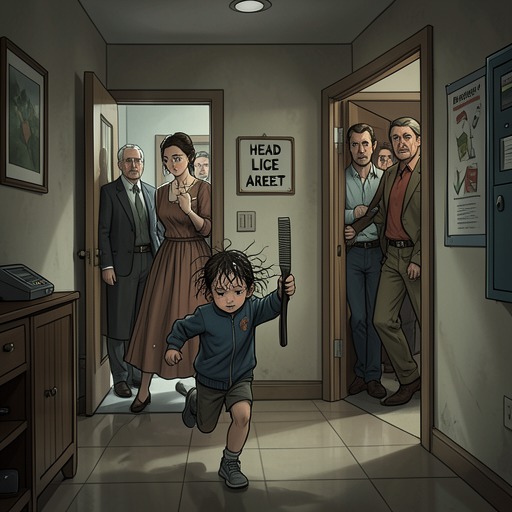
The first explicit announcement comes from Billy, who brightens while reporting that he has nits. Bridget reacts with alarm and reaches instinctively for her own hair. Mr Wallaker explains that the children have them and recommends nit-combing Billy and Bridget as well. His dry prediction that the news will cause a national emergency among north London mothers and their hairdressers anticipates the episode’s combination of practical care and social comedy.
Bridget has already noticed Billy scratching but had set the concern aside amid other demands. Once the infestation is named, her thoughts jump from Billy to Mabel, herself, and then Roxster: the possibility of transmission becomes an expanding chain of responsibility. The fear is at first more extensive than the evidence. At eight that evening, a careful combing finds two actual insects and seven eggs in Billy’s hair, including five eggs behind one ear. Bridget records satisfaction in seeing the dark specks emerge on the white comb, making inspection a small, visible task with a result that can be counted.
The children’s treatment also becomes a scene of sibling affection and comic reversal. Mabel is upset because the first check finds no lice on her. She cheers up when allowed to comb Bridget, only to discover that Bridget has none either. Billy, pleased with his seven eggs, sweetly transfers three into Mabel’s hair when she begins to cry. The gesture requires Mabel to be combed all over again: kindness produces a fresh round of the very work it was meant to soften.
Intimacy, Appearance, and Responsibility
The infestation quickly intrudes on Bridget’s plans to present herself as a professional woman. Before a Greenlight Productions meeting, she weighs whether to have her hair blow-dried despite the possibility of undetected eggs at the beginning of a seven-day cycle. She decides that a salon visit would be morally wrong and wonders whether the children should avoid playdates too. The episode turns an ordinary grooming choice into a question about exposing other people to risk, while also exposing how easily childcare concerns multiply beyond the original diagnosis.
Bridget faces the same conflict in her relationship with Roxster. She worries that honesty requires telling him about the lice, then entertains the absurd alternative that a lie might be better than lice. Her distress eventually breaks into spontaneous crying and head-scratching. Roxster offers to come over, and when she asks whether the infestation bothers him, he replies that he has searched online and claims lice are allergic to testosterone. The reassurance is a joke rather than a treatment plan, but it punctures the shame that has grown around the problem.
The couple make nit-combing part of what Bridget regards as responsible sex. Roxster combs her hair, pretends to find and eat lice, and intermittently kisses the back of her neck. When Bridget takes her turn, she avoids putting on reading glasses because she does not want to draw attention to her age; she therefore combs his thick hair without being able to see properly. The practical task becomes a measure of their ease with one another, but also an occasion for Bridget’s anxiety about aging to surface. In a later moment of charged closeness with Mr Wallaker, his touch on her hair prompts the question, “There aren’t any nits in here, are there?” The callback brings the outbreak’s homely physical reality into a scene otherwise shaped by romantic tension.
A Wider Outbreak and Interrupted Work
By Tuesday 23 April, lice have become an organizing principle for Bridget’s day. Her diary records no minutes spent writing her screenplay and 507 minutes spent dealing with other people’s nits. She lists 23 people who might have been infested, among them Tom, Jude and Jude’s recent dates, Talitha, Roxster, the children’s contacts, Chloe, and Brian. The list even includes the Greenlight Productions team and jokes about whether lice might travel down a telephone. The comic accounting registers a real consequence: the infestation has consumed time Bridget intended to spend rewriting The Leaves in His Hair.
The anxiety also travels by message. Tom asks whether Bridget’s head itches, recalling a recent head-nuzzling hug; Bridget insists that any itching must be psychosomatic and says she has no lice, even as her own head begins to itch. Tom then reports sleeping with Arkis and asks whether he should tell him. The exchange shows how the outbreak spreads through conversation as well as through feared physical contact, crossing from a scalp check into the management of new intimacy.
Mabel’s encounter with a school notice makes the social reach more painful. After a letter tells Infants Branch parents that a child in her class has head lice, Mabel bursts into tears, believing that she herself has infested the class. Bridget comforts her by explaining that the notice concerns another child and that no lice were found on Mabel. Her hug may itself risk reinfesting them, she reflects, revealing how care and caution can become difficult to separate once the household is preoccupied with transmission.
Talitha’s hair extensions create a further practical and financial consequence. A salon refuses to remove them because of the risk of bringing lice into the premises. Talitha finds a celebrity nit nurse, who removes the actual insects, but Bridget later helps take out the extensions by rubbing oil into the glue and inspecting it. They find no insects, though dark dots remain in the glue, and Talitha faces the prospect of spending hundreds of pounds to have the extensions put in again. Bridget offers to pay. The episode broadens the outbreak from a family health nuisance into a disruption of appearance, salon access, friendship, and money.
Treatment, Cost, and Recurrence
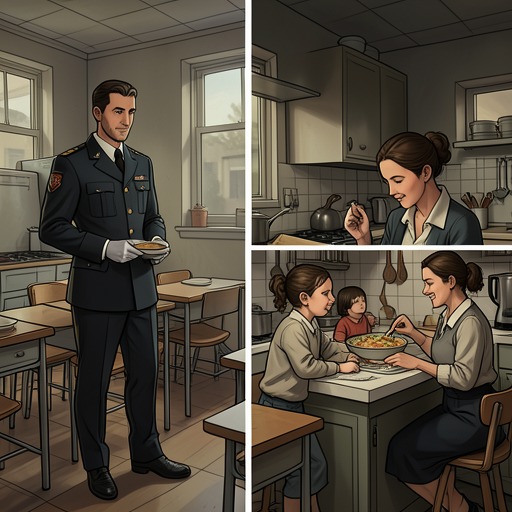
The group eventually attends the nit nurse. Billy calls the expedition extreme fun: assistants dressed entirely in white vacuum the hair, report finding nothing, and blast everyone with a very hot hairdryer. The mood changes when the bill arrives at £275. Bridget calculates that 32 lice and eggs have been extracted over the course of the treatment period, at a recorded professional cost of £8.59 per dead nit. She wonders whether the same effect could be achieved at home with a mini-vacuum and a very hot hairdryer. The contrast between the theatrical treatment and its price sustains the book’s joke that even an infestation can generate a consumer-service economy.
The year-end ledger makes the episode’s scale explicit: five people have been infested and 152 nits extracted at the stated professional rate. Yet the final household update refuses to present the problem as definitively over. Bridget, Scott Wallaker, and the children live together near Hampstead Heath, and all six currently have head lice. The closing recurrence turns the earlier campaign of counting and clearing into a temporary reprieve rather than a permanent solution.
Narrative Function
Head lice work as a recurring material counterweight to Bridget’s efforts to manage romance, motherhood, work, and self-presentation. They interrupt screenplay days, complicate a salon appointment, turn a sexual encounter into mutual combing, and make a school notice feel like an accusation to Mabel. The figures—two insects and seven eggs in Billy’s hair, 507 minutes lost to other people’s lice, £275 for treatment, and 152 extracted by year’s end—give the comic nuisance a measurable cost in attention, money, and effort.
The outbreak’s humor depends on the mismatch between its small physical scale and its huge social reach. Bridget’s imagined chain from Billy to Mabel to herself to Roxster becomes a list of 23 possible contacts; reassurance about testosterone sits beside serious combing; a cheerful outing ends with a startling bill. The final declaration that the entire household has lice preserves that tension to the end: even in a newly shared family life, domestic disorder remains stubbornly present, counted, combed, and not quite conquered.