Mark Darcy
Bridget Jones: Mad About the BoyMark Darcy’s death in Darfur is the defining absence in Bridget Jones’s life: it leaves her to raise their young children alone, but does not end his presence in the family. Remembered as a brilliant human-rights lawyer, a trusted husband and an attentive father, he survives in the practical arrangements he made, in the stories Bridget tells, and in ordinary family moments that continue to turn toward him.
Identity and Background
Mark Darcy was born in 1956 and died in 2008. Publicly, he was a prominent British human-rights lawyer and an internationally recognized authority in cross-border litigation, conflict resolution, international crisis resolution and transitional justice. He advised international bodies, governments, opposition groups and public figures, and was a leading supporter of Amnesty International. The scale of that public career contrasts with the private vulnerability Bridget recalls: she had known him since childhood, when she ran unclothed around his parents’ lawn, and later found that his sleep-talking sometimes disclosed feelings he concealed while awake.
In those memories, the formidable lawyer contains a hurt child. Bridget remembers asking whether his mother loved him and seeing him try, in his sleep, to signal that she did not. She connects this pain to his having been sent away to boarding school at seven. Yet the account does not reduce him to that wound: in the same remembered scenes, he is the man who, when asked whether he loved Bridget, smiled, nodded and drew her close. The contrast between public authority and private tenderness makes their intimacy legible without diminishing either side of his character.
Death and Public Legacy
Mark was killed in the Darfur region of Sudan when the armoured vehicle in which he was travelling struck a landmine. Anton Daviniere, a Swiss representative of the UN Human Rights Council, died in the same incident. A newspaper clipping preserved by Bridget describes Mark’s work on behalf of victims and his interventions in international crises. Among them was his successful effort to secure the release of British aid workers Ian Thompson and Steven Young, who had been held hostage by a rebel regime for seven months and were believed to face imminent execution.
The public tributes to Mark came from heads of state, aid agencies and individuals. The clipping also records the family his work left behind: Bridget, a two-year-old son, William, and a three-month-old daughter, Mabel Darcy. In the story’s personal record, the son is known as Billy Darcy. The abrupt shift from international recognition to the ages of his children gives the report two scales of loss at once: the death of a consequential public figure and the disappearance of a father from the daily lives of very young children.
Marriage and Family Life
For Bridget, Mark had been both her husband and the secure place from which she could face the wider world. She remembers trusting him completely and describes their relationship as an intimacy in which they knew one another inside out. Her image for it is a submarine: with Mark beside her, the frightening outside world could be explored from somewhere safe. After his death, that protection seems to vanish, and she experiences the world as frightening and no longer safe.
His presence is especially vivid in the small physical and domestic details Bridget misses: his arm across her shoulder as he slept, the feel of his suit against her skin, his stubble, and the look he gave her while handling an important work call. She remembers his ability to spend hours doing complicated puzzles with Billy Darcy, who shared his cleverness. These memories do not remain sealed off as a general portrait of a good husband. They return in moments with the children, making happy milestones feel marked by the person who cannot share them.
Mark had also made detailed financial arrangements, including insurance policies, and taken care of practical matters that allowed Bridget and the children to leave the large, memory-filled house in Holland Park for a smaller home in Chalk Farm. His planning meant that she did not immediately have to work and could concentrate on Billy Darcy and Mabel Darcy. It was tangible care that continued to protect them after his death, even as Bridget describes herself as devastated and empty inside. The provision was not a cure for bereavement; it was part of what enabled the family to keep going through it.
Grief and Continuing Presence
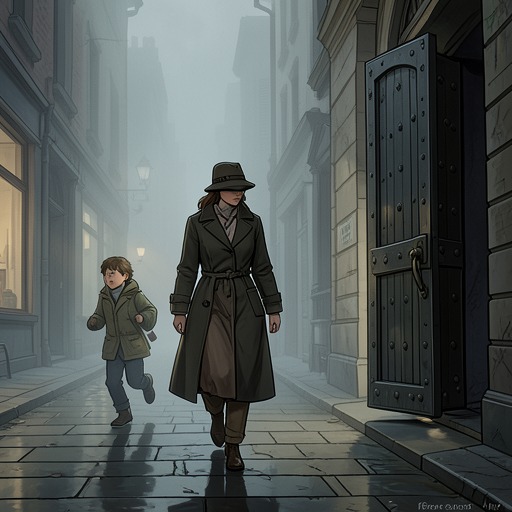
Bridget’s grief moves between painful recollection and the work of caring for her children. Five years after Mark’s death, she remembers the day she learned of it: Billy running through the house saying he had lost his father, Jeremy and Magda arriving with a police officer, and the family seeing Mark’s face on the television beneath the dates 1956–2008. The memory remains blurred, but its images retain their force. In the mornings, sleep briefly made Bridget believe life was unchanged; then pain returned, while nappies, bottles and the children’s needs required her to act. She found that keeping the household functioning could matter more immediately than expert-led attempts to organize bereavement into a process.
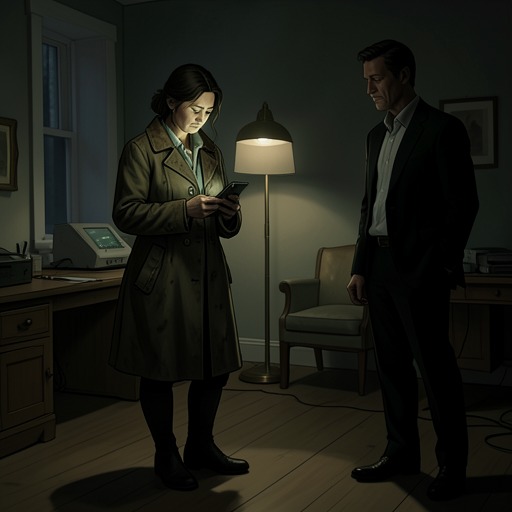
That practical rhythm does not prevent sudden returns of sorrow. After watching the children asleep, Bridget can be overtaken by an imagined alternative in which Mark is still alive. At other times she recalls the last kiss, the doorbell and the faces that announced his death. Later, she gathers cuttings and photographs and writes to him about loneliness, her fear of managing alone, and the everyday advice and comfort she still wants from him. Her letter also contains self-reproach about dating and about feeling upset by things other than his absence. The act of addressing Mark keeps him present as a particular person to whom she can still speak, not merely as a fact about the past.
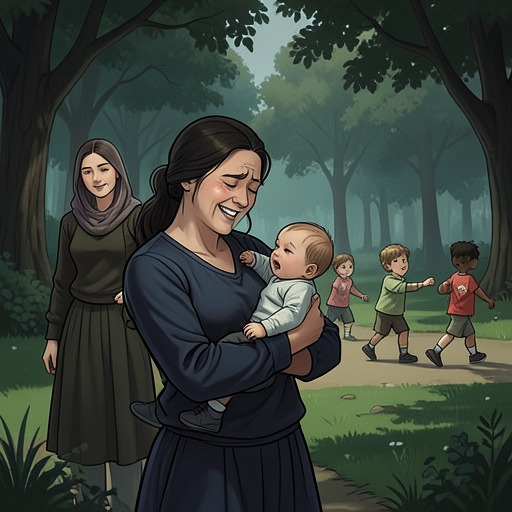
The children’s memories and rituals extend that bond. On Father’s Day, Billy Darcy and Mabel Darcy make cards and ask whether they can post them to their father. Bridget brings out photographs: Billy Darcy in a small suit matching Mark’s, standing in the same pose with one hand in his trouser pocket, and Mark holding newborn Mabel Darcy in her onesie. The children talk about their father, and Bridget reassures them that he knows what they are doing and still loves them. Mabel Darcy addresses her card to him in Heaven and Space. The scene holds grief and connection together: Mark cannot receive the cards in the ordinary sense, but the family’s act of sending them gives the children a way to include him in their present.
Memory in Bridget’s New Life
Mark’s absence complicates Bridget’s relationship with Roxster. Before she begins a new sexual relationship, she experiences guilt and panic, as if moving toward another person means stepping away from the safe world she shared with Mark. Later, while she and Roxster are caught up in an exhausting night together, she registers the difficulty of fitting intimacy into life with children. The contrast does not make the new relationship a simple replacement for the old one. Rather, Mark remains part of the emotional landscape against which Bridget tests what it means to be a woman and partner again.
During a country mini-break with Roxster, Bridget notices how the Bridal Suite recalls her wedding to Mark. Roxster carries her over the threshold in a playful imitation of a wedding, and the couple later pretend to marry in an ancient chapel, with cows as their guests. The weekend is joyful, but the setting brings the earlier marriage into the scene too. Under the full moon, Bridget remembers Mabel Darcy saying that the moon follows her, and recalls believing for years that she and Mark had a long future together. The moment lets present happiness and remembered certainty occupy the same night without suggesting that one cancels the other.
Mark also appears in the future Bridget imagines and the plans she can no longer share with him. Before Billy Darcy’s summer concert, she pictures Mark sorting through the mass of picnic emails and replying that he will bring hummus and black bin liners. The imagined practical response turns his love into a recognizable habit of competence; it also makes his absence concrete, because Bridget has to face the event without the partner she once expected to be there. At Christmas, present songs and ceremonies summon earlier years: childhood in Grafton Underwood, her father’s last Christmas, Billy Darcy’s first Christmas with Mark, and the first Christmas after Mark’s death, when the holiday itself seemed cruel for continuing to arrive.
Change and Narrative Significance
By the story’s conclusion, Bridget believes Mark would have wanted the family not to remain alone and confused, and would have been glad that, if she had to find someone, it was Scott Wallaker. This is Bridget’s understanding of Mark, not a claim that grief has ended or that the marriage has been displaced. She now has a household with Scott Wallaker and their children: Billy Darcy has older boys to play with, and Mabel Darcy has a father present in her life. Bridget describes herself as safe, cared for and no longer lonely. The family visits Capthorpe House and playfully reenacts an earlier scene in the bushes, this time with a better ending.
Mark’s narrative importance therefore lies not only in the death that begins Bridget’s bereavement, but in the continuing relationships shaped by his memory. His professional legacy is recorded in the rescue of hostages and the tributes that follow his death; his private legacy survives through the care he arranged, the habits his family remembers, and the stories and rituals that keep him in the children’s lives. Bridget’s eventual capacity to love again does not erase him. Instead, the ending makes room for a new family life while preserving Mark as a beloved husband and father whose absence remains part of its history.