Smug Marrieds
Bridget Jones: Mad About the BoySmug Marrieds names the self-assured social gaze that turns Bridget Jones’s widowhood and romantic prospects into matters for other people to assess. The expression’s force comes from a sharp distinction: sympathy can recognize her loss, while married acquaintances may treat her being alone as a problem they are entitled to solve.
Meaning and Use
The phrase appears as a pointed diary heading, “SMUG MARRIED HELL,” and as a broader description of the assumptions Bridget encounters. Its target is not marriage itself so much as the presumption that married people may judge how long a widow should remain alone, or press her toward remarriage. The label compresses that social irritation into a comic, adversarial shorthand.
Widowhood and Social Tact
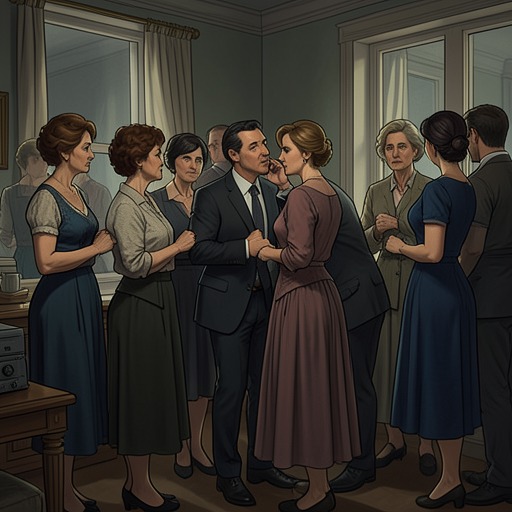
Bridget contrasts being widowed with being single in her thirties. In her account, the latter status can be treated by Smug Marrieds as the single woman’s own fault, giving them license to say whatever they like; widowhood, by contrast, usually prompts some tact. The qualification matters: the tact is customary, not guaranteed. At a gathering, Magda’s husband approaches Bridget with questions about whether she is still on her own and when she will marry again. Magda tells him to stop, but he presses on, suggesting that enough time has passed and that Bridget cannot wear widow’s weeds forever. His insistence makes the phrase concrete: sympathy gives way to a timetable imposed from outside.
Social Pressure and Support
The pressure sits against the circumstances of Bridget’s bereavement. Five years after Mark Darcy’s death, she recalls the shock of the news, the children’s confusion, and the effort of keeping daily life going while grieving. Her friends Talitha, Tom, and Jude try to draw her out by arranging their regular evenings together; Talitha bluntly insists that Bridget needs sex and scans the room for possible candidates. That intervention is direct, but it belongs to an effort by friends to get Bridget back into social life, rather than to the presumption that a widow owes anyone a remarriage. The contrast helps distinguish practical companionship from the intrusive certainty mocked by Smug Marrieds.
Comic Form and Significance
The expression works through a mismatch between Bridget’s private reality and the confident ease with which others discuss her future. The remarriage question may be delivered as ordinary social conversation, yet its repetition turns concern into pressure. Bridget’s ironic label reverses the judgment: instead of accepting that her solitary status needs explanation, it makes the married observers’ assumptions the subject of scrutiny. In that sense, Smug Marrieds is both a comic complaint and a compact account of the unequal freedom to comment on a woman’s relationship status.