The moon follows me
Bridget Jones: Mad About the BoyThe moon follows me is a recurring image that gives shape to how Bridget Jones and her children live with Mark Darcy’s absence. Mabel first makes the idea her own beneath a full moon; later, Bridget remembers the moon as part of her life with Mark, and the image returns in the final pages beside a barn owl. Its meaning lies less in explanation than in recurrence: the moon becomes a familiar presence against which loss, memory, and the children’s growing lives can be felt.
Mabel’s Moon
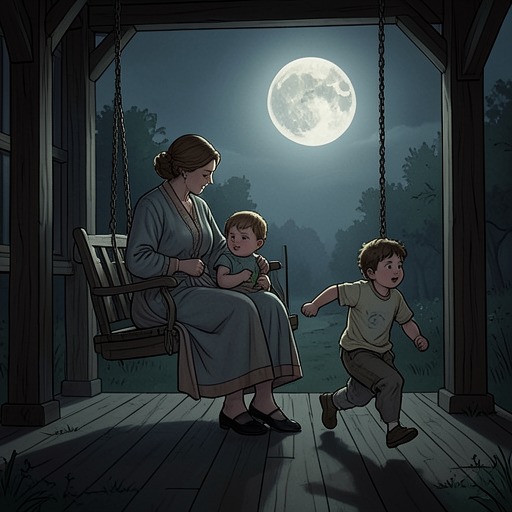
At midnight, after an evening of grief, Bridget finds Mabel standing in her pyjamas by the window. The moon is full and white above the little garden, and Mabel solemnly announces, “It followth me.” Bridget starts to explain the moon, but Mabel cuts her off to point out an owl. The exchange leaves the child’s account intact: rather than correcting her, the scene allows the moon to be both a visible object in the sky and a companion in Mabel’s understanding of the world.
That moment follows Bridget’s confrontation with Mark’s death. Sitting among photographs and cuttings, she has read a report describing the human-rights lawyer’s work and the circumstances in which he was killed in Darfur. In a letter to him, she writes of loneliness, the children growing up without their father, and her wish that they could have shared their life together. The moon appears not as an answer to this grief but as a small, immediate presence in the garden, encountered with Mabel at a moment when the past is pressing heavily on Bridget.
Memory and the Full Moon
The image returns during Bridget and Roxster’s country mini-break. After a meal, the couple go outside to walk; seeing the full moon, Bridget thinks of Mabel’s words and of the times the moon had seemed to follow her and Mark. That recollection opens onto the life she once expected: years together, without the heartbreak that actually came. Roxster notices that something has affected her, while Bridget covers the feeling with a joke about having eaten too much. The moon thus links a present moment of companionship to the marriage and shared future that bereavement took away.
A later full moon prompts another imagined scene with Mark. As Bridget holds Billy’s hand until he falls asleep before the summer concert, she wonders what it would be like to attend with her husband. In the memory, Mark would have dealt briskly with the mass picnic emails and volunteered to bring hummus and black bin liners. The practical detail makes the absence intimate: what Bridget misses is not only a grand romantic past, but Mark’s familiar participation in the everyday arrangements of family life. She urges herself to keep going, while the moon remains above the rooftops.
The Image Across Family Time
The moon’s recurrence belongs to a wider pattern of family memories. At Christmas, a carol brings Bridget back through successive seasons of her life: childhood Christmases in Grafton Underwood, her father’s last Christmas, and the first Christmas she and Mark took Billy to church. The sequence also reaches the first Christmas after Mark’s death, when the holiday seemed cruel simply for continuing. These memories place the children’s present inside a longer family history, in which joy and bereavement occupy the same calendar.
Father’s Day makes the continuing absence newly concrete. When Billy tells Bridget that he and Mabel have made cards, she pulls the car over and wipes her eyes before turning to the children. The scene does not describe the moon, but it sharpens the motif’s emotional setting: family rituals carry Mark’s absence into the present, while small shared moments keep him connected to the children’s lives.
The Owl and the Closing Return
In December, Mabel again looks out at the moon and says that it is still following them. She adds that the owl is there too. Bridget looks into the snowy garden and sees the barn owl on the wall; this time it spreads its wings and flies up into the winter night. The owl’s return completes the earlier exchange at the window, while the repeated moon phrase makes the ending echo Mabel’s first observation.
The final image does not resolve grief or turn the moon into a literal message from Mark. Instead, its steady return gathers together the book’s contrasts: a child’s uncomplicated certainty and a mother’s knowledge of loss, the remembered marriage and the life that continues, the familiar moon and the darkness around it. Mabel’s words give the image its simplest form; Bridget’s memories show how much that simplicity can hold.