Woney
Bridget Jones: Mad About the BoyWoney is Cosmo’s wife and an acquaintance in Bridget’s social circle whose changing appearance becomes a recurring, vivid measure of the book’s anxieties about age and attractiveness. After taking advice from Bridget and Talitha, she changes her hair and clothes, has Botox, and later undergoes liposuction. Her transformation is both comic spectacle and a concrete instance of the effort to alter the visible signs of age.
Identity and Introduction
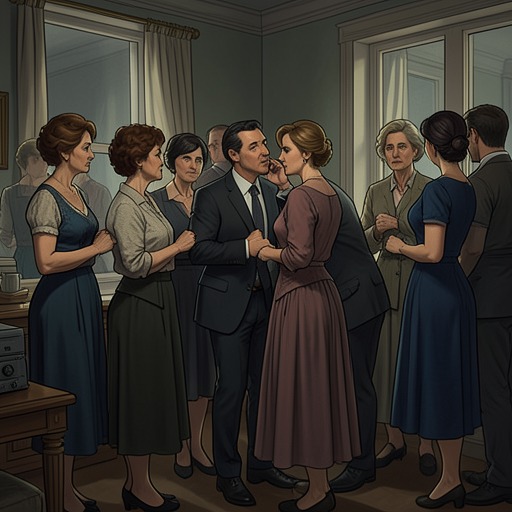
Woney enters the account through her connection to Cosmo and her place among Bridget’s acquaintances. At their earlier encounter at Talitha’s party, she still had grey hair and wore her familiar high-necked duchess dress. When Bridget sees her again outside a Harley Street clinic, the contrast is striking: her hair is six inches longer, dark brown, and apparently enhanced with extensions; she wears a fitted peach dress, high heels, and a neckline that shows her waist.
The change is not presented as an isolated whim. Talitha has argued that looking younger depends on altering the body’s visible “signposts,” from fat and wrinkles to shiny hair. Woney later traces her own decision back to something Bridget said at Magda’s drinks the previous year, and to thoughts prompted after Talitha’s party. Her makeover thus grows out of a social exchange: advice circulates among women, then becomes a set of practical interventions in appearance.
Makeover and Encounter on Harley Street
On 18 June 2013, Bridget has just received Botox when she encounters Woney across the road on Harley Street. Woney confirms that she has had Botox too, asking Bridget not to tell Cosmo, and explains that Talitha directed her to a place to have her hair done. The confession links cosmetic treatment and hair extensions as parts of a coordinated change, while the request for secrecy makes the makeover a private matter within her marriage.
Woney’s new appearance draws an immediate compliment from Bridget. She responds warmly, then asks how Bridget’s relationship with her younger man is going. Woney has recently sat beside a younger man at a charity lunch and says she enjoys flirting. Bridget does not tell her that the man has ended their relationship because Bridget is too old; instead, she praises the appeal of younger men and repeats that Woney looks fabulous. The exchange sets Woney’s buoyant confidence against Bridget’s concealed hurt, and shows how reassurance can pass between women even when one of them is disguising a painful reversal.
Woney hurries away giggling, and Bridget suspects she is slightly drunk in the middle of the afternoon. Watching her go, Bridget takes some comfort from the encounter: Woney’s Botox looks good, so perhaps Bridget’s will too. Woney’s appearance becomes an immediate point of comparison for Bridget, turning another woman’s successful-looking treatment into tentative reassurance about her own.
Later Appearance and Narrative Significance
By the summer, Woney has also had liposuction. At Paxos, where Magda and Jeremy have invited Bridget’s group for a week, she parades in brightly coloured swimsuits and matching sarongs, swinging her hair extensions. The conspicuous display extends the earlier makeover beyond the clinic and the street: the altered body and hair are now presented in the company of friends, while the sight frightens Cosmo.
Woney’s arc is brief, but its repetitions give it shape: advice at social gatherings, a changed appearance outside the clinic, and a later holiday display that adds liposuction to the list of interventions. Through her, the book renders beauty culture as both social and material. Ideas about youth and desirability become hair appointments, Botox and surgery; their consequences are visible in Woney’s altered look, Bridget’s comparisons, and Cosmo’s alarm. The comedy does not erase the pressure behind the transformation, but lets that pressure appear through specific details rather than abstract argument.