“Once in Royal David’s City”
Bridget Jones: Mad About the Boy“Once in Royal David’s City” is the carol at the centre of a Christmas church service that brings Bridget Jones’s earlier Christmases into the present and turns remembered grief into a moment of recognition. Its Nativity imagery touches her losses and her life as a mother; as she joins the congregation in singing, Mr Wallaker looks directly at her, and his silent, understanding response leads Bridget to know that she loves him.
Performance in the church
The carol begins after the congregation has settled, the vicar has given the blessing and the choir and musicians have filed into the pews. Bridget and the children have found seats near the front. Mr Wallaker appears in a blue shirt and dark jacket, looking cheerful and masterful. Billy Darcy, proud to be in the choir, keeps glancing over at his family. He has strictly told them not to wave, but Mabel Darcy waves, and Bridget cannot help joining her. Mr Wallaker notices Billy; Billy rolls his eyes and giggles.
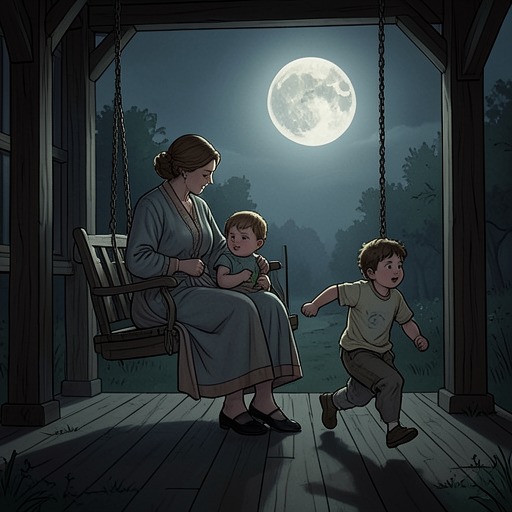
When the first carol starts, everyone stands. A boy known as Spartacus sings the solo, and the purity of his voice carries the opening words through the church: “Once in royal David’s city, / Stood a lowly cattle shed, / Where a mother laid her baby / And His cradle was a stall.” The song is not presented as a performance Bridget evaluates from a distance. Its words about a mother and a child open directly onto her own memories, and the service becomes the setting in which those memories surface.
Christmases recalled
The carol gathers together Christmases from different stages of Bridget’s life. She remembers being little, standing between Bridget’s Mother and Bridget’s Father in the village church at Grafton Underwood on Christmas Eve and waiting for Santa Claus. In her teenage years, she and her father tried to suppress their laughter while Bridget’s Mother and Una sang their sopranos too loudly. The recollection is affectionate and comic, placing family ritual beside the more solemn service unfolding now.
Another memory is more painful: in her thirties, single and sad, Bridget feared that she would never have a baby of her own to lay in a manger—or, as her wry correction puts it, in a Bugaboo stroller. The carol’s image of a mother with her baby thus meets a past anxiety that motherhood might never be part of her life. The present service, with Billy Darcy singing in the choir and Mabel Darcy beside her, quietly contrasts with that earlier fear.
The memories also include the previous winter, when Bridget was tweeting Roxster, who she imagines may now be dancing to garage house music with Natalie, Miranda or Saffron. The uncertain sequence of names gives this recollection a different, unsettled tone from the family scenes around it. She recalls, too, Bridget’s Father’s last Christmas, when he staggered out of hospital to attend Midnight Mass at Grafton Underwood, and the first Christmas she and Mark Darcy went to church with Billy Darcy in a little Santa Claus outfit. The carol makes no clean division between happy and painful holidays: each belongs to the same accumulating history.
Grief inside the song
The memory of Billy Darcy’s first Nativity play at nursery school carries the sharpest loss. It was the first Christmas after Mark Darcy’s death, and Bridget remembers being unable to believe that Christmas could be so cruel as to happen at all. The contrast between the annual recurrence of the holiday and the irreversibility of Mark’s death gives the scene its force. A familiar carol can return, but the person missing from the family’s Christmas cannot.
Bridget begins to cry. Mabel Darcy grips her hand and pleads, “Don’t cry, Mummy, pleathe don’t cry.” Billy Darcy looks over, and Bridget wipes her tears with her fist and raises her head to sing. The next words offer a language capacious enough to hold both grief and happiness: “And He feeleth for our sadness, / And He shareth in our gladness.” The carol does not erase the memories or resolve Bridget’s bereavement. Instead, its movement from sadness to gladness lets her remain in the service, connected to the children around her and to the past she is remembering.
Recognition and narrative significance
As the congregation continues singing, Bridget sees Mr Wallaker looking straight at her. He has stopped singing and simply looks back at her, while she stands with mascara on her face and hot chocolate on her coat. His slight, kind smile is described as one that understands. The detail matters: he does not interrupt the service or offer an explanation; the exchange is conveyed through his attention and Bridget’s response to it. Around them, the boys he has taught continue the familiar carol, while the moment between the two adults remains quiet.
Bridget’s recognition follows the carol’s passage through her memories rather than arriving as a separate declaration or conversation. The song has connected childhood ritual, family humour, the longing for a child, Christmas with Mark Darcy, and the grief that followed his death. By the time its words turn toward shared sadness and gladness, Bridget is visibly affected, and Mr Wallaker has witnessed that emotion without turning away. She looks back at his smile and knows that she loves him. In this scene, the carol’s narrative importance lies not only in its Nativity subject but in its role as a recurring seasonal form: it makes several different Christmases present at once, allowing an old loss and a new attachment to occupy the same moment.