Bridget Jones’s bereavement
Bridget Jones: Mad About the BoyBridget Jones’s bereavement is the continuing grief for Mark Darcy that runs beneath her life as a mother, worker, and later partner. Mark’s death in Darfur is not confined to a past event: it returns in sudden waves, attached to the children’s ordinary happiness, the objects and records that preserve his story, and the family rituals he cannot share. The diary presents grief as something Bridget must live alongside rather than complete, repeatedly interrupted by the work of keeping her children and household going.
The death and its aftermath
Mark Darcy was killed in 2008 when the armoured vehicle carrying him in the Darfur region of Sudan struck a landmine. An obituary clipping records that he was an internationally recognized human-rights lawyer, a specialist in cross-border litigation and conflict resolution, and a supporter of Amnesty International. It also reports his role in securing the release of two British aid workers held hostage for seven months. The same notice reduces an immense loss to stark particulars: a widow, Bridget, a two-year-old son, William, and a daughter, Mabel, only three months old. Encountering this account years later makes the public record of Mark’s work collide with Bridget’s intimate knowledge of the husband and father who will not return.
Five years after the death, Bridget recalls the first shock through fragments: Billy running through the house saying he had lost his father; Jeremy and Magda arriving with a policeman; and Mark’s face appearing on television beneath the dates 1956–2008. She remembers instinctively gathering the children to her and trying to answer their fear while unable to comprehend what had happened herself. The memories do not resolve into a smooth account. They come as a blur of faces, news, family, friends, and the practical arrangements that followed.
Survival through care and routine
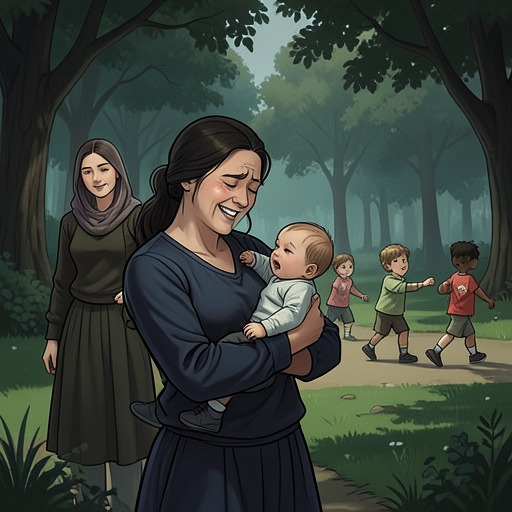
In the first years, Bridget’s days were organized around getting through the next demand. She remembers waking at five in the morning and, for a brief moment, believing life was unchanged before the pain returned so forcefully that she felt unable to move. Soon the children would wake, and she had to manage nappies and bottles, hold things together until help arrived, and then find a private moment to cry before putting on mascara and carrying on. The alternation between collapse and routine is central to her account: grief is not absent from daily life, but daily life will not wait for it to pass.
The bereavement counselors and therapists who helped Billy and later Mabel emphasized honesty, talking, and age-appropriate versions of the truth. Bridget, however, remembers the question facing her as more basic: whether she could survive. Her practical answer was to keep the household afloat. Mark had arranged finances and insurance, and the family moved from the memory-filled house in Holland Park to a smaller home in Chalk Farm. School fees, bills, and the children’s home were provided for; Bridget nevertheless describes herself as an empty shell, living as a mother and widow and taking one step at a time. Her phrase Keep Buggering On names the effort, not a cure.
Memory inside family life
The children’s milestones bring Mark close and make his absence newly painful. Bridget remembers Billy and Mark absorbed together in complicated puzzles, and the intimate gestures by which Mark made her feel protected. At Christmas, Billy and Mabel give her a Nespresso machine as a surprise, with Chloe’s help; Mabel’s nightly furtive whispers about the present turn a happy secret into another memory Bridget cannot share with Mark. Bridget fears that every sweet thing the children do will be tinged with sadness, and that she cannot endure another Christmas like the last.
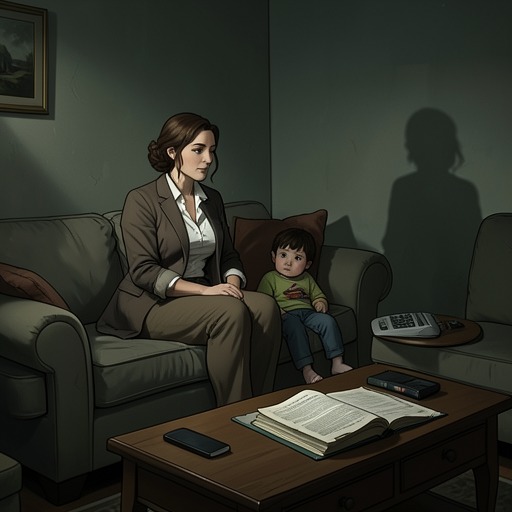
On one especially difficult night, she opens a box of cuttings and photographs and finds the report of Mark’s death. She writes him a letter asking for comfort, advice, and the closeness they had promised each other. The letter moves between longing for their physical and emotional intimacy and an effort to affirm what remains: Billy and Mabel, the home Mark secured, and her knowledge that he had taken precautions before going to Sudan. She tells herself not to dwell on what might have happened otherwise, yet the wish that they could have raised the children together keeps returning. Writing makes the loss speakable for a moment, but it also exposes how much of the shared future has vanished.
That night, Mabel gets out of bed and points to the full moon, telling Bridget that it follows her; she also notices an owl. The child’s confident attention to the sky briefly interrupts Bridget’s downward spiral. The scene does not undo the grief, but it places mother and daughter together in the present, looking at something beyond the room and the memories. The children are both reminders of Mark and living companions in a family life continuing without him.
Grief’s returns and changes
The diary’s entries show how remembrance recurs even while Bridget attends to other parts of life. On 20 April 2013, she records a sleepless night and the minutes spent thinking about Mark, loss, death, life without him, and the effort to become a woman again. The stark tally gives grief the shape of time consumed: it sits beside anxieties about dating, parenting, and work rather than replacing them. Her return to dating does not erase the older attachment; the new relationship and the bereavement occupy the same crowded life.
In July, after accepting that things with Roxster are over, Bridget sits alone with a cup of tea and acknowledges that she cannot keep every demand in the air. She gives up, for the moment, on the impossible pressure to manage work, online dating, schedules, children’s activities, and the performance of having everything under control. Her decision to let the days flow by is a change in how she meets the present, not a declaration that she has stopped missing Mark.
Christmas brings the past back in a different, wider sequence. While the children take part in the school carol concert, Bridget remembers Christmases from childhood in Grafton Underwood, her father’s final Christmas before his death, the first Christmas she and Mark took Billy to church, and the first Nativity play after Mark’s death. The recollections connect successive family losses and stages of life without making them equivalent. When Mabel grips her hand and asks her not to cry, Bridget wipes her tears and joins in. Mark’s absence remains part of the occasion, but so does the child beside her and the act of participating. The book therefore presents bereavement as recurring and enduring, held within the practical and affectionate continuities of family life.