Daniel Cleaver’s substance addiction
Bridget Jones: Mad About the BoyDaniel Cleaver’s substance addiction moves from a troubling reputation among his friends to a medical crisis that nearly costs him his life. A breakup precipitates a weekend of extreme drinking, but the account also makes clear that this collapse follows years of addictive tendencies and failed efforts by others to manage them. Bridget Jones’s visit to him in hospital reveals the strain between affection and fear of enabling him; his later arrival at her home, newly released from rehabilitation and unable to bear being alone, leaves recovery open rather than settled.
A Longstanding Pattern and a Sudden Collapse
Daniel’s addiction is not presented as a new development. His addictive tendencies have been apparent for years and have grown worse as he has aged. At one stage, concern about him circulated among his friends as his behaviour at dinner parties became increasingly outrageous. Several glamorous women tried to fix him, and he was eventually sent to a treatment facility in Arizona. He returned looking fresh-faced and somewhat sheepish, and his friends understood him to be fine. That apparent improvement proves an uncertain measure of recovery: the narrative gives no account of what treatment involved, and the assumption that he was well lasts only until the next crisis.
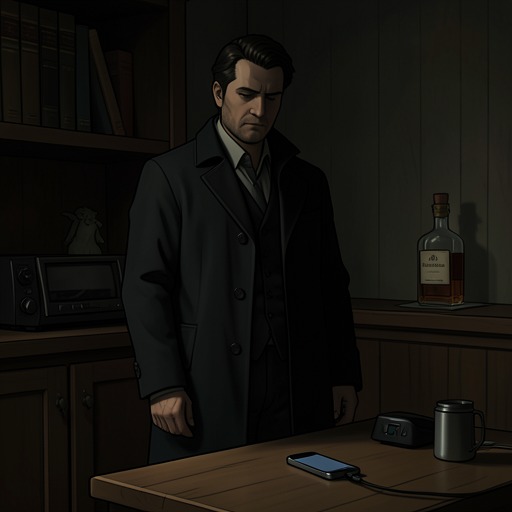
The immediate trigger for that crisis is the breakup with his latest glamorous partner. Daniel responds with a dazzling spree, drinking through the entire contents of his 1930s cocktail cabinet in a single weekend. The setting and scale make the episode concrete: this is not described as an isolated excess at a party, but as a sustained binge at home, ending with his cleaning lady finding him in a terrible state on Monday morning. He is admitted to the drugs and drink ward at St Catherine’s Hospital, the same hospital where Bridget had attended the Obesity Clinic. The parallel in location links their separate medical vulnerabilities without suggesting that their conditions are alike.
Hospitalization and the Near-Fatal Joke
Bridget learns about Daniel’s collapse from Talitha and is immediately alarmed by the fact that she had allowed Billy Darcy and Mabel Darcy to stay overnight with him. Leaving Greenlight Productions to deal with its own problems, she goes to the hospital. Its unsettling mixture of Victorian prison, 1960s doctor’s surgery and the Yemen disorients her as she searches for the right block. She buys Daniel newspapers and a card decorated with a duck and a message of encouragement, then adds an affectionate insult and a declaration of enduring love. The gesture holds together the intimacy of their friendship and her awareness that comfort might be mistaken for approval.
Daniel is on a locked ward. After Bridget presses the green button, a staff member lets her in. When she asks what happened, he explains that during the binge he drank what he believed was a bottle of crème de menthe, only to discover that it was Fairy Liquid. The familiar rueful humour returns for a moment, and both of them shake with laughter. Then Daniel begins choking and wheezing, bubbles appearing at his mouth as the detergent foams inside him. A nurse rushes over and treats him. The comic turn does not cancel the danger; it makes the danger suddenly visible, as a private drinking spree becomes an acute medical emergency in front of Bridget.
Affection, Shame and the Question of Enabling
After the nurse has dealt with the choking, Daniel opens Bridget’s card. For a moment he looks close to tears, then pushes it back onto the table as a glamorous blonde arrives. She rebukes him and treats the affectionate card as evidence of the problem, arguing that friends who respond with fondness enable him. The scene gives that accusation force: Bridget’s message is tender, but Daniel’s collapse is serious, and the people around him disagree over whether care helps or shields him from consequences.
Bridget does not answer that disagreement with a settled theory. Her earlier fear about leaving the children with Daniel and her decision to visit him coexist with the impulse to reassure him. The card itself makes the conflict tangible: its cheerful duck and buoyant printed message sit beside Bridget’s handwritten affection, while the blonde reads that same affection as indulgence. The narrative does not establish that either tenderness or reprimand can cure Daniel. Instead, it shows how his addiction places the meaning of friendship under pressure, forcing those close to him to wonder whether support is comfort, permission, or both.
Release and an Unfinished Return
Later, Daniel turns up at Bridget’s home carrying an overnight bag after being released from rehabilitation. He says he does not want to be alone and asks to spend time among people, adding that he does not intend to try to sleep with Chloe. His request marks a change in the immediate situation: instead of arriving as the charming, sexually presumptuous figure familiar from his past, he openly asks for company and names a boundary he says he will respect. Bridget agrees, but makes that agreement conditional on his promise not to pursue Chloe.
The evening becomes an unconventional gathering in which Daniel, Bridget, Bridget’s mother and Chloe share the household’s emotional upheaval. Daniel helps lift Chloe’s view of herself, while Bridget’s mother grows more receptive to Kenneth Garside. This is a return to company, not evidence that Daniel’s addiction has ended. The account supplies no further details about his treatment or the durability of his recovery. At the end of the summer, Bridget’s diary records many friends and no boyfriends, but says nothing that would confirm Daniel’s condition. His arc therefore rests on a careful distinction: he survives the binge, receives treatment and seeks human contact after release, while the possibility of relapse and the question of how to help him remain unresolved.