Keep Buggering On (KBO)
Bridget Jones: Mad About the BoyKeep Buggering On (KBO) is Bridget Jones’s terse rule for living through bereavement and the daily work of raising children without Mark Darcy. Its force lies in the gap between its brisk, almost comic phrasing and the pain it has to carry: it is not a claim that grief has ended, but an instruction to get through what comes next.
Meaning and First Use
Bridget explicitly expands KBO as Keep Buggering On while recalling the first years after Mark’s death. At first, survival meant getting through each day. Billy was old enough to run through the house saying that he had lost his father, while Mabel was still too little to understand. Bridget remembers the policeman at the door, the news showing Mark’s face beneath the dates 1956–2008, and the shock of holding both children close as they asked what was wrong.
The phrase emerges from the demands that followed those scenes. Bridget recalls waking at five in the morning with a brief, sleep-made impression that everything was unchanged, then being struck again by the loss. Within half an hour the children would be awake, and she would need to manage nappies and bottles, keep things together until help arrived, and find a private moment to cry before putting on mascara and carrying on. KBO condenses that sequence into a daily imperative: grief does not suspend care.
Persistence as Practical Care
Bridget distinguishes the children’s support from her own experience. Bereavement counsellors and therapists helped the children through honesty, conversation, and manageable versions of the truth; Bridget, as the person expected to provide their secure base, had to keep functioning herself. In the sessions, the blunt question was whether she could survive. She felt there was no choice.
The contrast is between formal attention to grieving and the immediate logistics of family life. Bridget found it more useful to work out how to change a nappy while microwaving a fish finger than to follow a carefully orchestrated grieving process. Keeping the household afloat, even if not upright, seemed to her to account for most of the struggle. Mark had arranged financial matters, insurance, school fees, and other practical necessities; the family moved from the house in Holland Park, full of memories, to a smaller home in Chalk Farm. That security eased material pressures but did not repair Bridget’s sense of herself: she describes being a mother and widow who kept putting one foot in front of the other while feeling emptied out inside.
Memory Returns Inside Family Life
The motto does not stop grief from recurring. On a later night, Bridget tries to make herself stop thinking about how Mark slept with his arm across her shoulder, the look in his brown eyes, or his hours spent doing complicated puzzles with Billy. Even the children’s milestones become double-edged: Mabel’s first nativity play, Billy’s first grown-up carol concert, and a Christmas Nespresso machine bought for Bridget by the children with Chloe’s help all summon the person who is absent from them. Bridget fears she cannot go on having every sweet moment with the children tinged with sadness.
After speaking with Tom, Bridget opens a box of newspaper cuttings and photographs and writes to Mark. The cutting reports that he was killed in Darfur when the armoured vehicle he was travelling in struck a landmine; it also describes his human-rights work and his role in securing the release of two British aid workers who had been held hostage for seven months. The account makes the public scale of his work part of the private loss. In her letter, Bridget says she misses his comfort and counsel, cannot bear that he will not see the children grow up, and worries about Billy growing up without his father. She also acknowledges that Mark had made sure the family would be all right financially. KBO sits beside, rather than erases, this continuing bond: practical survival and longing occupy the same letter.
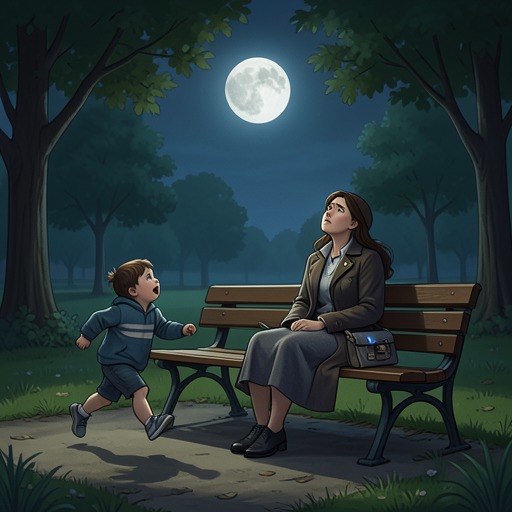
The night turns back toward the living when Mabel gets out of bed and stands by the window. She points out the full moon and an owl, describing the moon as following her. Bridget kneels beside her. After the cuttings, photographs, and letter have drawn her into memories of Mark, the child’s attention to what is outside makes the present immediate again. The scene offers no resolution of bereavement; it shows care resuming within it.
Recurrence and Limits
KBO is therefore a discipline, not a cure or a straight route away from grief. The diary’s later accounts keep placing loss within ordinary obligations: the children tell Bridget they have made cards as Father’s Day approaches, and Christmas brings back memories ranging from her childhood in Grafton Underwood to the first Christmas she spent with Mark and Billy and the Christmas after Mark’s death. These returns show how family occasions can reactivate the past even as the family continues through the calendar.
The limits of relentless forward motion become visible when Bridget’s relationship with Roxster ends. Sitting alone with tea, she recognizes that she cannot keep every demand in the air: the screenplay rewrites, online dating, children’s schedules and parties, and the effort to be a mother, do a job, and have a boyfriend. She lets herself accept that the relationship is over and that, for the moment, life may simply consist of herself and the children as the days pass. This quieter acceptance does not cancel KBO. It clarifies its scale: persistence may mean meeting the next task, but it does not require pretending to have unlimited capacity or to be finished grieving.