Mabel Darcy
Bridget Jones: Mad About the BoyMabel Darcy is the young daughter of Bridget Jones and Mark Darcy, and Billy Darcy’s sister. The novel presents her through the practical rush and intimate pauses of Bridget’s diary: as the last child waiting at school, a solemn observer of the moon, and a participant in the small negotiations of family life. Her brief appearances carry particular weight because they show both her own curious, affectionate presence and the care required to raise her after Mark’s death.
Identity and Introduction
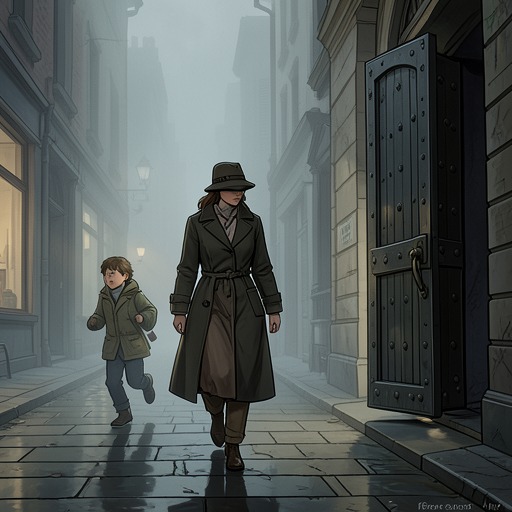
Mabel appears as a young child in the Infants Branch, where one afternoon she is left on the steps after the other children have gone. Bridget Jones reaches the school late because the roads have been gridlocked. In the confusion, drivers have moved their cars aside believing an emergency vehicle needs to get through; the apparent emergency proves to be a woman in a black Porsche taking advantage of the cleared road. By the time Bridget arrives, Mabel is waiting with only one other child, whose mother is about to take him home.
The scene makes Mabel’s composure striking without suggesting that she is unaware of the delay. She looks at Bridget with huge, solemn eyes, then kindly calls her “Old Pal.” The affectionate greeting reverses the expected direction of comfort: Bridget is the late, flustered parent, while Mabel offers warmth. Her mother’s explanation that the road was blocked does not erase the awkwardness of the pickup, but Mabel’s manner turns the reunion into a moment of closeness rather than reproach.
Family Life and Loss
Mabel’s childhood is set against the loss of Mark, who died in 2008. Five years later, Bridget recalls the first days of bereavement: Billy running through the house saying he had lost his father, friends and family arriving, and the children asking what was wrong as Bridget held them. In that recollection, Mabel was still too little to understand what had happened. The passage does not give Mabel a separate account of her grief; instead, her early life is framed through Bridget’s effort to keep the children safe while enduring her own pain.
A later midnight encounter offers a quieter image of their bond. Mabel has climbed down from the bunk bed and stands silhouetted against the window in her pyjamas. When Bridget kneels beside her, Mabel says that the moon follows her. The full moon is white above the little garden, and Bridget begins to explain it. The scene rests on the gap between a child’s confident interpretation and an adult’s impulse to correct it. Mabel’s observation is not presented as a problem to solve so much as an intimate disclosure made to her mother in the dark.
Temperament and Everyday Encounters
Mabel’s candour can also be exuberant and socially inconvenient. At the school pickup, she suddenly announces that her mother is fifty-one, despite saying she is thirty-five. Bridget tries to quiet her, laughs under the other parent’s stare, and redirects her to go and fetch Billy. The incident gives Mabel no elaborate motive; its comedy comes from the bluntness of a child saying aloud what her mother would prefer to keep private. It also places their affection inside an ordinary public embarrassment, among school gates, waiting parents, and the mechanics of getting everyone into the car.
At home, Mabel’s responses to her brother show a different, more vulnerable side. After Bridget finds two insects and seven eggs in Billy’s hair, she combs both children. Mabel is upset that she has none. She cheers when Bridget lets her check her mother’s hair and finds no eggs there either. Billy, crowing over his count, sweetly puts three of his eggs into Mabel’s hair; when Mabel cries, the family has to comb her again. The episode moves from a child’s disappointment to Billy’s attempt to include her, then back to the practical work of treatment. Mabel is not merely the object of her brother’s joke: her distress changes what the household has to do next.
The Household’s Demands
Bridget’s diary repeatedly places Mabel within a busy pattern of care. On a morning when Bridget believes that parenting books have made looking after two children straightforward, the family cuddles in bed, eats breakfast, plays hide-and-seek, and draws pictures from Plants versus Zombies. The ease proves temporary: Billy asks Bridget to play football, and the diary’s breezy confidence meets the next demand for attention. Mabel’s presence in the shared morning is part of the pleasure, but the episode also shows how quickly a mother’s plans are shaped by what the children need.
By June, even a single weekend requires a dense arrangement of adults, transport, and overlapping activities. Mabel has a Build-A-Bear party on Sunday at the same time as Billy’s football. Bridget’s list also includes Billy’s African drumming party, pickups, work calls, household jobs, and deciding whether a planned mini-break with Roxster will happen. Chloe’s message sets out how Grazina and the other parents can cover the children; Bridget reacts to the plan by recognizing how complicated child-rearing has become. Mabel’s party is one item in the timetable, but its overlap with Billy’s match helps expose the coordination behind what might otherwise look like a simple weekend outing.
The pressures continue into the end-of-year school season. Bridget notes the accumulation of plays, trips, themed days, teacher-gift emails, and arrangements around Billy’s summer concert at Capthorpe House, where he is to play a solo on his bassoon. Amid these obligations, she remembers that she has not made dentist appointments for Mabel and Billy and worries that their teeth may already be badly damaged. Mabel is not shown at the concert or at the dentist; what the diary establishes is Bridget’s constant accounting for both children’s needs, alongside work, social commitments, and her own attempts to manage the day.
Narrative Significance
Mabel’s characterization is built from small actions rather than a continuous account of her inner life. She waits, greets her mother kindly, exposes a private fact without hesitation, becomes upset at being left out of the nit-combing, and shares a nighttime thought about the moon. These moments make her distinct without turning her into a miniature adult: she can be perceptive and tender, but her concerns remain immediate and child-sized.
Her appearances also give the diary a measure of Bridget’s changing circumstances. The school pickup shows the vulnerability of relying on a parent who is juggling work and childcare; the memories of Mark’s death place Mabel’s early childhood within a family loss she was initially too young to understand; the weekend plans and dental worries show the continuing labor of raising two children. Mabel’s importance lies not in a separate plot of her own, but in the particular presence she brings to that family life: her affection and curiosity make its daily complications visible, while Bridget’s care gives those complications their emotional context.