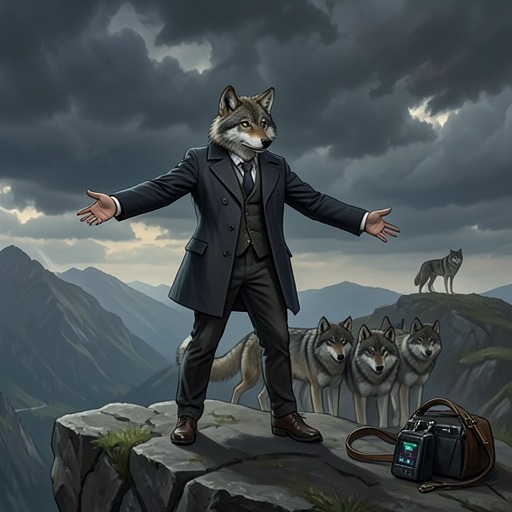
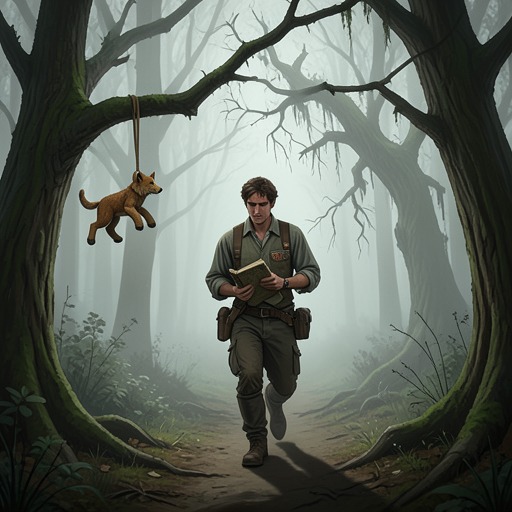
Alan becomes the Blue Blood Pack Alpha
Broken Rejected MateAlan becomes the Blue Blood Pack Alpha at the point when private grief, family history, and pack politics converge. The succession is not simply a promotion: it requires Alan Lowell to decide whether he will abandon the pack’s damaged legacy or remain within it long enough to reshape it. His acceptance binds his future to Sierra Langford’s, turning their mate relationship into a shared political responsibility as well as a personal one.
Background and Eligibility
Alan’s claim rests on both bloodline and character. The pack’s elders explain that, in ordinary circumstances, three Alpha contenders would fight to the death to prove who was strongest. Alan’s position is different because the succession crisis leaves the pack without a leader and because his family already carries Alpha blood. The same inheritance that makes him eligible also burdens him with the memory of what happened to the Lowells who held power before him.
The political meaning of Alan’s bloodline is inseparable from the history of Dysomnias. Sierra recounts that her mother was recognized as a Dysomnia from birth, was protected temporarily because her father was Alpha, and was eventually killed after giving birth to Sierra. That history establishes Alpha authority as something capable of both shielding an endangered family member and enforcing the violence of the pack against her. Alan’s rise therefore occurs in a world where lineage can grant legitimacy, but cannot by itself guarantee justice.
The Succession Crisis
After the previous Alpha’s fall, Alan and Sierra return to the pack grounds and are summoned to an elders’ meeting concerning the vacant leadership. The oldest-looking member of the pack addresses more than a hundred gathered werewolves and warns that a pack cannot survive indefinitely without an Alpha. Without a leader, the Blue Blood Pack would be vulnerable to attacks and other dangers, making the succession an immediate matter of collective security rather than ceremonial inheritance.
The elders have already approached Alana Lowell, the mate of the last Alpha, about governing until her son returns. Alana declines, and she makes clear that Anthony Lowell has no desire to become the next Alpha. Her refusal removes the most obvious alternative and leaves Alan as the only remaining wolf with Alpha blood among the available candidates. The choice thus emerges from a combination of exclusion and necessity: the pack does not merely select Alan from an open field; it turns to him after other routes to continuity have closed.
The elder presents Alan as unusually young for the office but fully eligible. The qualities named in his public commendation are strength, courage, mercy, and fairness. The pack has watched him grow up through trials that shaped him, and the elder also identifies Sierra as a powerful mate who would help form a formidable Alpha pair. Alan’s leadership is consequently described as relational from the beginning. His authority is not imagined as his alone, but as something strengthened by the partnership beside him.
Alan’s Decision
When asked whether he accepts the position, Alan is overwhelmed rather than triumphant. He admits that he expected the pack to reject any other Lowell after the earlier disaster associated with his family. His hesitation shows that succession is also an act of emotional inheritance: accepting the title means stepping into a name that has become politically suspect while trying to prove that the name need not dictate the future.
Sierra helps him reach the decision. Outside the meeting, Alan confesses that he does not know what to do, while Sierra recognizes that his willingness to consider the office already reveals his desire. She tells him simply to say yes. The choice is placed against their earlier plan to leave for Rome, Italy, together. Sierra argues that remaining can allow Alan to fulfill his dream and keep the promise he made to his father, rather than treating escape as the only possible form of freedom.
Alan then asks whether Sierra wants to become his Alpha female. She acknowledges that the role will require a major adjustment, but tells him that his happiness matters to her and that she can see he wants the position. Her support does not erase the cost of staying; it converts the decision into a shared undertaking. Alan’s acceptance is therefore made possible not by a sudden certainty, but by Sierra’s recognition that leadership is part of the future he has been moving toward.
The New Alpha Pair
By nightfall, Alan and Sierra are officially the Alphas of the Blue Blood Pack. Sierra never expected to belong to a pack, much less lead one, and the transition is presented as a startling reversal of the life they had planned. Their elevation joins intimate partnership, inherited legitimacy, and public duty: the mate bond becomes visible as a governing alliance.
The new position also places Alan’s private relationships inside the wider structure of pack loyalty. Earlier, when the pack came for Sierra, Alan promised to fight to the death if they wanted her. The promise shows the protective force of his mate bond, but Alpha leadership demands that protection be extended beyond one person to the whole community. His duty to Sierra and his duty to the pack are not identical, yet the narrative repeatedly makes them overlap: protecting the pack also protects his mate, while protecting Sierra tests whether the pack deserves his allegiance.
That tension becomes particularly significant because Sierra is a Dysomnia whom some wolves regard as dangerous. The pack’s leader had argued that killing Dysomnias was wasteful and that Alan could calm Sierra when she entered a wolf state, suggesting that her survival could be managed through their bond. Sierra nevertheless wants to join guard duty and participate actively in protecting the pack, while Alan initially refuses because he sees protecting his mate as his primary duty. Her resistance complicates the expected Alpha-pair model: she is not merely a protected consort, but someone who insists on choosing how her power will serve the community.
Leadership, Violence, and Moral Responsibility
Alan’s accession follows a period of extreme violence. Sierra’s father is killed by a huntress while standing in front of her, and Sierra responds by allowing her wolf to control her human body, seizing the attacker’s sword, and killing her. Later, grief drives Sierra’s wolf into a prowling, uncontrolled state during a shift. These events make leadership inseparable from the question of how power should be restrained. The Alpha must govern a population that includes frightened allies, hostile hunters, inherited prejudice, and members capable of turning on one another.
Sierra is explicitly reminded that a Dysomnia’s extraordinary powers carry extraordinary responsibility. She is told that Dysomnias were not made to be killers, that the battle did not begin with her, and that her mate does not need her to end it. Her proper role, according to that counsel, is to assist quietly from behind the scenes while the werewolves fight their own wars. The advice reinforces an important contrast in Alan’s new position: he must be willing to fight when necessary, but the legitimacy of his rule cannot rest on killing alone. Mercy, one of the qualities praised by the elder, becomes as important as strength.
Alan’s own response to loss exposes the danger of confusing Alpha authority with vengeance. After Andrew Lowell dies, Alan is consumed by rage and attacks Ronald Lowell’s side, fighting several werewolves and tearing flesh from Lukas before continuing toward another opponent. Sierra is warned not to intervene directly, because her power should be used responsibly rather than as an uncontrolled weapon in a war she did not start. Alan’s accession therefore does not conclude the conflict; it places him at the center of its moral aftermath, where he must learn to lead after violence without allowing grief to become his only command.
Future and Significance
Alan’s elevation gives the Blue Blood Pack a leader at the exact moment when its political order is vulnerable. The elders frame his presence as necessary for survival, while Sierra frames it as an opportunity to honor his father and realize a long-held dream. Together, those perspectives turn the succession into both a practical repair and a symbolic break with the past.
The future implied by the new Alpha pair extends beyond governance to bloodline and family. Alan and Sierra later decide to try to have a child, despite their earlier fear of raising a Dysomnian child born with Alpha blood. The example of Tony and Caroline raising their twins helps them believe that they can do the same. Their pregnancy plans make the succession more than a transfer of office: they connect Alpha inheritance, Dysomnia heredity, mate commitment, and the possibility of a family that does not reproduce the old persecution.
Alan’s final significance lies in the contradiction he is asked to hold together. He is a Lowell inheriting a name associated with distrust, a protector whose anger can become destructive, and a young leader chosen because the pack needs stability before he feels ready to provide it. Sierra’s support allows him to remain rather than flee, while the pack’s recognition gives public form to qualities he has developed through hardship. His ascension does not promise that the Blue Blood Pack’s conflicts are over. It establishes instead the difficult task that follows: making strength, fairness, mercy, and shared responsibility more than words attached to a new title.