Alan kills the vengeful hunter
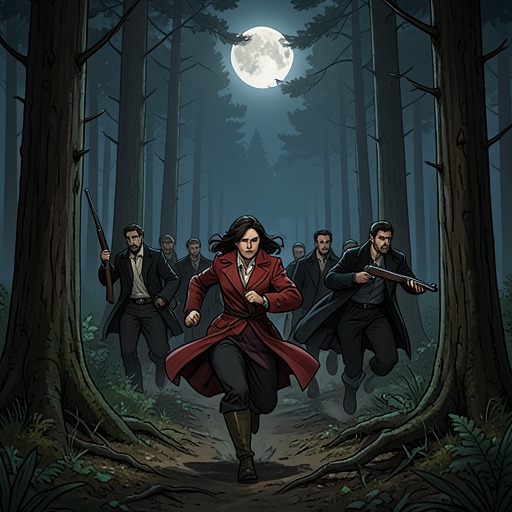
Broken Rejected MateAlan Lowell kills the vengeful hunter who attacks Sierra after Alan has already defeated and spared him. The action is not a simple execution at first sight: it develops from a deliberate act of mercy into a violent reversal when the hunter returns, targets Alan’s mate, and injects her with a substance that causes agonizing pain. Alan’s decision exposes both the strength and the danger of his leadership, because the lesson that mercy makes a good leader is immediately tested by the consequences of letting an enemy leave alive.
Defeat and the First Act of Mercy
Alan’s confrontation with the hunter begins with physical dominance. When the hunter swings his sword again, Alan catches the blade with his paw, growling directly into his face, and uses all his strength to pull the weapon from the hunter’s hand. The sudden loss of the sword changes the balance of the encounter. The hunter had apparently not regarded Alan as a serious threat, but Alan’s alpha blood and demonstrated strength make that underestimation impossible to maintain.
With the hunter defenseless, Alan raises his claws to the hunter’s throat and silently demands submission. The gesture establishes that Alan has won before he delivers a killing blow: the hunter glares, but resistance is futile because he knows he has lost. Alan then begins shifting back into human form and orders him to leave. The command is both a practical dismissal and an assertion of authority, ending the immediate fight without turning defeat into slaughter.
Alan explicitly chooses not to kill because he believes that leadership requires restraint. He recalls his father’s lesson that a good leader knows when to show mercy, and he extends that principle to an enemy whose sister has died. Alan warns the hunter not to bother Sierra or Alan again and urges him not to let anger over his sister’s death consume him. In this moment, mercy is presented as a form of justice rather than weakness: Alan has the power to kill, has already proven it, and nevertheless allows the defeated man to live.
The Return of Vengeance and the Attack on Sierra
The hunter initially treats Alan’s mercy as evidence of foolishness, questioning whether Alan is stupid or merely gullible for allowing him to leave. That reaction reveals the central miscalculation behind the reprieve: the hunter does not interpret restraint as authority. Although he departs, the conflict has not ended. When the hunter’s white car suddenly appears again, Alan is with Sierra, and the vehicle is heading directly toward them. Alan grabs Sierra by the shoulder and pulls her out of the car’s path, recognizing the renewed danger before the impact can reach her. The hunter emerges with red, furious eyes and announces that he has changed his mind because his sister would want him to avenge her. His return transforms the earlier confrontation from a completed defeat into an unfinished cycle of revenge, with Sierra now placed at its center.
The Injection and the Reversal of Mercy
The hunter’s renewed attack is more treacherous than the first duel because he abandons any direct contest with Alan and turns immediately toward Sierra. As Alan charges, expecting another fight, the hunter reaches into a small black pouch, seizes Sierra’s head, and injects an unknown liquid into her neck with what appears to be a syringe. She collapses instantly, clutching at the wound. Alan’s response is immediate and physical: he sees red, grips the hunter by the throat, and demands to know what he has done. Through their mate bond, Alan can feel the severity of Sierra’s suffering, transforming the attack from a threat against an individual into an assault that reaches him through their shared connection.
The hunter explains that the substance will not kill Sierra because she is a Dysomnia, although it will cause agonizing pain and would have killed any other wolf. His statement gives the attack a calculated cruelty: Sierra’s exceptional nature does not protect her from suffering but merely changes the substance’s final effect. Alan’s fury is intensified by the fact that he had already released this same enemy. He declares that he set the hunter free, while the hunter answers that sparing him was a mistake. The exchange turns mercy into an accusation against Alan himself, making the hunter’s survival the immediate condition of Sierra’s torment.
Alan accepts that judgment and acknowledges that allowing the hunter to leave had indeed been a mistake. His claws lengthen and sharpen, and he cuts through the hunter’s throat. The killing is therefore not presented as an impulsive first strike but as a reversal of a prior moral decision: Alan had possessed the strength to kill, chosen restraint, watched that restraint enable a second attack, and then concluded that justice required violence. The hunter’s brown eyes become cold and lifeless, confirming the finality of the act. Alan’s leadership principle has not simply disappeared; it has been forced into a harsher form in which mercy remains valuable but cannot be extended without regard for the danger an enemy continues to pose.
Immediate Consequences for Sierra and Alan
The hunter’s death does not resolve the scene’s true crisis. Alan turns from the lifeless body to Sierra, who remains on the ground clutching her throat. His physical victory is inseparable from failure and guilt: he has eliminated the attacker, yet he could not prevent the injection, and the pain now reaches him through the bond. When he pulls Sierra into his chest and calls her “Baby,” the gesture shifts the scene from execution to care. The decisive consequence of Alan kills the vengeful hunter is thus double-edged: the threat is removed, but the cost of his earlier mercy is written into Sierra’s suffering and into Alan’s responsibility for having misjudged what the defeated hunter would do next.
Moral Reversal and Narrative Significance
Alan Lowell kills the vengeful hunter at the precise point where mercy becomes impossible to separate from its consequences. The earlier decision to spare a defeated enemy had expressed Alan’s inheritance as a leader: he possessed overwhelming physical power, demanded submission, and then chose restraint because his father had taught him that a good leader knows when to show mercy. The hunter’s return exposes the limits of that principle when it is applied without confidence that the enemy will accept the offered boundary. By coming back in a white car, announcing that his sister would want vengeance, and attacking Sierra rather than engaging Alan directly, the hunter converts Alan’s compassion into an opening for renewed violence.
The killing therefore carries the structure of a failed speech act. Alan’s order to leave was meant to end the conflict, and his warning that the hunter must never trouble Sierra or him again attempted to establish a new condition through words. Instead, the hunter’s departure proves temporary, while his later return gives the earlier command an unintended meaning: it was not peace, but a reprieve that the enemy used to prepare another assault. Alan’s later declaration that he had set the hunter free is answered by the hunter’s claim that this freedom was a mistake, and Alan’s agreement confirms that the scene has moved from confidence in mercy to recognition of its cost.
Yet the episode does not reduce Alan’s leadership to brutality. He does not kill the hunter while the man is already defenseless; he kills only after Sierra has been deliberately injected and left in agonizing pain. Even then, the narrative places the violence beside an immediate act of care. After the hunter’s brown eyes turn cold and lifeless, Alan turns back to Sierra, feels through their mate bond how severely she is suffering, and pulls her into his chest while calling her “Baby.” The hunter’s death removes the immediate danger, but it cannot undo the injury or Alan’s guilt. Its lasting significance lies in that unresolved contradiction: Alan’s mercy remains a genuine moral value, yet the story forces him to acknowledge that protecting Sierra may require him to abandon mercy toward someone who has chosen to exploit it.