Alpha Command and Submission Rule
Broken Rejected MateThe Alpha Command and Submission Rule is the pack principle that turns an alpha’s authority into an immediate bodily demand for obedience. An alpha’s growl can require submission, and a direct command can make even a powerful wolf feel the instinct to bend the knee. Yet the rule is not absolute: Sierra’s Dysomnia nature places her beyond the ordinary pack hierarchy, while bloodline, personal strength, and the legitimacy of the office determine whether an alpha’s command can actually be enforced.
Definition and Operation
The rule is first experienced as sound before it is explained as law. When Alan Lowell returns to the ranch late, Ronald Lowell emits a low growl from the living room, a warning that simultaneously calls for immediate submission and identifies itself as a sound only the alpha can make. Ronald’s authority is therefore registered through the body: the command does not need to be argued before its force is felt. His position also carries practical responsibilities, since the alpha oversees pack members, expenditures, diplomatic problems, and the general safety and well-being of the pack.
Ronald’s questioning of Alan shows how the rule operates in ordinary discipline. He demands to know where Alan was running, warns him that rebel wolves in the area could have captured and killed him, and treats the danger as a reason to restrict Alan’s behavior. Alan responds by reducing the reprimand to its operative terms—“Rebel wolves, danger, no more running. Got it”—and leaves rather than prolonging the confrontation. The exchange presents submission as both a social expectation and a survival practice: the alpha’s warning becomes a rule that Alan is expected to carry into his own movements.
The rule also creates a hierarchy of speech. Ronald can question, warn, and command from his position, while others are expected to answer deferentially. When Ronald enters Sierra’s home with the important figures of the pack, he takes a seat without being invited and gestures for Doherty Langford to sit in his own house. Doherty complies while trying to defuse the situation, and greets him submissively as “Alpha Lowell.” The title and the gesture together show that alpha authority extends beyond pack territory and can temporarily reorganize the social space of another household.
Limits and Exceptions
Sierra’s identity exposes the rule’s central limitation. As a Dysomnia, she is not governed by the pack hierarchy in the same way as ordinary werewolves. During the confrontation with the twins, Alan Lowell orders them, “Shift,” and even Sierra can feel the dominance concentrated in that single word. Her immunity does not mean that the command lacks force; she can still perceive its pressure. It means that the hierarchy cannot simply make her obedient.
The twins complicate the command further because they possess alpha blood. Alan’s order is therefore not automatically decisive against them, and he has to reinforce it by declaring that he is serious in a low, cold voice. They eventually return to human form, but the scene proves that formal authority and inherited power do not always coincide neatly. The command can compel a response from wolves who recognize the hierarchy, yet the presence of competing alpha blood makes obedience a contested act rather than a mechanical reflex.
Sierra’s first transformation presents another form of bodily discipline. She insists that Alan put chains on her, and despite his protests, both of her legs are cuffed to the cellar wall before her bones begin breaking. Alan has never heard of a first turn occurring without a full moon, so the procedure is driven by uncertainty as well as danger. The chains are not an alpha command in themselves, but they reveal how the pack’s understanding of wolf behavior is translated into restraints placed upon a body that may not follow ordinary rules.
Authority, Bloodline, and Contestation
The succession crisis reveals that alpha command depends on more than the ability to issue a dominant order. Sierra learns that, under normal circumstances, three alpha contenders would fight to the death to determine who was strongest. The possibility of such a contest shows that authority is continually tested through bloodline, strength, and recognition rather than guaranteed permanently by a title.
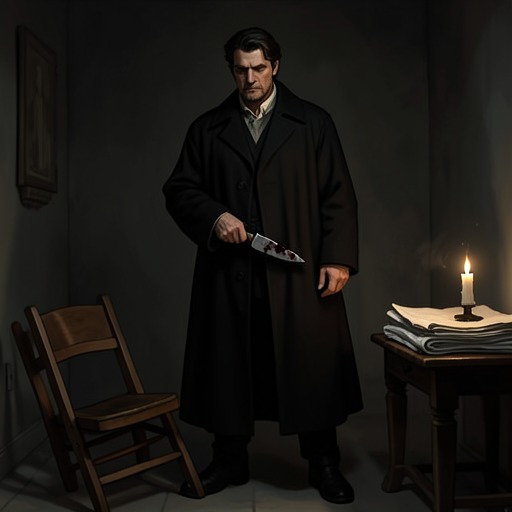
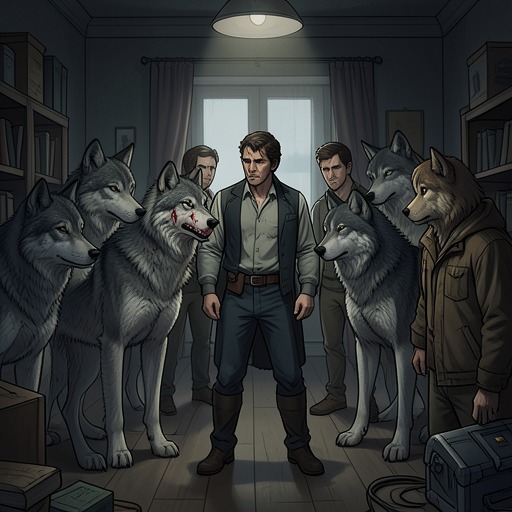
Ronald’s rule later turns the command into an instrument of political seizure. When Ronald Lowell sends Lukas toward Sierra, Alan Lowell’s allies block the approach, acting on the belief that Sierra does not deserve the punishment Ronald is planning. Ronald then releases a low growl charged with alpha power. The surrounding wolves submit and clear a path for him, demonstrating the rule’s collective reach. Alan, however, remains standing and refuses to let Ronald’s power dominate him. Ronald orders him, “Stand down, Alan,” and Alan feels his wolf wanting to submit, but his duty to protect his mate prevents him from yielding.
This confrontation distinguishes obedience from legitimacy. Ronald possesses the immediate force of the alpha office, but Alan believes Ronald should never have acquired that power. His resistance does not deny that the command is physically potent; it acknowledges its pull while refusing its political claim. The rule thus becomes the scene where inherited hierarchy, supernatural compulsion, and moral authority separate from one another.
Pack Governance and Consequences
After the pack loses its alpha, the elders treat the absence of command as an existential danger. At a meeting attended by more than a hundred pack members, the oldest member explains that a pack cannot survive without a leader and would become vulnerable to attacks if the position remains vacant. The speech turns the rule into an administrative necessity: submission is not presented merely as personal domination but as the mechanism by which the pack coordinates protection and prevents disorder.
The elders first approach Alana Lowell, the mate of the previous alpha, but she declines to govern temporarily and states that Anthony Lowell has no desire to become the next alpha of the Blue Blood Pack. With those possibilities removed, they turn to the only other wolf among them with alpha blood, Alan Lowell. His eligibility is paired with a moral assessment: the elders describe him as strong, courageous, merciful, and fair, and emphasize that his trials have shaped him. The implication is that a command deserves enduring obedience only when the person issuing it can convert power into responsible leadership.
The rule also operates through the completed mating bond between Sierra and Alan. Once the bond is complete, Alan can feel Sierra’s emotions and recognize when something is wrong even when she tries to conceal it with a smile. This is not pack submission, but it creates an intimate form of mutual awareness that can interrupt or counter public authority. Alan’s instinct to protect Sierra in the confrontation with Ronald is therefore not a rejection of all bonds; it is a transfer of responsibility from coercive hierarchy toward reciprocal loyalty.
Narrative Significance
The Alpha Command and Submission Rule gives the werewolf world a visible grammar of power. A growl can clear a room, a title can make a stranger’s house feel politically occupied, and a single command can move bodies before reason catches up. At the same time, Sierra’s Dysomnia status, the twins’ alpha blood, Alan’s resistance, and the disputed succession prevent the rule from becoming an unquestioned law of nature.
Its deepest dramatic function is to measure the difference between authority that is felt and authority that is accepted. Ronald Lowell commands through office, dominance, and fear; Alan Lowell’s eventual claim is tied to bloodline but also to courage, mercy, fairness, and the support of those who know him. The rule therefore preserves pack order while exposing the danger of confusing obedience with justice. In this world, the strongest voice may compel submission, but the future of the pack depends on whether that voice can be recognized as worthy of being followed.