Anthony Lowell
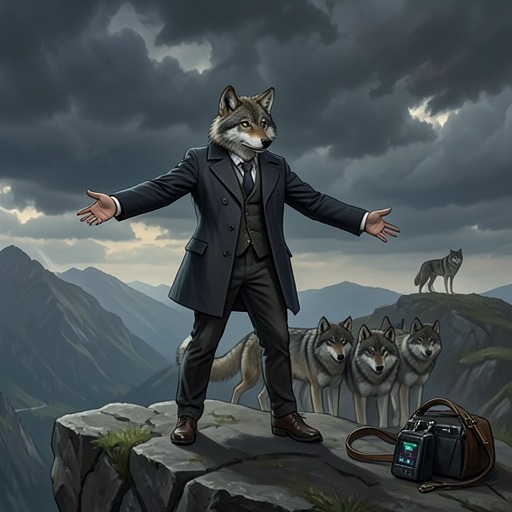
Broken Rejected MateAnthony Lowell is Alan Lowell’s identical twin cousin, Andrew Lowell’s brother, and a prominent young member of the Lowell family. His defining tension is the distance between his aggressive manner and his capacity for devotion: he can confront Sierra Langford harshly, yet he can also defend her, stand against his father, and remain bound to the people he loves after catastrophic loss. Through Anthony, family loyalty is shown not as a simple inheritance but as a choice made under pressure.
Identity and Family Background
Anthony is one of identical twins. He and Andrew share brown eyes, dark brown hair, and muscular physiques, but the brothers can be distinguished by their individual marks and mannerisms: Anthony bears a jagged scar on his neck, while Andrew has a small mark beside his chin. Andrew is the kinder twin, whereas Anthony is more openly confrontational. Their resemblance makes their bond visually unmistakable, but their different temperaments prevent them from becoming interchangeable figures.
Anthony, Andrew, and Alan grew up close enough to regard one another as brothers. Ronald Lowell had a basement remodeled for the three cousins when they were sixteen, turning it into their private territory for games, recreation, and gatherings with friends. The space represents the intimacy of their youth, yet it also houses the rivalry that will eventually divide them. Anthony and Andrew share a closeness Alan believes he can never completely understand, and their common future includes a contest to determine who will become alpha. Alan intends to win, but he never fully trusts the twins, fearing that they may have inherited not only the better qualities of their father but also his darker nature.
Suspicion of Sierra Langford
Anthony first meets Sierra in an atmosphere of teasing familiarity and guarded hostility. When she is introduced to the twins, she notes dryly that she has already met Anthony, establishing that their relationship begins with friction rather than warmth. In the basement, he criticizes Alan for breaking rules and warns that actions have consequences. His anger is genuine, but it can quickly give way to ordinary companionship; after questioning Alan about his run, Anthony returns almost immediately to a friendlier manner.
His suspicion becomes much more serious when Sierra’s identity as a Dysomnia is exposed. Anthony reacts with bitter disbelief that Alan is helping and protecting a Dysomnia, treating the decision as another in a series of foolish choices. His response reflects the pack’s inherited fear of Dysomnias more than any demonstrated wrongdoing by Sierra. The force of his prejudice is measured against Alan’s answer: Alan identifies Sierra as his mate and insists that the bond creates a duty to protect her.
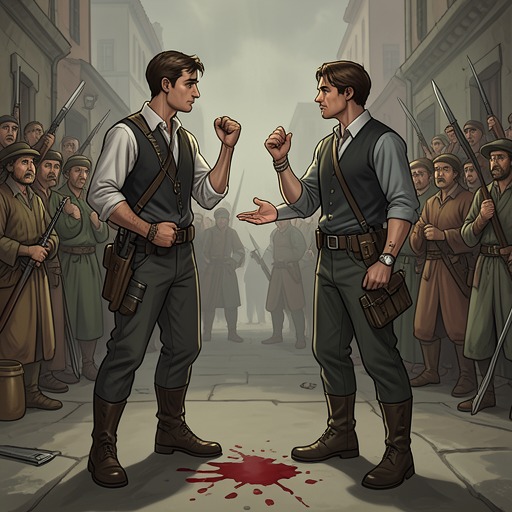
Anthony’s attitude does not change through a single argument. Instead, the story repeatedly places him beside Sierra in situations where his assumptions are tested by her conduct and by the obligations of pack life. When two men threaten Sierra on school grounds, Anthony intervenes after one of them grabs her hand. His glowing eyes and low growl turn the confrontation immediately, and his command to leave is a direct act of protection. Andrew arrives soon afterward with visible concern, making the twins’ response a shared defense even though Anthony is the one who acts first.
Loyalty, Protection, and Conflict
Anthony’s relationship with Sierra develops through action rather than easy confession. At a pack gathering, despite having one hand in a sling, he greets her with a smile and throws his uninjured arm around her shoulder, joking about his cast. The gesture follows his earlier hostility and suggests that his acceptance is becoming practical and personal. His willingness to treat her as part of his social world matters because it contradicts the fear that first governed his response to her.
Alan later argues directly for Anthony and Andrew to protect Sierra. He reminds them that they promised, when they were young, to protect one another’s mates and tells them to behave as decent werewolves. The appeal is not merely emotional; it invokes a shared pact and a reciprocal obligation. Anthony’s eventual conduct shows that the promise remains meaningful even when his father’s authority demands the opposite.
The decisive test comes during Ronald’s coup. Ronald orders his sons to get Sierra. Anthony and Andrew initially move toward her, and Alan believes they have chosen their father and betrayed him. The apparent betrayal exposes the uncertainty surrounding Anthony: his history of suspicion makes the worst interpretation plausible. Yet the twins stop when they reach Sierra and stand beside her, turning to face Ronald instead. Andrew pleads with their father to stop, and the brothers’ movement transforms from obedience into defiance.
That choice places Anthony against the authority of his own father and reveals the limits of inherited loyalty. He does not reject family; he rejects Ronald’s violence. His resistance is therefore more difficult than simply joining Alan. Anthony must preserve his bond with his brother and cousin while breaking with the paternal power that has shaped their lives.
Andrew Lowell’s Death and Anthony’s Grief
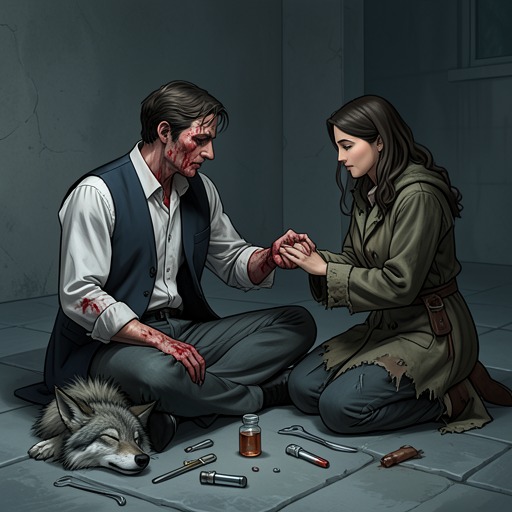
Ronald’s attack makes Anthony’s commitment irreversible. When Ronald’s wolf leaps toward Sierra with the intention of killing her, Andrew pushes Alan—or, in the immediate crisis, the endangered party—out of the path and is clawed in the process. Anthony rushes to his twin, attempts to cover the gash, and tries to stop the bleeding, but the wound is fatal. Andrew coughs blood, falls, and dies with his head in Anthony’s lap after warning Alan that he should have trusted the twins.
Andrew’s death is not only a personal bereavement but also the destruction of the pair that defined Anthony’s identity. The identical twins had been treated as a unit in appearance, family history, and shared destiny; afterward, Anthony must live as the surviving half of that bond. His grief is intensified by the fact that Andrew dies while protecting the very people Anthony had once distrusted. The sacrifice gives final moral weight to the twins’ decision to stand with Sierra and against Ronald.
Alan assures Anthony that he will always have him, while admitting that he can never replace Andrew. Anthony accepts the comfort but refuses to remain in the same environment. He explains that he must leave because every step is haunted by the memory of his twin. His departure is therefore both an act of mourning and a survival strategy: remaining would keep him trapped inside the physical and emotional space of the loss.
Later Life and Narrative Significance
Anthony’s later life shows that grief does not erase his ability to form new attachments. After returning to Arizona, he marries Caroline and builds a family with her. They have twins and another child on the way, and Anthony becomes an attentive, devoted father. The presence of twins in his new family creates an unavoidable echo of Andrew, but the narrative presents it as part of Anthony’s renewed happiness rather than as a replacement for the brother he lost.
Anthony and Caroline live away from the pack grounds, yet they remain available whenever the pack needs them. This arrangement preserves his independence without severing his communal obligations. His later happiness also contrasts with his earlier anger and suspicion: the character who once confronted Sierra as a threat becomes a husband, father, and dependable member of the wider group.
Anthony’s importance lies in the way his loyalties are tested across several forms of belonging. He is attached to Andrew by twinhood, to Alan by cousinhood and a childhood pact, to Ronald by parentage, and eventually to Caroline and their children through marriage and family. These bonds do not automatically point in the same direction. His development occurs when he chooses protection over prejudice, moral responsibility over obedience, and continued life over being consumed by bereavement. His final image is not that of the angry twin who resisted Sierra, but of a surviving brother who carries loss while still making a future.