Doherty Langford
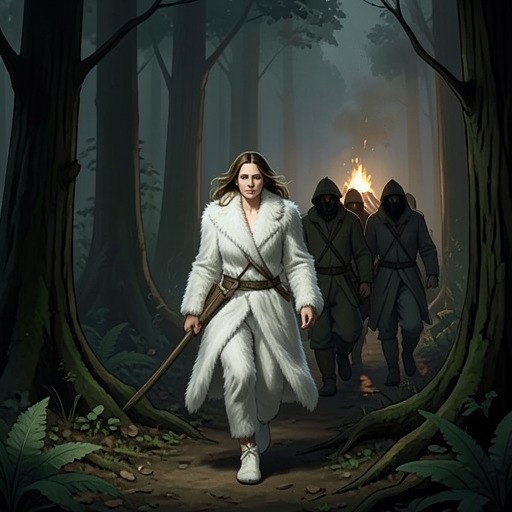
Broken Rejected MateDoherty Langford is Sierra Langford’s father and the central protector of her early life. He is the person who moves with her from one temporary home to another, teaches her to hide what she is, and stands between her and the hunters who regard Dysomnias as a threat. His importance is therefore both personal and structural: he is Sierra’s only stable attachment in a life organized around departure, concealment, and the expectation that discovery will be followed by pursuit.
Identity and Background
Doherty’s life with Sierra is defined by movement. She explains that she does not form relationships because every new place is temporary; she counts down the time until they must leave before someone discovers who she is. The newly acquired house is already marked, in her mind, as a future loss: it belongs to them only for a few months before they will have to abandon it. That pattern makes Doherty more than a parent in the ordinary sense. He is her traveling guardian and the person responsible for keeping her hidden from a society that would hunt her.
His protectiveness appears in an ordinary domestic scene. While standing on a wooden stool to install a light in their new home, he asks Sierra to pass him a light-bulb. She watches the stool carefully, afraid that he might lose his balance, because he is no longer as young as he once was and remains the only person she has in the world. The scene gives their relationship a quiet physical dimension: Doherty protects Sierra from supernatural danger, while Sierra instinctively watches over his vulnerable body. Their bond is reciprocal even though the larger burden of survival rests on him.
Guardian of a Dangerous Secret
Doherty insists that Sierra is not an ordinary Werewolf and that her kind is unwelcome anywhere. He tells her that other wolves hunt Dysomnias, while even dogs can sense that they are dangerous. Their difference produces fear before Sierra has done anything to deserve it, so he instructs her to remain alert at all times. His warning is not abstract. They are living on the territory of the largest pack in Arizona, beside the Blue Blood Pack, whose strength and ruthlessness make concealment especially urgent.
Doherty’s instructions establish the rules by which Sierra has been raised: keep her head down, attract no attention, and survive the duration of their stay. His caution also reveals the emotional cost of guardianship. He cannot offer Sierra an ordinary adolescence or a settled home; he can offer only another escape before the hunters arrive. The protection that keeps her alive simultaneously teaches her to expect rejection, distrust intimacy, and treat every residence as temporary.
When Sierra’s wolf becomes feral, Doherty supplies the history through which she and the reader understand the danger. He explains that Dysomnias were once revered for their strength and intelligence and may even have been regarded as the most powerful wolves, perhaps as royalty. According to the history he has repeated since Sierra was a child, all Dysomnia wolves later became feral, hunted other werewolves, and killed without reason. Their persecution is consequently presented as a response to an earlier catastrophe, while their near-extinction—Doherty estimates that no more than twenty may remain in the entire world—makes Sierra part of an endangered and feared lineage.
Yet his account does not reduce Sierra to that history. Doherty suggests that her wolf’s desire for revenge may arise from the centuries of hunting directed against her kind, but he refuses to let inherited fear determine her worth. He tells her that none of the broader history matters to him compared with the fact that she is his daughter. His promise to do anything to protect her, and to let no one take her away, is the clearest expression of his moral position: the category others use to condemn Sierra cannot override the familial bond through which he knows her.
Relations and Conflicts
Doherty’s relationship with Sierra is marked by intense mutual dependence. Sierra’s fear of losing him is immediate and concrete, while his entire mode of life is organized around preventing that loss from becoming reality. He is the only person she trusts fully, and his protective role allows her to remain hidden even as it leaves her isolated from lasting friendships and romantic relationships.
The wider wolf community stands against this private loyalty. Doherty knows little about the Blue Blood Pack, but he understands enough to fear its power. The pack’s territory places Sierra under surveillance and turns everyday behavior into a possible exposure. His response is not confrontation but concealment, a strategy that reflects the hunted condition of Dysomnias and the limits imposed on a father who cannot safely challenge every threat surrounding his daughter.
Doherty’s knowledge also intersects with the ambitions of the Lowell family. Alan Lowell recognizes that he, Andrew Lowell, and Anthony Lowell share a destiny that will eventually require a fight over who becomes alpha. Against that background, Doherty’s attempt to keep Sierra unknown protects her from more than hunters: it keeps her outside rivalries and power struggles that could make her identity politically dangerous. The secrecy he maintains is thus both a shield and a postponement; it delays conflict without removing the forces that will eventually find her.
Death and Consequences
Doherty’s protection ends during another hunter attack. His phone receives a message, and when Sierra turns to check it, she hears a sword cut through the air. He calls her name, then steps in front of her. The huntress’s long sword pierces his chest, and she pulls it free before raising it toward Sierra. Doherty dies in the exact position that defines his life: physically between his daughter and the violence aimed at her.
His death produces an immediate reversal in Sierra. She does not pause to protect herself or flee. Her wolf takes control while she remains in human form, something no normal Werewolf can do. She catches the huntress’s sword, tears it from her grasp, and advances with the sole desire to make the woman suffer as Doherty has suffered. When Sierra drives the sword through the huntress’s heart, the wolf recedes into her subconscious; she then returns to her father’s side as the light dies from the huntress’s eyes.
The sequence makes Doherty’s death the trigger for Sierra’s first fully retaliatory act. His warnings had taught her to hide, run, and remain vigilant, but his murder makes concealment impossible as an emotional posture. The attack exposes the lethal power he spent his life containing, while Sierra’s response confirms that her identity cannot remain entirely separate from the history of Dysomnia persecution and revenge.
Narrative Role and Legacy
Doherty functions as mentor, guardian, and emotional home rather than as a participant in the later contests for alpha power. His influence survives through the knowledge he gives Sierra, the habits of caution he instills, and the unconditional loyalty that allows her to imagine herself as more than the feared history attached to Dysomnias. His role is especially significant because the story places inherited stigma beside chosen love: the world sees a dangerous species, while Doherty sees his daughter.
His death also changes the meaning of protection. While alive, he can absorb danger physically and preserve Sierra’s hidden life. Once he is killed, Sierra must become the active defender, taking control of a power that even her upbringing was designed to suppress. The loss does not erase the bond between them; it converts that bond into motive, memory, and consequence. Doherty’s final act is not a speech or a victory but a bodily decision to stand in front of Sierra, and that gesture becomes the foundation of the violent transformation that follows.