Dysomnia guidance and restraint code
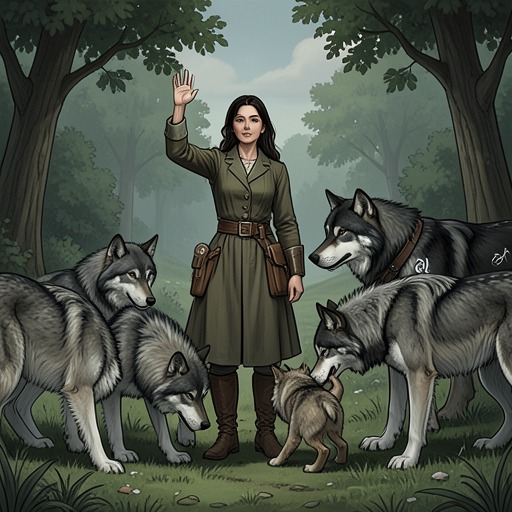
Broken Rejected MateThe Dysomnia guidance and restraint code is a moral doctrine governing how Dysomnians should use their power among werewolves. Its central distinction is between protection and violence: Dysomnians were created to guide werewolves toward the right path, settle quarrels, and clear up misunderstandings, not to rule them, wage wars, or kill. The code therefore treats power as an obligation of restraint rather than a license to dominate.
Origin and Purpose
The code recalls a time before the Dysomnians became associated with royalty. Their original role was service. They were meant to assist werewolves from behind the scenes, quietly correcting disputes and helping them find the right path instead of governing them as kings or queens. The doctrine presents this earlier purpose as an ethical foundation and regards the later drift toward warfare and leadership as a serious corruption of Dysomnian identity.
This history also supplies the code's sharpest prohibition: Dysomnians are not killers. Their powers may make them seem almost divine, but that near-divine status increases their responsibility. Extraordinary ability is framed as a burden requiring judgment, not as proof that its bearer has the right to decide every conflict by force.
Restraint in Conflict
The code instructs a Dysomnian to remain separate from werewolf wars whenever possible. Werewolves may fight their own battles, while a Dysomnian's proper task is to assist without becoming another combatant. The doctrine is especially strict when intervention would be driven by anger, grief, or loyalty to a mate. It insists that a Dysomnian's responsibility is not measured by the intensity of a crisis but by whether the power is used to protect or to harm.
Sierra confronts this rule while watching Alan Lowell attack werewolves after Andrew Lowell's death. Alan Lowell, consumed by rage, advances toward Ronald Lowell, and other werewolves turn against him. As the fight escalates, Sierra recognizes that she needs to stop her mate before he commits an act he would regret permanently. Her request for a small burst of energy is therefore framed as a limited act of protection, not an attempt to injure anyone. She accepts that her powers were granted to protect all werewolves and promises not to use them to harm, while still seeking enough strength to reach Alan Lowell and restore his judgment.
Relationship to Care and Responsibility
The code does not exist in isolation from ordinary forms of protection. Sierra's father, Doherty Langford, understands the pain of losing a mate and promises that he will not move away merely because Sierra's bond with Alan Lowell has become unavoidable. His care is expressed through remaining present and preparing to confront Alan Lowell, even while annoyance shapes his attitude toward him. The same protective pattern appears after Doherty Langford's death: Alan Lowell stays beside Sierra, holds her at night, makes sure she eats at least once a day, and gives her the solitude required for grief.
Caroline likewise offers care without demanding that Sierra recover quickly. When Sierra is mourning her father, Caroline asks how she is holding up, accepts her tears, and promises to remain available. These scenes broaden the meaning of restraint. It is not only the refusal to kill; it is also the discipline of staying present without forcing another person into a prescribed emotional response. The code's ideal of quiet assistance is echoed by the people who protect Sierra through patience rather than control.
Ethical Limit and Consequence
The doctrine ultimately places safety above victory. Sierra is told that the battle did not begin with her and that Alan Lowell does not need her to end it; he needs her to remain safe. This instruction opposes the heroic temptation to solve violence through greater violence. It also creates a conflict between inherited purpose and intimate obligation: Sierra cannot simply stand aside while friends die, yet she must not become the destructive force the code forbids.
Its resolution is deliberately narrow. Sierra does not reject the doctrine or claim that her powers justify revenge. Instead, she seeks only a controlled push of energy to reach Alan Lowell and prevent irreversible harm. The Dysomnia guidance and restraint code thus turns self-control into active courage: the strongest response is not necessarily to strike, but to intervene precisely enough to preserve life and stop grief from producing another crime.
Restraint in Conflict
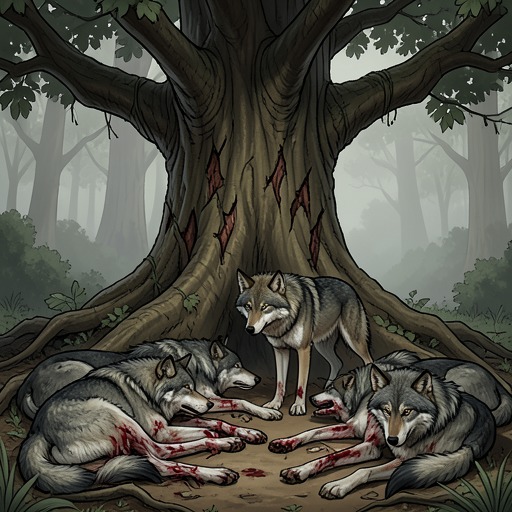
The code becomes most demanding when protection and violence begin to resemble each other. Sierra faces that ambiguity while watching Alan Lowell, blinded by rage after Andrew Lowell’s death, advance toward Ronald Lowell. Malcolm tries to intervene, but Alan Lowell pushes him aside; then five werewolves attack Alan Lowell in succession, and he tears flesh from Lukas before hurling another wolf into a tree. Sierra cannot accept either extreme: she cannot stand passively while her mate is overwhelmed, but she also cannot turn her Dysomnian power into an instrument of revenge. Her proposed solution is deliberately limited—a small burst of energy strong enough to reach Alan Lowell and make him stop before he commits an act he would regret forever. In this moment, restraint is not withdrawal from danger. It is the effort to enter danger without reproducing its violence.
Restraint in Conflict
The code becomes most demanding when protection and violence begin to resemble each other. Sierra Langford faces that ambiguity while watching Alan Lowell, blinded by rage after Andrew Lowell’s death, advance toward Ronald Lowell. Malcolm tries to intervene, but Alan Lowell pushes him aside; then five werewolves attack Alan Lowell in succession, and he tears flesh from Lukas before hurling another wolf into a tree. Sierra cannot accept either extreme: she cannot stand passively while her mate is overwhelmed, but she also cannot turn her Dysomnian power into an instrument of revenge. Her proposed solution is deliberately limited—a small burst of energy strong enough to reach Alan Lowell and make him stop before he commits an act he would regret forever. In this moment, restraint is not withdrawal from danger. It is the effort to enter danger without reproducing its violence.
Ethical Limit and Lasting Significance
The Dysomnia guidance and restraint code ultimately places safety above victory. Sierra Langford is told that the battle did not begin with her and that Alan Lowell does not need her to end it; he needs her to remain safe. This principle resists the heroic temptation to answer violence with greater violence, while also exposing the code’s difficulty: Sierra cannot simply remain detached while friends are dying, yet she must not become the destructive force her inheritance forbids. Her response is a controlled compromise rather than a rejection of the doctrine. She asks for only enough energy to reach Alan Lowell and stop him before grief and rage lead to an irreversible act. The code therefore defines courage as disciplined intervention. Its highest expression is not domination, revenge, or victory, but the ability to preserve life while refusing to let power reproduce the violence it was meant to prevent.