Dysomnian guardianship
Broken Rejected MateDysomnian guardianship is the founding purpose attributed to the Dysomnias, a restrained form of power whose proper work is to guide werewolves, settle their conflicts, and protect them without seeking dominion. Its importance lies in the contrast between what the Dysomnias were created to do and what later history says they became: a feared people associated with ferocity, war, and extermination. For Sierra, guardianship is not an abstract legend but a moral command that governs whether she may intervene when violence threatens the werewolves she loves.
Origin and Lost Purpose
The history explained to Sierra distinguishes the Dysomnias’ original role from their later reputation. They were created to help werewolves, not to lead them. Their responsibilities were conciliatory and corrective: guiding werewolves toward the right path, solving quarrels, and clearing up misunderstandings. They were not made to be kings or queens, nor to engage in wars. The statement redefines Dysomnian power as a service entrusted to the community rather than a claim to superiority over it.
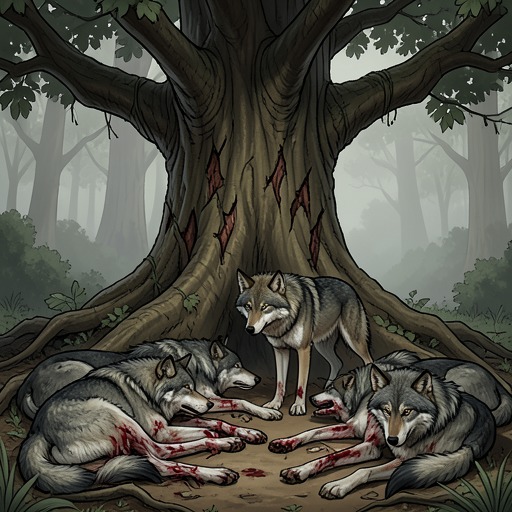
That purpose was obscured by a catastrophic transformation in the relationship between the Dysomnias and other werewolves. Sierra has been told that her kind once lived in harmony with werewolves and was revered for strength and intelligence, perhaps even treated as a form of royalty. Then all Dysomnia wolves reportedly became feral, hunted other werewolves, and killed without reason. The resulting fear explains why Dysomnias are hunted in the present: other werewolves fear a repetition of that history. The doctrine of guardianship therefore survives beneath a collective memory that defines the Dysomnias primarily as threats.
The scale of that historical loss is emphasized by the claim that no more than twenty Dysomnias may remain in the entire world. Near-extinction gives guardianship a double burden. It is a responsibility to the werewolf population, but it is also part of the inheritance of a persecuted people whose surviving members are judged through the actions attributed to their ancestors. Sierra’s identity is consequently caught between a vocation of protection and a bloodline treated as evidence of possible violence.
The Guardian’s Restraint
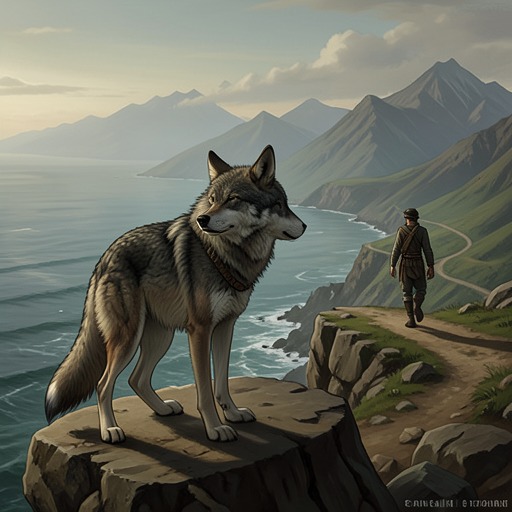
The doctrine requires Sierra to separate protection from domination. Her powers are described as almost divine, but their magnitude does not authorize her to impose herself on every conflict. She is told that a Dysomnia’s job is to assist quietly from behind the scenes while werewolves fight their own wars. The werewolves may wage their battles, but Sierra should not become another combatant merely because she possesses the ability to change the outcome.
This restriction creates a sharp ethical distinction between capacity and permission. Sierra can act, yet the fact that she can act does not by itself make intervention rightful. The command to use power responsibly rejects violence as the default proof of strength. It also refuses the historical logic that transformed guardians into rulers: once extraordinary ability becomes a license to command, the guardian’s service has been replaced by authority.
The doctrine also answers the fear surrounding Sierra’s feral wolf. When she encounters the huge black dogs stalking her, she senses both their anger and their fear, and their fear is linked to what they feel from her. Their response turns her presence into a perceived danger before she has chosen violence. The scene reflects the larger Dysomnian predicament: power produces fear, fear encourages aggression, and aggression can then appear to confirm the original suspicion. Guardianship offers a way out of that cycle, but only through deliberate restraint and protection rather than retaliation.
Sierra’s Moral Crisis
The guardianship principle becomes most difficult to follow during the confrontation surrounding Alan. Andrew’s death leaves Alan blinded by rage, and he advances toward the much larger Ronald with the intention of killing him. When other werewolves intervene on Ronald’s side, Alan faces five attackers and tears flesh from Lukas before hurling another wolf into a tree. The conflict is not presented as a simple contest between equal combatants: Ronald is weakened by wolfsbane, grief, and the consequences of having killed his own son, while Alan is driven by bereavement and revenge.
Sierra initially believes that Alan deserves revenge for what happened to his parents, but she recognizes that killing Ronald when he can no longer properly fight would turn vengeance into an irreversible act. The guardianship doctrine gives her a language for that hesitation. Her task is not to win the werewolves’ war for them, and Alan does not need her to end the battle; he needs her to remain safe. The principle therefore demands both nonviolence toward the wider conflict and protection of the individual whose fury may destroy him.
Sierra refuses to treat restraint as indifference. She tells her wolf that her powers were granted for the protection of all werewolves, not for violence, and that she should never use them to harm anyone. Yet she also asks for a small burst of energy to reach Alan and make him see reason before he commits an act he will regret forever. This is a carefully bounded intervention: she does not seek to attack the opposing wolves or punish Ronald with Dysomnian power. She uses just enough force to interrupt a killing and protect her mate from the consequences of his rage.
The exchange with her wolf makes guardianship a shared discipline rather than a rule imposed from outside. Sierra understands the prohibition, acknowledges the danger of violating it, and still argues for a limited exception grounded in protection. Her wolf cautions her that the attempt may kill them, but Sierra proceeds because refusing to act would leave Alan moving toward irreversible violence. The doctrine is thus tested not by an easy choice between good and evil, but by a conflict between noninterference and the duty to prevent harm.
Legacy and Narrative Significance
Dysomnian guardianship revises the dominant story told about Sierra’s kind. The werewolves’ fear insists that Dysomnias are born for slaughter; the recovered history insists that they were made to guide and heal social fractures. The tension between those accounts explains why Sierra’s existence is so threatening to the established order. She embodies evidence that a persecuted bloodline cannot be understood solely through the crimes attributed to it, while her uncontrolled wolf and the fear she provokes keep the historical accusation emotionally present.
The concept also provides a governing alternative to the power struggles among werewolves. Where their conflicts are organized around leadership, loyalty, revenge, and killing, guardianship imagines influence without sovereignty. Its ideal guardian does not become king or queen, does not enter every war, and does not confuse strength with the right to rule. Sierra’s struggle to reach Alan preserves that distinction: she intervenes because protection requires it, but she refuses to convert her intervention into violence.
As a result, guardianship becomes the moral framework through which Sierra begins to understand her inheritance. Her Dysomnian identity is neither a curse that must simply be hidden nor a throne that entitles her to command. It is a responsibility shaped by historical failure, collective fear, and the constant possibility that protective power may itself become destructive. The concept’s decisive significance is that it gives Sierra a third path between helpless concealment and feral domination: to remain powerful, involved, and accountable while using that power to keep others from being consumed by violence.