Dysomnian magic
Broken Rejected MateDysomnian magic is the defining supernatural capacity of the Dysomnia wolf lineage, a force whose scale makes Sierra Langford appear simultaneously vulnerable, dangerous, and indispensable. It first emerges as an uncontrolled energy within her, but the plot gradually establishes that it can enhance strength and speed, produce destructive waves, communicate through the wolf consciousness, and even make possible the extraction of magic for another person’s use. The power therefore drives both Sierra’s fear of herself and Ronald Lowell’s plan to possess her.
Definition and Historical Meaning
Dysomnian magic belongs to a lineage that other werewolves once revered for its strength, intelligence, and exceptional status. Doherty Langford explains that Dysomnia wolves may once have been treated almost as royalty, before all of them became feral and began hunting and killing other werewolves without apparent reason. That history is used to justify centuries of persecution: other werewolves fear that allowing Dysomnias to survive could repeat the earlier violence. The lineage is nearly extinct, with Doherty estimating that no more than twenty Dysomnia wolves remain in the entire world.
The magic is consequently surrounded by inherited fear rather than neutral curiosity. At Domina High, Sierra knows that some students are werewolves who might technically be her kind, yet she believes none would accept her if they discovered her identity. Her father’s precautions are designed to keep her nature secret, and her instinct is to remain invisible, avoid attention, and stay away from anyone who might identify her. Even the enormous black dogs that stalk her respond to her presence with anger and fear, suggesting that the danger associated with Dysomnian power is perceived physically before it is understood intellectually.
First Manifestation and Loss of Control
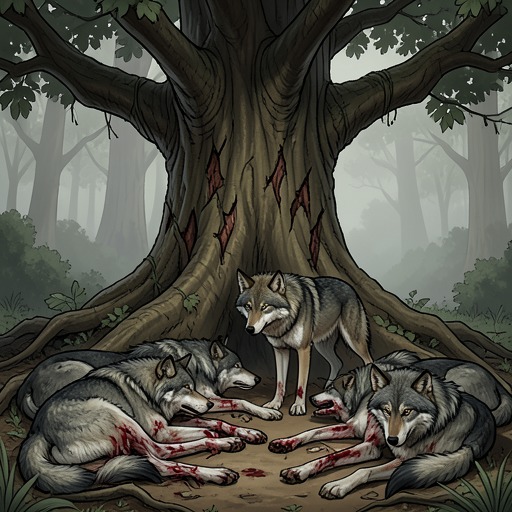
Sierra’s clearest early manifestation occurs when she is surrounded by wolves. She struggles to restrain her feral wolf while energy builds beneath her skin, becoming so intense that holding it inside is almost painful. When her control finally vanishes, she howls and releases a blinding flash of white light from within herself. The resulting energy wave throws everything within a mile backward. Wolves are hurled against rocks and trees, and Julie’s wolf suffers a severely bent hind leg. The immediate consequence is not triumph but horror: the force injures allies and leaves Sierra’s wolf still hungry for violence.
The episode reveals that Dysomnian magic is not merely an abstract inheritance or a heightened version of ordinary werewolf strength. It is an eruptive bodily force that can transform a crowded gathering into a field of casualties. Sierra experiences the power before she can name or direct it, and the sequence joins magical awakening to psychological terror. Her wolf’s blood lust continues after the energy burst, making the magic inseparable from the danger of the feral state. Control is therefore not presented as a decorative skill; it is the condition that separates protective power from indiscriminate destruction.
Abilities, Knowledge, and the Problem of Control
Alan Lowell interprets the energy wave as one of Sierra’s magical abilities and recalls stories that a Dysomnia could kill hundreds of people without moving. He also says that her kind was especially blessed by the wolf goddess. Sierra recoils from the idea because she does not want the capacity to kill hundreds of people without physical action. Alan’s response redirects the issue toward discipline: if she must possess such power, he argues, she must learn to control it and reserve it for enemies. The exchange establishes the central ethical tension of Dysomnian magic. Its existence does not determine Sierra’s morality, but it creates consequences that morality alone cannot prevent unless the power is mastered.
Later reports confirm that Sierra’s abilities extend beyond the energy burst. Lukas tells Ronald that she has unleashed most of her powers, becoming stronger and faster and displaying more abilities than anything he has ever seen. The report also identifies Sierra as the person who discovers how to cure Anthony Lowell, linking Dysomnian magic to knowledge and healing rather than only to violence. Her power thus contradicts the historical image of Dysomnias as killers: the same exceptional capacity that terrifies the wolf community becomes the means by which a gravely injured wolf can be saved.
The discovery begins with a sensation rather than a deliberate spell. While Sierra is holding Anthony’s hand, she feels a spark, then feels it again as a vision surges through her veins. For the first time, her wolf speaks clearly inside her mind and gives her the word “Lichen” before retreating. This moment presents magic as a collaboration between Sierra’s conscious self and the wolf beneath it. The knowledge is not produced through ordinary investigation alone; it arrives through an awakened internal connection and becomes the clue that makes Anthony’s treatment possible.
Exploitation and Conflict
Ronald Lowell views Dysomnian magic as a resource to be harvested. After hearing Lukas’s assessment of Sierra’s growing strength and abilities, Ronald declares that he will soon have all the power he could possibly need at his fingertips. The ambition turns Sierra’s body into a political objective. She is no longer merely someone Ronald wants controlled or feared; she is a source of power that he believes can be converted into his own strength.
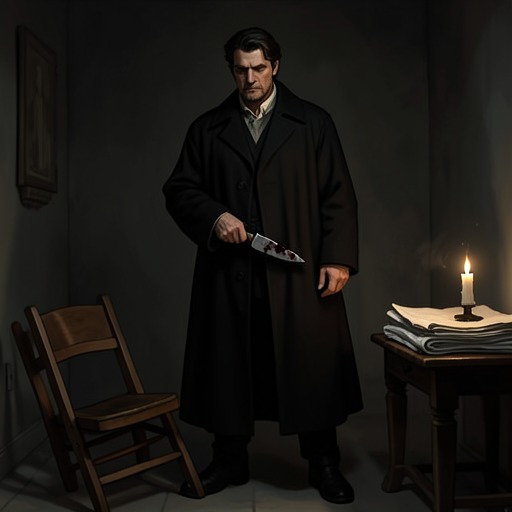
The plan is made explicit when the twins learn that Ronald intends to kidnap Sierra, extract her magic, and use it to strengthen himself and selected pack members. Resistance is to be met with lethal force, and the extraction will probably kill Sierra. The scheme gives Dysomnian magic a material cost: it cannot be transferred without threatening the life of its bearer. Ronald’s desire for endless power therefore depends on treating Sierra as an expendable vessel, while the people who care about her must respond to the plan as both an assault and an attempted violation of her identity.
The plot also challenges the ordinary werewolf rule that werewolves are born rather than turned. Ronald’s supporters insist that the rule can be overcome through Sierra’s magic. Once the power is extracted, they believe Ronald will possess endless power and fulfill a long-standing desire. Dysomnian magic consequently appears capable of altering not only strength but the boundaries of werewolf nature itself. The claim intensifies the threat around Sierra: her abilities are valuable precisely because they are believed to make impossible transformations possible.
Protection, Poison, and Aftermath
Sierra’s magic is treated as a danger by enemies and as a responsibility by those closest to her. Her father protects her from the dogs that attack her, while Alan urges her to learn control rather than surrender to fear of what she might become. These protective responses contrast with Ronald’s extractive logic. Protection preserves the person who bears the power; exploitation seeks to separate power from personhood and convert it into authority.
The distinction becomes especially urgent when a revenge-seeking hunter attacks Sierra and injects her with an unknown liquid from a syringe. The attack is directed at Alan’s mate rather than at him, and Sierra collapses immediately after the injection. The poison is later identified as yellow wolfsbane, and Sierra spends the following weeks in the pack hospital with Noah Collins while he removes the wolfsbane from her system. Her recovery places Dysomnian magic within a medical and communal framework: the power may be extraordinary, but its bearer can still be poisoned, incapacitated, and dependent on another healer’s sustained care.
By the aftermath, Sierra’s growth and control have changed the wider meaning of Dysomnias. Word spreads across packs that she is no longer a danger to werewolves. Her magic remains formidable, and the possibility of killing hundreds without moving has not disappeared, but demonstrated control begins to separate inherited capacity from inherited guilt. Even Ronald Lowell’s earlier acceptance of Sierra contributes indirectly to that change by allowing others to witness her development. Dysomnian magic thus moves through the story from a hidden source of terror, to an uncontrolled destructive force, to a means of healing and a contested foundation of power. Its decisive significance lies in the question of who gets to define extraordinary ability: persecuting communities, an ambitious ruler, or the person who learns to govern it herself.