Feral wolf state
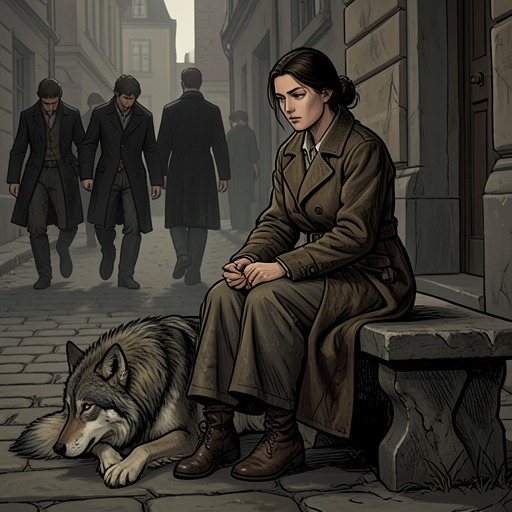
Broken Rejected MateFeral wolf state is the condition in which Sierra Langford’s wolf consciousness overtakes her human judgment, transforming grief, fear, and protective instinct into an uncontrolled force. It first appears as a terrifying loss of mastery after her father’s death, but the state is not treated as simple savagery: it is also the embodied result of a life shaped by Dysomnian persecution, repeated bereavement, and the belief that everyone Sierra loves will eventually be taken from her. Her eventual connection with her wolf changes the meaning of the condition, making control possible without requiring Sierra to deny the wolf as part of herself.
Definition and Trigger
The feral state emerges during Sierra’s formal transformation before the pack. The physical act of shifting has become comparatively easy for her, like slipping into a new outfit, and she expects that familiarity to give her some control. Instead, she discovers that her wolf has not been quietly grieving. It has been prowling and waiting to be released. Her father’s death has wounded the wolf as deeply as it has wounded Sierra, but the wolf expresses that injury through predatory readiness rather than mourning.
The wolf’s response is rooted in a larger interpretation of Sierra’s life. Her father’s death reinforces the conviction that Sierra and her wolf will always be hunted. From that conviction comes a desire to burn the world down, while Sierra experiences herself as an innocent bystander inside her own mind. The feral state therefore separates the human and wolf aspects of her identity at the very moment when they should be working together. It is not merely anger enlarged; it is grief converted into a total theory of danger, in which every surrounding person can become part of the threat.
The Pack-Side Manifestation
Sierra tries to restrain the wolf while the other wolves gather around her in wonder. They have never seen a white wolf, and their curiosity prevents them from recognizing how close the situation is to catastrophe. Sierra can feel energy building beneath her skin, but she cannot understand or name it. Her effort to maintain control becomes a physical struggle as the pressure grows more intense and painful.
When control finally disappears, the stored energy erupts in a blinding flash of white light and sends everything within a mile flying backward. Wolves are thrown against rocks and trees, and Julie’s wolf suffers a badly bent hind leg. The episode gives the feral state consequences beyond Sierra’s private distress: her loss of control injures members of the very pack whose acceptance she needs. The white wolf’s unusual power is thus inseparable from unusual danger. Strength does not protect Sierra from responsibility; it magnifies the harm that can follow when responsibility fails.
Alan Lowell becomes the immediate means by which Sierra can return from the state. He asks her to demonstrate at least a small measure of control by shifting back, because the pack needs evidence that she can come out of her feral condition. Sierra fears the insults and mistreatment that will follow the injuries she has caused, yet she changes back for Alan. His presence does not erase the damage, but it gives her a relational anchor strong enough to interrupt the wolf’s dominance.
Trauma, Attachment, and Training
Sierra later recognizes that the wolf’s violence is connected to attachment rather than indiscriminate cruelty. The wolf has only just begun to care about Anthony Lowell when he is injured; then Sierra’s father dies. The people to whom the wolf becomes attached keep dying, and the wolf cannot understand that the rest of the world is not responsible for each loss. Sierra describes it as potentially one of the strongest wolves alive but emotionally weak, an important contrast between power and maturity.
Training therefore begins with an ethical lesson: not everyone is terrible. Alan Lowell and Andrew Lowell are chosen as early companions in the woods because Sierra is least likely to kill them. Andrew’s presence has already become familiar to the wolf through the weeks spent around him and his brothers. The purpose of the training is not simply to suppress an animal impulse but to teach the wolf discrimination, trust, and a stronger bond with Sierra. Sierra remembers that her father could converse internally with his wolf because they understood one another and shared the same goals. She and her wolf lack that mutual language, so developing connection becomes the first step toward control.
This distinction makes the feral state a problem of divided identity as much as a problem of violence. Sierra cannot safely command a part of herself that she does not understand, while the wolf cannot respond reliably to a human consciousness it experiences as distant or vulnerable. Control requires integration rather than the permanent victory of one side over the other.
From Loss of Control to Connection
The decisive change occurs when Sierra’s wolf tells her that she is the first Dysomnia in a hundred years to achieve a connection with her wolf. The wolf is proud of her and says that Sierra has helped heal its mind; with their connection established, they are finally in control. This statement reframes the earlier feral episodes. The wolf is not an alien invader to be destroyed, nor is Sierra’s humanity restored by eliminating her wolf. Their stability depends on recognition and cooperation between two consciousnesses that had previously been divided.
The achievement also carries collective significance. Sierra’s success is unprecedented within the remembered history of the Dysomnias, so her private struggle becomes evidence that a Dysomnian can survive the conflict between immense inherited power and conscious restraint. The feral state remains part of her experience, but it no longer defines the only possible relationship between Sierra and her wolf. What began as domination by an injured, suspicious instinct becomes a shared form of agency.
Vulnerability, Power, and Consequences
The danger of the feral state remains visible even after Sierra has learned more control. When she later lies poisoned by wolfsbane, her wolf warns her not to shift: the more energy Sierra exerts, the faster the poison will move through her body, and allowing it to reach her heart would make a shift fatal. The warning shows that wolf form is not an automatic solution to crisis. Its power has conditions, and exerting it can intensify the physical threat rather than overcome it.
Sierra nevertheless feels compelled to act while friends are in danger. Her pain combines with Alan Lowell’s anguish and rage until she feels capable of bursting, echoing the earlier image of energy accumulating beneath her skin. The recurring pattern links the feral state to affect that moves through bodies before it can be reasoned through: grief becomes pressure, pressure becomes energy, and energy threatens to become violence. Alan’s ability to calm Sierra and the wolf’s later ability to counsel her provide contrasting forms of containment, but neither works by pretending that the underlying pain does not exist.
The feral wolf state consequently stands at the intersection of persecution, family loss, bodily transformation, and political fear. Sierra’s mother was identified as a Dysomnia from birth, hunted by her pack after her first shift, and killed immediately after giving birth to Sierra. That inherited history helps explain why Sierra’s wolf reads danger as permanent and why the state carries more than personal rage. At the same time, Sierra’s power makes her vulnerable to exploitation: Ronald Lowell has nefarious plans concerning her, and the threat of others treating her Dysomnian nature as something to control or extract reinforces the need for self-possession.
By the later stages of Sierra’s story, control is not presented as obedience to the pack’s gaze or as submission to a stronger authority. It is the hard-won ability to remain responsible while acknowledging the wolf’s grief, strength, and independent perception. The feral state begins as the image of a persecuted being who can only survive by destroying everything nearby. It ends as the condition Sierra must understand and integrate so that her power can protect rather than repeat the violence that created it.