Hunters attack the Langford home again
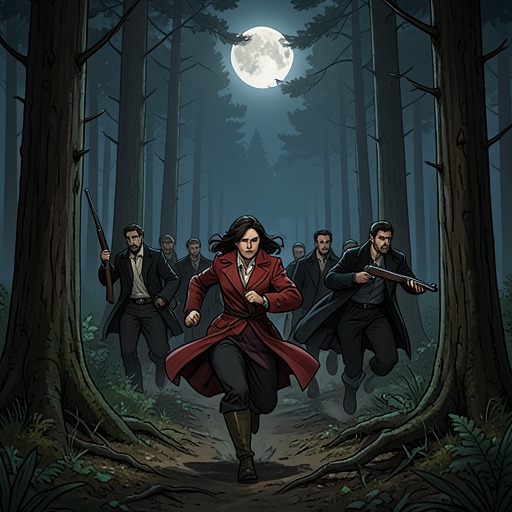
Broken Rejected MateHunters attack the Langford home again when Sierra and her father are caught off guard by the return of the two hunters who have already pursued her and poisoned her friend Tony. The assault is significant because it collapses the boundary between the supposedly protected family house and the outside world: the hunters no longer stalk Sierra at a distance, but enter the place where her father has tried to keep her safe. Their arrival also brings Sierra’s fear of her own power into direct conflict with the immediate need to defend herself.
Causes and Background
The attack begins with recognition rather than warning. Sierra’s father suddenly freezes after detecting two unfamiliar scents inside the house, and Sierra then identifies them as the hunters. Their return is earlier than she expected, making the danger feel both persistent and uncontrollable. The intruders are not strangers to the family: the man is the same tattooed hunter with the cold brown eyes who confronted Sierra two days earlier, while the woman is his sister, the huntress Sierra fought before. Their repeated pursuit reflects the larger persecution of Dysomnias, a nearly extinct kind of wolf that other werewolves fear because of its violent history and reputed power.
That history gives the hunters a justification for their violence, but the scene makes clear that their stated mission is not limited to preventing a future threat. The man tells Sierra’s father that the siblings have come to hurt his daughter and do much worse, claiming that she has been alive too long and that it is time to let her go. His language turns extermination into a supposed duty while revealing a personal willingness to torture and kill. The huntress reinforces the challenge by accusing Sierra of depending on others for protection and demanding that she stand and fight. The attack is therefore both a planned execution attempt and a provocation designed to force Sierra into open combat.
The Assault Begins
Sierra cannot safely transform inside the house. She fears that her wolf, still adapting to unfamiliar scents, could lose control and attack innocent people. Although she is supposed to be an exceptionally powerful werewolf, this limitation leaves her feeling helpless, and her father orders her to get the phone and text Alan. Her wish for Alan to arrive does not erase the immediate crisis; it emphasizes how quickly protective relationships become strained when the enemy has already crossed the threshold.
Her father places himself between Sierra and the man. He warns the hunter to leave and says that no one needs to be hurt, but the hunter answers with false sympathy and insists that Sierra must die. The father responds with a low growl and orders him to stay away from his daughter. The huntress then enters the kitchen, reminding Sierra that she fled their previous fight and explaining that she has returned because she does not accept losing. She draws her sword, her brother follows, and the siblings advance together.
The Fight in the House
Sierra’s father tells her to stay behind him and do nothing while he engages both hunters. He fights without transforming, relying on training, claws, evasive movement, and physical strength. He dodges sword thrusts with the ease of a dancer, slashes at the attackers, releases a low howl, and kicks the male hunter hard enough to send him into a wall. The choice not to shift is tactically important: his wolf form would be more ruthless, but the house is filled with unfamiliar scents and Sierra has already recognized the danger of uncontrolled violence in an enclosed space.
The father cannot hold both opponents back forever. While he continues fighting the huntress, the male hunter recovers and advances toward Sierra. Her father’s order to remain behind him becomes impossible to follow. Sierra remembers that this is the man responsible for what happened to Tony, and anger rises alongside the pressure of the wolf beneath her mind, which urges her to be released. She still refuses to transform because she does not trust the wolf to stop once it begins killing. Her restraint is not passivity; it is an attempt to prevent the defense of the house from becoming a massacre.
Sierra instead uses every part of the training her father has given her. The hunter cuts her leg with his sword, but she answers with a punch to his stomach. When he retreats and suddenly attacks again, expecting to catch her unprepared, she has already anticipated the move. She seizes the blade with both hands despite the pain, tears the sword from his grasp, and throws it away. Once the weapons are removed, the confrontation becomes a test of their bodies rather than their equipment, and the hunters’ underestimation of Sierra’s supernatural strength becomes their decisive mistake.
Sierra strikes the hunter in the jaw and follows with another blow that sends him to the ground. She then pins him and repeatedly punches his face, driven by anger, rage, and frustration. Her intention is not merely to stop him; she wants him to feel the force of everything he has done and everything he has threatened to do. The violence continues until her father has to pull her away, making the scene’s central reversal unmistakable: the daughter who began unable to defend herself becomes powerful enough that her protector must restrain her.
Protection, Restraint, and the Meaning of the Home
The father’s defense of Sierra is more than a physical intervention; it is the clearest expression of the protective bond that has shaped her life. He has spent years keeping her identity concealed and preparing her to survive a world that regards Dysomnias as a threat, yet the hunters’ arrival exposes the limits of protection when danger enters the family’s own rooms. His first response is still to place himself between Sierra and the attackers, to negotiate before fighting, and to command her to remain behind him. The order carries both practical wisdom and emotional desperation: he knows what the hunters intend, but he also knows that Sierra’s wolf may turn defense into uncontrolled slaughter if released among unfamiliar scents and confined walls. Earlier encounters have already taught Sierra that her father repeatedly saves her, a pattern that leaves her ashamed of helplessness even while she depends upon him. The renewed attack converts that private conflict into action. As he fights without shifting, using claws, training, and carefully controlled strength, Sierra watches a protector preserve discipline under the same pressure that threatens to overwhelm her. Yet when the male hunter reaches her, the protective structure changes. Sierra does not remain safely behind her father; she takes up the skills he taught her, disarms the hunter, and overpowers him with her own supernatural strength. Her father’s eventual need to pull her away marks the scene’s deepest reversal. The house is defended, but not by protection alone: Sierra must cross from being the person shielded by her father to becoming an active force capable of deciding how far violence will go.
The Attack’s Wider Stakes
The renewed assault also places the Langford home within the larger history of Dysomnian persecution. Sierra’s father has taught her to hide her nature because Dysomnias are nearly extinct and feared as descendants of wolves once regarded as the strongest, most intelligent, and possibly royal among werewolves. According to the history he has repeated since her childhood, Dysomnias eventually became feral, hunted other werewolves, and killed without reason; that past violence became the basis for a continuing campaign to prevent their return. The hunters therefore approach Sierra not as an ordinary fugitive but as a living danger whom they believe has survived beyond the time she should have been allowed to live. Their intrusion turns inherited fear into immediate violence, while Sierra’s conduct complicates the stereotype used against her: she refuses to shift precisely because she fears that her wolf may become uncontrollable, yet she remains capable of defending herself through discipline and training. The scene thus exposes the contradiction at the center of the hunters’ cause. They claim to be preventing feral bloodshed, but their method is an armed attack inside a family home, and their aggression helps bring forward the very rage they insist they are trying to suppress.
The Boundary Between Protection and Agency
The attack changes the meaning of Sierra’s dependence on her father. At the beginning of the confrontation, she experiences his protection as both necessary and humiliating. She cannot safely transform in the house, and the possibility that unfamiliar scents could provoke her wolf into attacking innocent people leaves her feeling helpless despite her extraordinary strength. Her father’s instruction to remain behind him reflects the practical conditions of the fight, but it also repeats the pattern of a lifetime in which he has hidden her, trained her, and repeatedly placed himself between her and danger. Sierra’s anger at the male hunter, especially because of his role in poisoning Tony, breaks through that arrangement. When the hunter moves toward her, she disobeys the order not from carelessness but from a decision that standing aside is no longer possible. She accepts the risk of close combat while still rejecting transformation, separating the controlled skills her father taught her from the feral violence she fears within herself. By taking the sword, answering the attack, and overpowering the hunter, she proves that protection has not made her weak; it has prepared her to act when protection fails. The father’s need to pull her away at the end completes the reversal. He saves her from the hunters, but he must also save the hunter from the full force of Sierra’s rage, making her emergence as an independent defender inseparable from the danger of her own power.
The Attack’s Wider Stakes
The renewed assault places the Langford home within the larger history of Dysomnian persecution. Sierra’s father has taught her to hide her nature because Dysomnias are nearly extinct and feared as descendants of wolves once regarded as the strongest, most intelligent, and possibly royal among werewolves. According to the history he has repeated since her childhood, Dysomnias eventually became feral, hunted other werewolves, and killed without reason; that past violence became the basis for a continuing campaign to prevent their return. The hunters therefore approach Sierra not as an ordinary fugitive but as a living danger whom they believe has survived beyond the time she should have been allowed to live. Their intrusion turns inherited fear into immediate violence, while Sierra’s conduct complicates the stereotype used against her: she refuses to shift precisely because she fears that her wolf may become uncontrollable, yet she remains capable of defending herself through discipline and training. The scene thus exposes the contradiction at the center of the hunters’ cause. They claim to be preventing feral bloodshed, but their method is an armed attack inside a family home, and their aggression helps bring forward the very rage they insist they are trying to suppress.
The Boundary Between Protection and Agency
The attack changes the meaning of Sierra’s dependence on her father. At the beginning of the confrontation, she experiences his protection as both necessary and humiliating. She cannot safely transform in the house, and the possibility that unfamiliar scents could provoke her wolf into attacking innocent people leaves her feeling helpless despite her extraordinary strength. Her father’s instruction to remain behind him reflects the practical conditions of the fight, but it also repeats the pattern of a lifetime in which he has hidden her, trained her, and repeatedly placed himself between her and danger. Sierra’s anger at the male hunter, especially because of his role in poisoning Tony, breaks through that arrangement. When the hunter moves toward her, she disobeys the order not from carelessness but from a decision that standing aside is no longer possible. She accepts the risk of close combat while still rejecting transformation, separating the controlled skills her father taught her from the feral violence she fears within herself. By taking the sword, answering the attack, and overpowering the hunter, she proves that protection has not made her weak; it has prepared her to act when protection fails. Her father’s need to pull her away at the end completes the reversal. He saves her from the hunters, but he must also save the hunter from the full force of Sierra’s rage, making her emergence as an independent defender inseparable from the danger of her own power.