Pack Loyalty Taboo
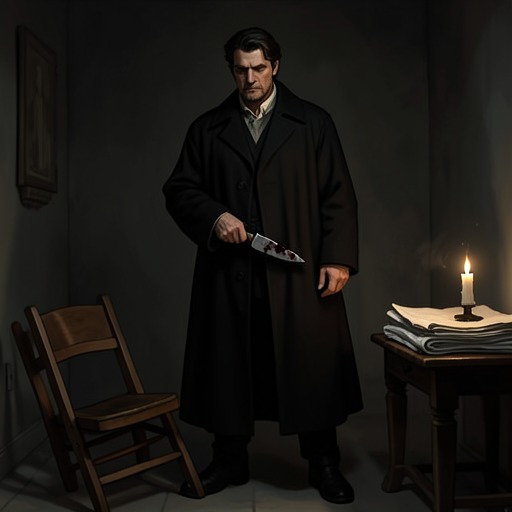
Broken Rejected MatePack Loyalty Taboo governs the Blue Blood Pack’s political and moral order by treating disloyalty to the Alpha pair as an offense more immediately recognizable than betrayal by the leaders themselves. Its force is clearest when Alan Lowell and Sierra Langford discover evidence against Ronald Lowell: Alan cannot simply accuse him, because Ronald still commands the pack, many members trust him, and the pack does not condone disloyalty to its Alpha pair. The rule therefore protects authority before it protects truth, leaving those who challenge the Alpha isolated and vulnerable.
Definition and Social Force
The taboo is not presented as a written statute but as a collective prohibition enforced through belief, allegiance, and the expectation of punishment. Alan understands that Ronald’s formal position remains intact even after Alan’s trust in him collapses. Proving what Alan and Sierra have learned would be difficult precisely because Ronald has a loyal reputation within the pack. The rule converts popularity and office into practical protection: a charge against the Alpha risks appearing to be rebellion before it can be recognized as justice.
This pressure operates alongside the pack’s rules for succession. When the question of the next Alpha arises, the pack explains that three contenders would ordinarily fight to the death to determine who is strongest. Leadership is therefore both hereditary and contestable, but the contest is regulated by pack custom. Once an Alpha occupies the position, however, loyalty becomes a separate barrier against challenge. The succession rule creates a path to power; Pack Loyalty Taboo makes departure from the current order morally and politically perilous.
The Rule in Alan Lowell’s Crisis
After learning that Ronald may intend harm, Alan runs into the woods and spends the night in a small grove, exhausted and overwhelmed by betrayal, fury, and heartbreak. He has respected Ronald, trusted him, and remained grateful that Ronald took him in and trained him alongside his sons without favoritism. That personal history intensifies the political problem: Alan is not merely opposing a distant ruler but accusing the uncle who helped shape his life.
Alan’s fear is not only that Ronald might act against Sierra. It is that any response could be interpreted as treason. Ronald is still the Alpha, the pack condemns disloyalty to the Alpha pair, and many members believe in him. Alan has no clear way to prove the discovery, no confidence that the pack would accept his account, and no certainty that there is any safe course of action. The taboo thus produces paralysis before it produces open conflict. Alan’s immediate withdrawal into the woods is a form of survival, but it also shows how completely the rule has narrowed his choices.
The bond between Alan and Sierra offers him one source of reassurance. While he remains apart from her, he trusts the link between them to warn him if her safety is threatened. By the next morning, however, his isolation no longer seems sufficient; he decides that Sierra must remain beside him until they understand what to do. The movement from solitary flight to shared vigilance marks a change in how he confronts an authority protected by collective loyalty.
Loyalty, Protection, and Counter-Obligation
The taboo competes with other obligations rather than eliminating them. Alan promises Sierra that anyone who wants her will have to go through him and that he will fight to the death. His declaration places mate protection above passive obedience, but it does not erase the danger created by Ronald’s authority. The promise is personal and immediate; the taboo is institutional and communal. Alan must defend Sierra while knowing that the pack may judge resistance to its Alpha as the greater offense.
Sierra also challenges the assumption that protection requires her withdrawal from danger. When the possibility of guard duty is discussed, Alan initially reasons that his primary responsibility is protecting his mate. Sierra then says that she wants to join. His immediate refusal reveals the protective logic surrounding their relationship, while her insistence presses against the boundary between protected mate and active pack defender. Later, Caroline urges Sierra to shift and be formidable, only to retreat uncertainly when Alan objects. These exchanges show that loyalty is entangled with gendered expectations about who may fight, who must be protected, and who is entitled to act for the pack.
A further counterweight appears in the guidance given to Sierra about her Dysomnia abilities. She is told that the werewolves will fight their own wars and that her responsibility is to assist quietly from behind the scenes rather than enter the battle directly. The advice frames restraint as an ethical duty: extraordinary power must be used responsibly, and Alan does not need Sierra to end the conflict so much as he needs her to remain safe. In this form, obligation is not blind submission to a ruler but disciplined care for others. The contrast exposes the taboo’s darker quality: principled restraint protects life, whereas compulsory loyalty can preserve a dangerous hierarchy.
Political Consequences and Reconfiguration
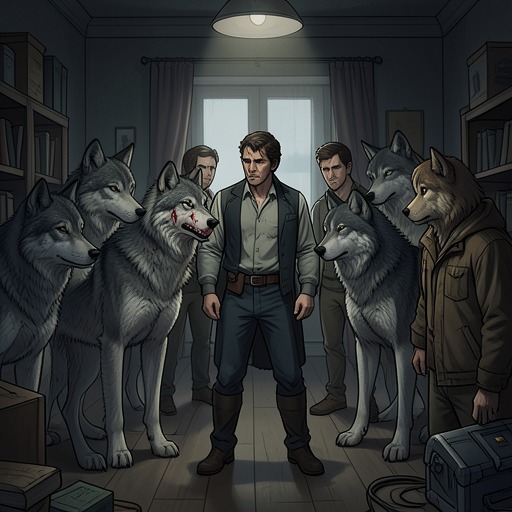
The taboo becomes most destructive when Ronald’s authority is treated as sufficient reason for other wolves to defend him. During the confrontation following Andrew Lowell’s death, Alan Lowell advances toward Ronald in rage, apparently ready to kill his uncle. Malcolm tries to stop him, but Alan pushes him aside. Other werewolves then recognize the threat to Ronald and begin shifting until Alan faces five opponents. They attack him one by one, and Alan tears flesh from Lukas before throwing another wolf into a tree.
The scene gives the taboo a physical form. Loyalty is no longer merely a principle invoked in conversation; it becomes a group response that turns several pack members against one of their own. Alan’s grief and anger are directed at Ronald, but the pack’s allegiance multiplies the danger by making Ronald’s defense collective. The result is a crisis in which the Alpha’s position commands bodies as well as obedience, even after the moral basis of that command has been shattered.
The pack’s later lack of an Alpha reveals the cost of this structure. With the leadership vacant, an elder warns that the Blue Blood Pack cannot survive without a leader and will remain vulnerable to attacks if the position is not filled. Alana Lowell has declined to govern temporarily, and she states that Anthony Lowell has no desire to become the next Alpha, leaving Alan Lowell as the only other wolf present with Alpha blood. The same political system that once made opposition to Ronald dangerous now needs Alan to restore order.
Alan is offered the position because the pack has watched him grow into someone strong, courageous, merciful, and fair. Sierra is identified as a powerful mate who could form a formidable Alpha pair with him, and Alan asks whether she would accept the role of Alpha female. Her consent transforms the meaning of their earlier conflicts over protection and participation. Rather than remaining outside the pack’s power structure, Sierra agrees to learn the responsibilities of the position and to share the future Alan wants.
Legacy, Bloodline, and Significance
The rule’s consequences extend beyond immediate obedience into questions of bloodline and belonging. Sierra’s mother was recognized from birth as a Dysomnia, and her pack members initially wanted her killed. Her Alpha father used his influence to delay the decision until her first shift, after which she won their affection for a time. When she shifted, she killed two pack members, and the pack—including her father—turned against her. Her pregnancy temporarily protected her because killing a pregnant werewolf was considered sacrilege, but she was taken away and killed immediately after giving birth. Sierra’s father then fled with her, beginning the life of concealment that shaped her childhood.
This history shows that pack loyalty can coexist with persecution. The same community that once loved Sierra’s mother and was persuaded to spare her could reverse itself when her nature became impossible to ignore. Loyalty is therefore conditional and directed toward the pack’s accepted order, not necessarily toward the individual whose difference exposes the order’s fear. The taboo helps explain why Alan and Sierra cannot assume that affection, family ties, or past service will protect them once authority defines them as threats.
The question of future children carries the same political tension into the next generation. Alan and Sierra have been afraid of raising a Dysomnian child born with Alpha blood, even as they believe that the example of Tony and Caroline raising their twins proves such a family may be possible. Their decision to try for a baby joins intimacy, heredity, and leadership in one unresolved future. In that context, Pack Loyalty Taboo is more than a rule about obedience: it is a mechanism that determines whose bloodline is accepted, whose difference is condemned, and whether a new Alpha family can turn inherited authority toward protection rather than persecution.