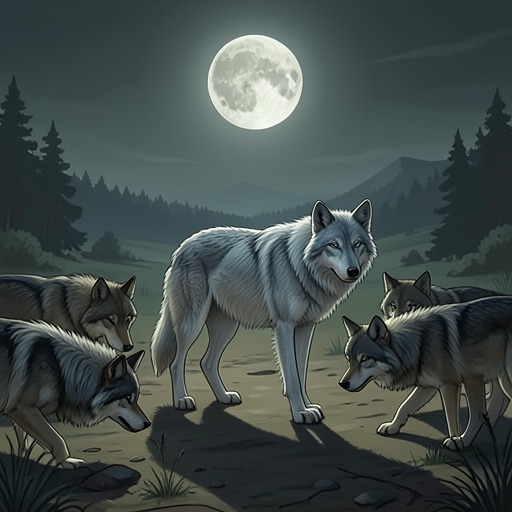
Sierra and Alan complete their werewolf mating bond
Broken Rejected MateSierra and Alan complete their werewolf mating bond at the point where love becomes an embodied, reciprocal commitment. After Sierra’s controlled shift and an ecstatic run with Alan, they exchange declarations of lasting love, mark one another permanently, experience their emotions as shared, and consummate the union as wolves. The sequence resolves Sierra’s movement toward belonging: by its end, she is not only bound to Alan but also welcomed into the pack.
The Run and the Turning Point
The scene begins with Sierra choosing motion over tension. She challenges Alan to a race, jumps, and shifts in mid-air, tearing away her clothes as she assumes her wolf form. The exhilaration is important because it demonstrates a change in her relationship with her own nature: she feels fully in control, and her wolf and human selves are finally attuned. The run is therefore more than recreation. It is a physical expression of integration, showing that the conflict between Sierra and her wolf has given way to cooperation.
Sierra and Alan run for what feels like hours before she allows Alan’s wolf to catch up. His tackle brings the run into playful intimacy as they roll together on the ground, then return to human form at one another’s request. The movement from flight, to pursuit, to stillness creates the scene’s decisive transition. Sierra’s freedom is not surrendered when she allows Alan to reach her; instead, the shared chase becomes the setting in which their mutual trust can be openly acknowledged.
Declarations and Reciprocal Marks
Alan is the first to speak plainly, telling Sierra, “I love you, Sierra,” while they lie alone on the ground. His declaration exposes Sierra’s remaining fear of saying the same words. She understands their emotional weight and hesitates, even though Alan waits patiently, tucks her hair behind her ear, and prompts her gently. His care matters because it contrasts with coercion: the bond is not completed through command, but through patience and mutual recognition.
Sierra eventually answers, “I love you, Alan Lowell. Always and forever.” The words convert private feeling into a vow. Alan immediately responds by sinking his teeth into the juncture of her neck and shoulder and marking her again. The mark is nearly faded, and Sierra recognizes that Alan has deliberately restrained himself from marking her for a long time. His patience makes the new mark a sign of renewed consent and commitment rather than simple possession.
The reciprocity becomes explicit when Sierra warns Alan that marking him means they will be “stuck together for life.” Alan answers by invoking her own promise of permanence, and Sierra then bites his neck and marks him forever as hers. The exchange reverses the usual direction of ownership: each becomes marked by the other, and each claims responsibility for the lifelong bond. Their physical actions therefore enact the permanence already spoken in their declarations.
Shared Feeling and Wolf-Form Union
The marking produces an almost immediate connection that Sierra feels throughout her body, from her heart to her toes. More significantly, she can feel Alan’s feelings as if they were her own, including his excitement and happiness. The bond is consequently represented not merely as a legal or ritual status but as a new sensory and emotional condition. Love becomes communicable without explanation; their emotions pass directly between them, making the relationship a form of shared experience.
The final step requires them to mate as wolves and consummate the union. Sierra shifts without hesitation, and Alan does the same. When the act is complete, they are joined “body and soul,” and Sierra understands the bond as so absolute that she would have to be dead before leaving him. This conclusion gives the event its strongest consequence: the mating bond changes an intimate relationship into an enduring existential attachment, confirmed through speech, marking, shared feeling, and wolf identity.
Belonging and Narrative Consequences
The completed bond also changes Sierra’s place within the wider social world. After the union, Sierra and Alan join the rest of the pack for the traditional run. The private intensity of their marking and wolf-form mating therefore opens into a communal ritual: what has been established between two bodies is recognized within the life of the pack. Sierra experiences the run as euphoric and says that she has never felt happier, while the pack’s acceptance gives her a sense of belonging she has never known before. The sequence consequently resolves two forms of uncertainty at once. Sierra is assured of her permanent connection with Alan, and she is received as one of the pack rather than remaining an outsider negotiating her wolf identity alone.
Shared Feeling and Wolf-Form Union
The reciprocal marking produces an almost immediate connection that Sierra feels throughout her body, from her heart to her toes. More significantly, she experiences Alan’s feelings as if they were her own, including his excitement and happiness. The bond is therefore represented not merely as a status or ritual but as a new sensory and emotional condition: feeling crosses between them without explanation, turning intimacy into direct mutual perception. Sierra’s brief statement that it feels amazing captures the physical force of this change, while Alan’s response makes clear that marking is only one stage of the union. The final requirement is to mate as wolves and consummate what they have begun. Sierra shifts without hesitation, and Alan does the same; once the act is complete, they are joined “body and soul.” The consequence is absolute in Sierra’s understanding: she would have to be dead before leaving him. Their relationship has thus become an existential attachment confirmed through spoken devotion, reciprocal marks, shared emotion, and a shared wolf identity.
Belonging and Narrative Consequences
The completed bond changes Sierra’s place within the wider social world as decisively as it changes her relationship with Alan. After their union, Sierra and Alan join the rest of the pack for the traditional run, allowing a private commitment to become part of communal life. The movement from an isolated encounter between two lovers to a shared ritual with the pack gives the bond public and social significance: Sierra is no longer negotiating her wolf identity alone or standing at the edge of the group. She experiences the run as euphoric and feels happier than ever, while the pack’s acceptance gives her a sense of belonging she has never previously known. The sequence therefore resolves two uncertainties at once. Sierra gains an enduring connection with Alan, and she is welcomed into the pack as one of its own.