Sierra formally shows her wolf form to the pack
Broken Rejected MateSierra formally shows her wolf form to the pack at a decisive threshold in her integration into the Blue Blood Pack. What begins as an introduction arranged because the pack regards her as a possible threat becomes a public test of trust: she must expose the nature that has made Dysomnias targets of persecution, while the werewolves must decide whether to judge her by inherited fear or by what she actually does. The scene therefore joins identity, belonging, and danger in one physical act of transformation.
The Decision to Meet the Pack
Alan Lowell proposes the introduction because the pack does not yet know Sierra and can see her only as a threat. He argues that meeting her and learning her character may change their behavior. Sierra initially balks and worries that she will regret accepting, but Andrew Lowell encourages her to give the pack a chance. She agrees to go to the pack grounds after asking her father, choosing exposure over continued separation.
The decision also carries a protective tension. Alan Lowell is committed to Sierra as his mate and has already defended her against hostility, insisting that she is an eighteen-year-old simply trying to live and that she is not going to harm the pack. He reminds Anthony Lowell and Andrew Lowell of their earlier promise to protect one another's mates, turning personal loyalty into a social obligation. Sierra's public introduction thus takes place within an argument over whether her difference should cancel her claim to protection.
A Controlled First Appearance
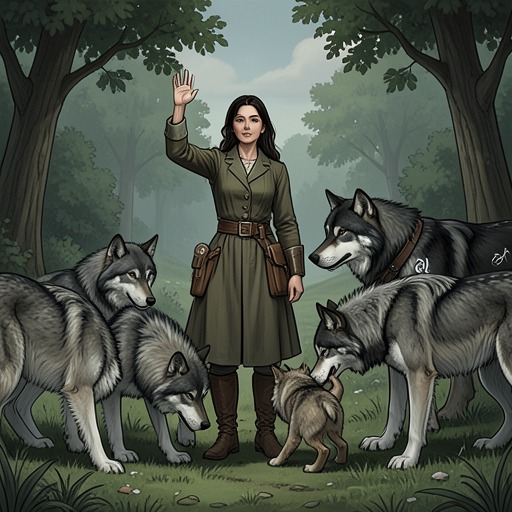
The pack's reaction is wary rather than uniformly hostile. A few members frown and glare, but most of those introduced to Sierra are kind once they have the opportunity to meet her. Their surprise is revealing: they expect a Dysomnia to change immediately into wolf form and attack them. When Sierra does not do so, the immediate image of her as an uncontrollable danger begins to weaken, and the pack members return to their warmer behavior.
The encounter reverses the expected order of proof. Sierra is not asked to demonstrate innocence through a speech or an appeal; her restraint is itself evidence. The pack's fear depends on an anticipated attack that never occurs. Only after that initial social barrier has lowered do the group members proceed to the run, allowing Sierra to reveal her wolf form in a setting where transformation is part of pack life rather than a spectacle of punishment.
The Transformation and Recognition
Sierra has never shifted in front of the twins, and she fears that her wolf might regard them as threats. Her concern is grounded in the danger surrounding her identity, but her recent closeness with the twins gives her reason to hope that recognition will prevail. The twins shift first, after stripping, and Sierra follows, preparing to let her wolf take control.
The change is significant because control is becoming easier for her. Sierra begins to wonder whether all Dysomnias can control their wolves, a possibility that unsettles the history of their persecution: if such control is possible, the justification for hunting them becomes even less credible. Her transformation is therefore both personal progress and a challenge to the assumptions governing the treatment of her kind.
Her wolf initially turns toward Andrew Lowell and Anthony Lowell with a low growl. The hostility does not last. Once the wolf recognizes the twins, the growl softens into a whine, acknowledging that they are no longer dangers. Their earlier rescue of Sierra also matters to this recognition; protection has become legible to the wolf as well as to Sierra. Alan Lowell then shifts and runs ahead, making the intended form of the encounter clear: the others are to chase him.
The Run as Proof of Belonging
The run changes the emotional meaning of Sierra's first public shift. It is not an isolated display but a shared pack activity, and she participates alongside Alan Lowell, Andrew Lowell, and Anthony Lowell. The woods become the space in which social acceptance is tested through movement, instinct, and mutual recognition rather than through formal declarations.
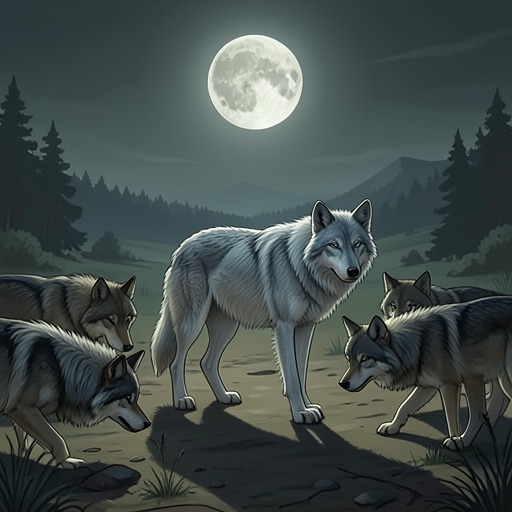
Sierra quickly outpaces the others. Her wolf is faster, and what begins as a chase becomes a race as she moves through the woods at a speed that seems beyond what should be possible. The howls of the boys follow behind her, but she does not slow down. Running produces an almost euphoric sensation, giving her access to a physical freedom that contrasts with the fear and concealment surrounding her life as a Dysomnia.
Her superiority does not isolate her from the group; instead, it establishes a new fact about her place within it. Sierra is not merely a tolerated outsider who has managed not to attack. She possesses an extraordinary capacity that the pack must acknowledge. The scene's value shifts from suspicion to exhilaration, although the discovery of her power also foreshadows the dangers that accompany it.
The Threat Beyond the Pack
The run ends its first phase when Sierra catches an unfamiliar scent and slows from a run to a trot. The boys stop behind her, and Alan Lowell's wolf becomes alert before moving toward her and shielding her body. His response shows that the mate-protection obligation remains active even during a moment that has otherwise been playful and communal.
The source of the scent is a human man and woman dressed in leather, with numerous tattoos on their arms and legs and swords strapped across their backs. Their arrival converts the celebratory run into a confrontation with an external danger. Sierra's successful introduction has brought her into the pack's physical and emotional circle, but the scene immediately demonstrates that belonging does not remove danger; it places her within a network that must now respond to threats together.
Longer Consequences for Identity and Loyalty
Sierra's formal display prepares the wider conflict over whether her identity can coexist with wolf-pack life. Her acceptance is not based on the disappearance of her Dysomnia nature. She remains faster than the other wolves, capable of controlling a formidable inner wolf, and marked by a history that makes ordinary pack members suspicious. What changes is the interpretation of those traits: difference becomes a fact to be understood rather than automatic proof of violence.
The public shift also strengthens the relational structure around her. Alan Lowell's defense of his mate, the twins' earlier rescue of her, and the wolf's eventual recognition of Andrew Lowell and Anthony Lowell all converge in the same movement from threat to trust. That movement is not permanent or uncomplicated, since later violence forces the family and pack to confront loyalty, succession, and sacrifice. Andrew Lowell ultimately dies after pushing Sierra out of Ronald Lowell's attack, while Anthony Lowell is left grieving the twin bond he shared with him; Alan Lowell later assures Anthony Lowell that he will always have him, even though he cannot replace Andrew Lowell.
Sierra's wolf-form introduction therefore functions as an early model for the larger trajectory of her place in the pack. She is first defended as someone who deserves a chance, then accepted when her conduct disproves the pack's fears, and finally recognized as powerful enough to alter the terms of the group's future. The run does not erase the danger attached to being a Dysomnia, but it gives Sierra a public experience of control, companionship, and belonging before the pack's conflicts escalate into open bloodshed and the question of leadership becomes unavoidable.