Sierra's uncontrolled shift and energy burst
Broken Rejected MateSierra's uncontrolled shift and energy burst is a catastrophic reversal in her effort to master her wolf nature. She agrees to practice shifting with seven other women, hoping that her recent self-control will prevent another attack. Instead, the transformation releases a wolf that has been silently prowling beneath her grief, followed by a blinding burst of energy that throws every wolf within a mile across the surrounding woods. The episode turns Sierra from a frightened student trying to belong into an immediate danger to the people attempting to welcome her, while also revealing that her power cannot be understood through ordinary werewolf rules.
Causes and Background
Sierra enters the exercise after her father's death has changed the relationship between her human self and her wolf. She believes the wolf has grown quieter and diminished, perhaps grieving alongside her, and therefore hopes that the two of them have become more attuned. That belief makes the invitation to practice seem like a test of progress rather than a reckless experiment. She counts the seven women accompanying her as seven people she could accidentally kill, so even her consent is shaped by fear and responsibility rather than confidence.
The immediate purpose of the exercise is integration: Sierra is expected to enter wolf form without surrendering herself to murderous instinct. This goal is especially important because Alan has previously been able to calm her when she was in a wolf state, evidence that her violence is not wholly beyond control. The possibility of her joining the guard also demonstrates the competing expectations surrounding her. Sierra wants to participate in protecting the pack, while Alan understands that protecting her may be the more urgent obligation. Her transformation therefore takes place within a larger struggle over whether she should be treated as a danger, a defender, or someone who must remain behind the scenes.
The Shift and Energy Burst
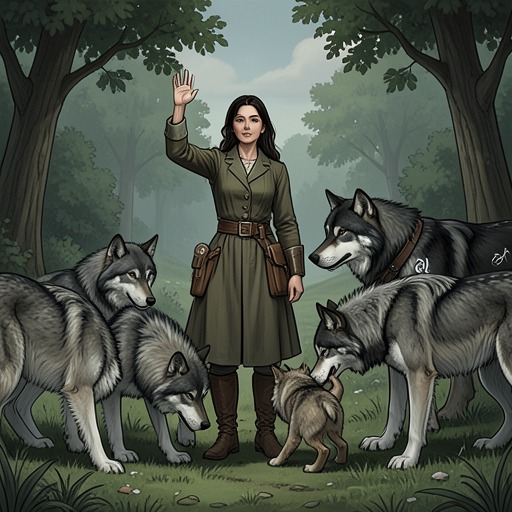
Sierra initially accepts the practice with a nod, and the other women eagerly walk with her toward the edge of the woods. They transform first. Sierra then removes her clothes, takes a breath, and begins changing; by this point, shifting feels almost as easy as putting on a different outfit. The apparent ease is deceptive. Once she is standing on four legs, she realizes that her wolf has not been mourning in the passive sense she imagined. The wolf has been prowling and waiting to be released.
Her father's death has injured the wolf as deeply as it has injured Sierra, but the wound expresses itself as rage. The wolf interprets their history as proof that they will always be hunted, and its desire is no longer merely to resist danger but to burn the world down. Sierra remains conscious of this violence while losing the ability to govern it. The episode makes the body the first site of truth: her earlier interpretation of silence as healing collapses the instant the wolf growls, and the physical force beneath her grief proves stronger than her explanation of it.
The other wolves do not understand the danger. They crowd around Sierra in wonder because they have never seen a white wolf, leaving her unable to warn them to run. Energy gathers beneath her skin as she struggles to hold the wolf back. When control finally vanishes, the energy becomes blinding and painful. Sierra howls, and a flash of white light erupts from within her rather than from any external object or attack.
The burst affects the entire area. Everything within a mile is flung backward, leaving the other wolves scattered across rocks and against trees. Julie's wolf suffers a visibly unnatural bend in one hind leg, and Sierra immediately feels sick at the damage. The wave is therefore not a symbolic display of power but a physical event with a precise and brutal radius, injuries, and witnesses. It also arrives at the exact instant her self-control fails, linking emotional intensity, wolf instinct, and Dysomnian magic into one uncontrollable force.
Immediate Consequences
The energy release does not satisfy the wolf's blood lust. Even after the other wolves have been injured, the wolf still wants to kill, and Sierra fears that she will be expelled from the pack if she cannot stop it. Alan arrives with several pack members after hearing the commotion, encountering the aftermath as well as the continuing threat. His presence creates the possibility of restraint, but it also confirms the scale of the crisis: Sierra's private struggle has become a public pack emergency.
The scene reverses the expectation that practice will produce steady improvement. Sierra has approached the woods hoping to demonstrate progress, yet the exercise exposes a deeper layer of danger. Her father's death has not simply weakened her; it has removed the emotional conditions that made control seem possible. Grief becomes kinetic force, and the attempt to domesticate the wolf instead gives its suppressed anger a larger arena.
This consequence explains why Sierra's place in the pack cannot be settled by goodwill alone. A Dysomnia is regarded as possessing extraordinary, almost divine power, and the later guidance given to Sierra insists that such power carries responsibility. She is told that the original purpose of her kind was not killing, that werewolves should fight their own wars, and that her role should be quiet assistance from behind the scenes. The energy burst supplies the practical reason for that restriction: her intervention can injure allies as readily as enemies.
Protection, Agency, and Restraint
The event also intensifies the conflict between Sierra's agency and the protection imposed upon her. Alan promises that anyone seeking her will have to go through him and that he will fight to the death, while Sierra repeatedly tries to enter danger beside him. Her wish to join guard duty and her later insistence that she be allowed to shift reveal a consistent desire to act rather than remain an object of rescue. Yet the burst demonstrates that action without control can become another form of harm.
That tension later becomes literal when Sierra is poisoned with yellow wolfsbane. Alan warns that exerting more energy will drive the poison farther through her body and that shifting would kill her. The warning recalls the earlier burst: her power is not freely available without bodily cost or collateral danger. When Sierra wants to help while friends are dying, the argument is not that she lacks strength, but that strength must be governed. Her safety is presented as part of her responsibility to the pack and to her mate, not merely as a reason for passivity.
The episode consequently resists a simple progression from frightened outsider to triumphant warrior. Sierra's white wolf makes her exceptional, but exceptional power does not guarantee mastery. Her later identity is shaped by the need to learn restraint, to distinguish protection from domination, and to decide when refusing the battlefield is the more responsible use of power.
Narrative Significance
As a plot event, the uncontrolled shift combines metamorphosis, discovery, and transformation. Sierra discovers that her apparent emotional attunement with the wolf has been misread, and the pack discovers that her capabilities exceed those of a normal werewolf. The value shift is severe: a hopeful communal exercise becomes a scene of bodily injury, fear, and possible expulsion. The forest, initially a training space, becomes the proving ground where grief is converted into force and belonging is placed at risk.
The event also foreshadows the larger political danger surrounding Sierra. Others recognize that her power can be exploited, including Ronald, whose plans concern Sierra specifically and whose desire for power is connected to family betrayal. Against that predatory use, the episode establishes the ethical question that governs Sierra's arc: whether extraordinary ability will be used to dominate, to kill, or to protect without reproducing the violence that created the threat. Sierra's burst does not answer the question, but it makes the answer unavoidable.