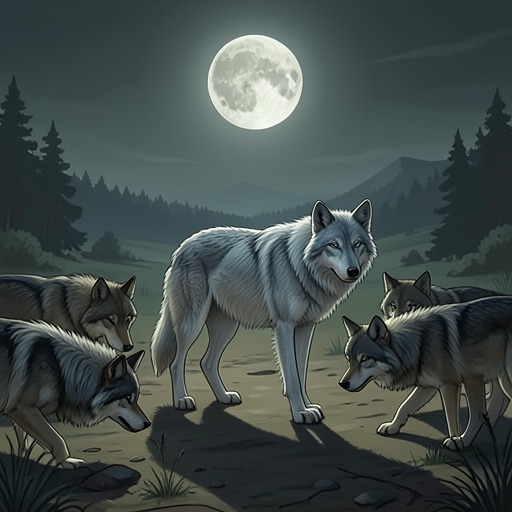
Traditional Full-Moon Pack Run
Broken Rejected MateTraditional Full-Moon Pack Run is a recurring communal ceremony in which members of the Blue Blood Pack gather under the full moon to shift, run together, and reaffirm their place within the pack. For Sierra Langford, it transforms an alarming supernatural inheritance into a public experience of acceptance; for the pack, it links family continuity, mate-bonding, and social belonging through a shared passage between human and wolf forms.
Ritual Setting and First Transformation
The run is governed by lunar time and by the exceptional significance of a first shift. During Sierra Langford’s first transformation, she and her cousins are escorted into the middle of the woods while pack members watch. The occasion is treated as a historic one because three wolves from the alpha family are expected to be born that day. The first transformation can take hours, since the body must endure the breaking and resetting of every bone, and relatives customarily accompany a new shifter to the woods until the process begins.
At seven in the evening, the moon is only beginning to rise, but its position does not prevent the ritual from starting. Sierra Langford feels the moon calling to her as energy travels down her spine and gathers across her skin. Standing several feet apart, she and her cousins exchange reassuring looks before removing their shorts and surrendering their human bodies to their wolves. Their shared preparation makes the first shift more than an individual ordeal: it is a family passage undertaken with witnesses, mutual courage, and inherited alpha significance.
The Run and the Mate Vision
After the transformation, the experience expands from pain into heightened perception. Sierra Langford can smell more intensely and see more clearly, and the group runs for almost an hour before reaching a circular clearing of bare earth and dust. There the wolves stop and bask in the moonlight, while other wolves mock-fight, prance, or enjoy the moment with their mates. The clearing functions as a communal center where physical exertion gives way to play, companionship, and lunar renewal.
The run also contains a private revelation within the public ceremony. Sierra Langford suddenly experiences searing pain in her eyes, followed by darkness, and recognizes that the time has come for her mate vision. She sees a blonde woman with pale skin and eyes glowing like the sun; when the woman turns, Sierra Langford recognizes her, though the vision ends immediately. The ritual therefore joins pack tradition to the First-Shift Mate Vision Rule: the new wolf is introduced not only to a collective but also to the possibility of a fated intimate bond.
Sierra Langford’s Entry into the Pack
Later, after Sierra Langford has joined the Blue Blood Pack, the traditional run becomes a test of whether her Dysomnian nature can coexist with the community. Pack members are surprised that she does not immediately change into wolf form and attack them. Once they understand that she is not a threat, their suspicion gives way to warmth and kindness. Alan Lowell and the twins introduce her to the pack, and the group then decides to run together.
Sierra Langford has never shifted in front of the twins, so the occasion carries a particular risk: she does not know whether her wolf will regard them as threats. Her growing control makes the transformation easier, and she wonders whether Dysomnias may possess the same capacity to govern their wolves. That question exposes the contradiction at the heart of Dysomnian persecution: if members of the persecuted group can control their wolf nature, the violence directed against them may arise from inherited prejudice rather than unavoidable danger. Her successful shift allows the run to become evidence of possible coexistence rather than another scene of exclusion.
Mate Bond and Communal Belonging
The full-moon run is closely connected to the completion of Sierra Langford and Alan Lowell’s mating bond. Before joining the pack, they shift as wolves and consummate their union, becoming joined in body and soul. The private act establishes the bond at its most intimate level; the subsequent traditional run gives that union a communal setting. Sierra Langford then experiences the ceremony as euphoric because the pack accepts her as one of its own, producing a sense of belonging she has never previously possessed.
This sequence distinguishes between being bonded to one person and being incorporated into a people. Sierra Langford’s commitment to Alan Lowell is absolute, but the pack run supplies the larger family she has lacked. Its emotional force is intensified by her father’s absence: after Doherty Langford’s death, she later receives a ceremonial werewolf funeral in which a shroud is burned, with Alan Lowell and only those who truly knew him present. Against that solitary grief, the run offers a living communal counterpart to the funeral fire—a ritual in which Sierra Langford is not sending someone away but finding a family willing to receive her.
Tradition, Lineage, and Future Order
The ritual’s importance extends beyond celebration. Full-moon customs operate within a society organized by alpha blood, succession, mate relationships, and the protection of werewolf families. Sierra Langford’s first shift is significant partly because three members of the alpha family transform together, while later discussions reveal that the pack must determine its next Alpha among bloodline contenders. In ordinary circumstances, three candidates would fight to the death to establish who is strongest, showing how family lineage and communal stability are connected through formal and violent expectations.
The run also recurs at a crucial moment of recovery. Anthony Lowell wakes in time for the traditional pack run on a full moon, two days later, and the occasion becomes Sierra Langford’s first run with the pack after his recovery. She is both nervous and excited, tapping her feet so persistently during lunch that her increased strength rattles the table. Her anticipation shows how the ritual has become an emotional milestone: it is no longer merely the setting of her first transformation, but a repeated tradition whose return promises normality, participation, and shared life.
Through lunar timing, shifting, running, mate visions, and collective acceptance, Traditional Full-Moon Pack Run converts supernatural change into social order. The wolves do not merely meet beneath the moon; they repeatedly enact who belongs, how family continues, and how private bonds become recognized by the wider pack. For Sierra Langford, the ceremony’s decisive meaning is that the identity once associated with fear and persecution can be lived openly as kinship, loyalty, and home.