
The Prince’s School as a Model of Society
Bullet TrainThe Prince applies ideas about conformity and institutional self-protection to his school, turning classmates and teachers into parts of a coercive system.
increasing Bearing strength in each event
 decreasing
Bearing strength in each eventdecreasingReading About Genocide

Reading About Genocide
A model for control
After reading about Rwanda, the Prince studies how institutions avoid acknowledging violence when recognition would require action. He compares the teachers to outside authorities reluctant to intervene.
He adapts those ideas to school by making adults fear the consequences of acting against bullying. The reading becomes less a lesson in human suffering than a blueprint for manipulating bystanders.
Conformity Becomes a Tool
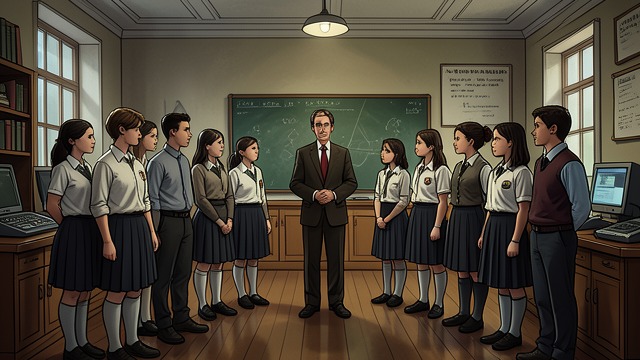
Conformity Becomes a Tool
Pressure shapes judgment
The Prince observes that people follow a group when decisions are difficult and consequences feel serious. He uses that tendency to make classmates accept each other’s participation in cruelty.
His authority rests on more than direct threats. Students learn to distrust their own judgment and to treat collective obedience as safer than resistance.
A Theory Tested by Family

A Theory Tested by Family
People resist the assigned role
The Prince expects family attachment to make adults controllable, but the Kimuras use their concern for Wataru to coordinate, investigate, and act. Their response does not fit the passive role he assigns them.
The confrontation complicates his theory that people can always be moved through fear and self-interest. His insights may identify real pressures, but they do not guarantee command over the people who feel them.
During the Prince’s school years, before Kimura intervenes
As the Prince consolidates control of his classmates
Near Morioka, when the Kimuras confront him
