“God of bad luck”
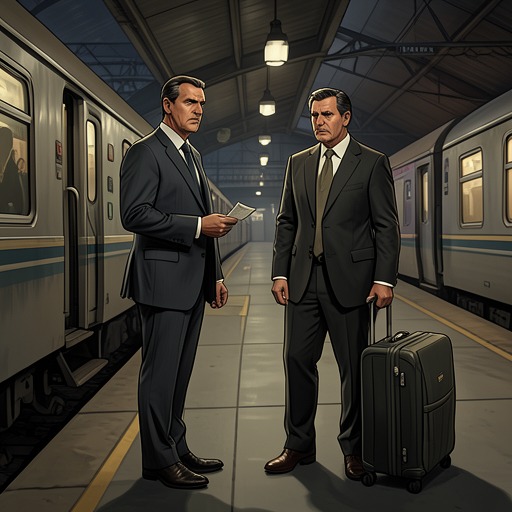
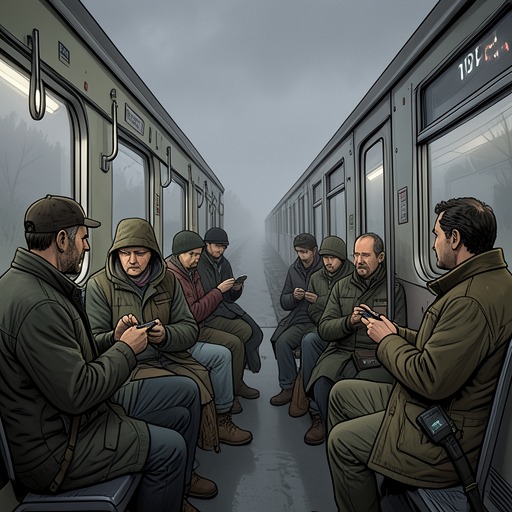
Bullet TrainThe “God of bad luck” is Maria’s comic personification of the force that seems to arrange Nanao’s repeated misfortunes. She first casts it as a marriage partner for him, then revises the figure into a goddess who loves him and, finally, a dog-faced goddess for whom he is the favorite. The changing image gives Nanao’s bad luck a mock-romantic character: it is not simply something that happens to him, but an overattentive companion that will not leave him alone.
The Missing Bag and the Marriage Joke
Maria introduces the expression while Nanao is dealing with the disappearance of the bag he had hidden. Asked whether he hid it, Nanao confirms that he did, only to add that it has now gone missing. Maria responds that it is time for him to marry the god of bad luck. The proposal is deliberately absurd, but its logic is specific to the predicament: Nanao and misfortune have become so familiar, she says, that they should get married because they are already so cosy.
The joke lets Maria convert a practical setback into a relationship metaphor. The missing bag is not evidence that any supernatural force exists; the god is a playful explanation for the sense that trouble keeps finding Nanao. Maria’s own reaction complicates the teasing. She says she should be pleased, but is too angry, then explains that she had been right that Nanao would not be able to get off at Omiya Station. Being proved right is satisfying, yet this prediction has left her depressed. Her mixed response makes the joke part of an ongoing exchange between them rather than a detached punchline: Maria can needle Nanao about his misfortune while also showing that its consequences frustrate her.
From God to Goddess
As the conversation turns to who took the bag, Nanao considers the most likely sequence: he stole it from the two men first, and they stole it back. He hopes that no third party is involved, since that would make the situation more complicated. Maria answers that if this is what he hopes, then it probably is the case. The line turns his hope itself into another forecast of disappointment.
The expression then changes gender. Maria calls Nanao’s predicament the story of his life and says that the god of bad luck is totally in love with him, adding that it might be a goddess instead. When Nanao asks whether the goddess is good-looking, Maria does not answer directly; she asks whether he really wants to know. The exchange keeps the personification light and flirtatious in tone without establishing any actual romance or supernatural event. Its comic force comes from making misfortune sound like a determined admirer: the more Nanao tries to anticipate what might go wrong, the more Maria’s version of the goddess seems to confirm that she has chosen him.
Nanao as the Goddess’s Favorite
Maria gives the metaphor a more personal explanation when she imagines that somebody may once have pointed Nanao out to the men involved. They might recognize him, she suggests, because he is the young man in black glasses who is by far the unluckiest person in the business. Nanao begins to object, then swallows his words; he cannot be sure that the possibility is impossible. Maria senses what he is thinking and treats the very plausibility of the scenario as proof of her point: this is exactly the kind of thing that would happen to him because he is the goddess’s favorite.
The final version, the dog-faced goddess of bad luck, pushes the joke from romance into deliberately ungainly comedy. Nanao notices the change and asks when the goddess acquired a dog’s face. Maria replies that beggars cannot be choosers, then sends him over to car three. That practical instruction ends the exchange without resolving the missing bag or proving whether anyone recognized Nanao. Instead, the scene leaves the metaphor in motion: an imagined goddess has become a way for Maria to name the pattern Nanao fears, while her teasing accompanies him onward into the next part of the train journey.
Function of the Expression
The expression gathers several distinct ideas into a compact running joke: Nanao’s conviction that his hopes fail, Maria’s confidence that his feared outcomes are likely, and the possibility that his reputation itself could expose him to recognition. It does not erase the concrete uncertainty over who has the bag. Rather, it gives the characters a shared language for approaching that uncertainty without pretending it has been solved.
Its escalation also matters. A god who might be married becomes a goddess who is in love, then a goddess whose affection supposedly explains why Nanao receives the worst luck, and finally a dog-faced figure whose appearance becomes another opportunity for Maria to tease him. Each revision makes the imagined force more intimate and more ridiculous. The result is not a declaration of belief but a comic frame for recurring misfortune, with Maria casting Nanao as its conspicuous favorite and Nanao answering by questioning the goddess’s looks.