Kimura's father
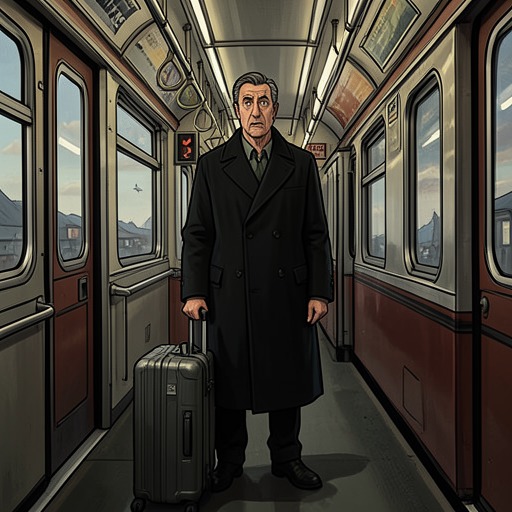
Bullet TrainKimura's father is remembered as both the Condor, a formidable figure at work, and a hands-on parent whose blunt advice shapes Yuichi Kimura’s understanding of adulthood, alcohol dependence, and self-control. He intervenes directly when Kimura reaches for a flask, explaining why he believes drinking cannot be safely resumed, even as Kimura’s later sobriety comes at a moment of profound personal loss.
Identity and Family
Kimura's father is identified by the nickname the Condor, a name Kimura says people used for him at work. The evidence gives no specific occupation, but his son recalls that the older man had a fearsome professional reputation. At home, he is also present in ordinary family scenes: he visits the park where Kimura and Akiko Kimura have taken Wataru, and notices Kimura reaching for alcohol when Kimura himself has not noticed his father sitting beside him.
His advice to Kimura draws on personal experience. He says that neither he nor Akiko Kimura drinks because they understand that an alcoholic cannot recover by returning to moderate drinking. The conversation presents him not as a detached observer but as a parent who recognizes a danger in his son’s behavior and tries to make its consequences unmistakable.
A Childhood Memory of Escape
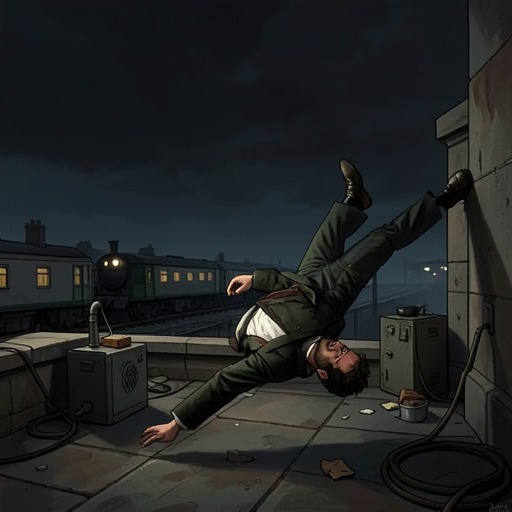
While bound with heavy straps and duct tape aboard the Shinkansen, Kimura struggles to free his wrists and ankles. The effort brings back a childhood scene at his family home: his father has tied up a younger former co-worker, and the two adults laugh as kindergarten-age Kimura joins them. The visitor had watched an escape artist on television and claimed he could do the same.
Kimura remembers his attention returning to the television while the visitor quietly untied the rope. The episode gives the present predicament a personal point of reference: Kimura is not recalling an abstract trick, but a demonstration he witnessed as a child and now hopes to learn from under pressure. In the remembered scene, his father’s laughter and the visitor’s escape belong to a familiar household moment; in the train, the memory becomes a possible clue to getting free.
The visitor was a younger former co-worker whom Kimura's father had mentored. He doted on Kimura, seemed sincere, and sometimes complained about his job when the two men drank together. Kimura recalls that hearing an adult admit to problems made him realize that grown-ups were not always as strong as they appeared. The men eventually lost touch. Their shared first name, Shigeru, is part of Kimura’s recollection of how the friendship began.
Confronting Kimura's Drinking
At the park, Kimura reaches into his pocket for his flask while taking a break from playing with Wataru. His father catches his hand, grips it until it hurts, and takes the flask. Kimura responds angrily, but his father does not yield to the protest. He returns the flask only after challenging Kimura to understand what alcoholism means; Kimura snatches it back, showing that the warning has not immediately resolved the conflict.
Kimura's father distinguishes addiction from simply enjoying alcohol or being able to tolerate it. In his account, alcoholism is a disease in which drinking becomes compulsive: once a person takes a sip, stopping is no longer a matter of restraint. He describes alcohol as stimulating the brain’s A10 cells and producing a feeling of accomplishment without corresponding work. Repeatedly seeking that easy pleasure, he says, changes the brain and creates a switch that can reactivate dependence even after a long period without alcohol.
That explanation places relapse outside the simple language of weak will. A person may appear to have recovered and lead a normal life, yet a single drink can restore the inability to stop because the brain remains wired for dependence. Kimura's father therefore rejects alcohol as a route to satisfaction and urges his son to abstain altogether. He pairs that warning with an alternative: honest work and the satisfaction of doing a proper job, rather than an easy reward that, in his view, fosters dependence.
Sobriety and Narrative Significance
Later, aboard the train, Kimura recalls the severity of his drinking: he became anxious and irritable when alcohol was unavailable, and when Wataru hid the alcohol on his grandparents’ instructions, Kimura searched the apartment in desperation, nearly turning to hair tonic. He is relieved that he never hit his son, imagining that remorse over such an act would have consumed him. These details show the damage his dependence threatened within the family, giving the father’s earlier intervention a concrete context without suggesting that the warning alone ended Kimura’s drinking.
Kimura has now stopped drinking and thinks of himself as having clawed his way out of alcoholism. But Wataru is in a coma in the hospital and cannot witness this change. Kimura feels that his new beginning has been deprived of its meaning. His father’s insistence that dependence cannot be overcome by taking just one drink resonates against this later struggle, while the contrast remains stark: Kimura has achieved sobriety, yet the relationship and recognition he most wants are unavailable to him in that moment.