Little Minegishi Dies Aboard the Shinkansen
Bullet TrainLittle Minegishi dies during the Shinkansen journey, turning a search for a missing suitcase into a crisis involving both a dead passenger and a concealed death. Tangerine and Lemon find him still in his seat, apparently asleep; they have no clear explanation for what happened, and their effort to keep the death from being noticed collapses at Omiya Station when the movement of his body draws attention from the platform.
Background and Discovery
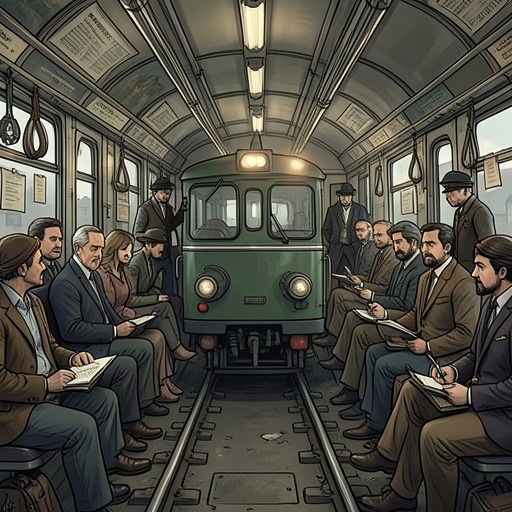
Tangerine is walking through the train looking for a mid-size black suitcase when he reaches Little Minegishi, seated halfway down the car. The boy’s eyes are closed, his mouth open, and his body leans towards the window. His posture initially resembles sleep. The circumstances immediately behind him make that appearance especially misleading: two days earlier, he had been kidnapped and held captive, escaped during the night, and been hurried onto the train without sleep. Tangerine does not pause to consider that history. He reacts to the sight of the boy, sits beside him, and realizes that the situation has changed from a search for luggage to a death.
Lemon comes closer and first treats the boy’s stillness as sleep. Tangerine tells him that the crisis has worsened, then states that Little Minegishi is dead. Lemon’s disbelief gives way to an alarmed acknowledgment of how serious their position has become. His reaction includes a brief, inappropriate effort to count the words in his own exclamation, a small instance of the strained levity that recurs in the men’s responses. Neither man, at this point, can say how the boy died.
Uncertain Cause and Immediate Response
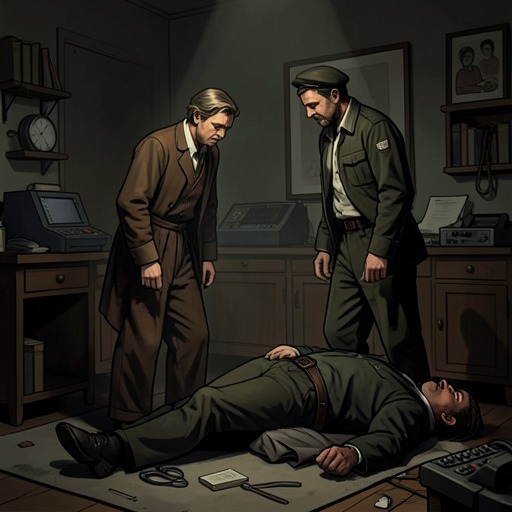
The body offers no obvious explanation. Tangerine finds no visible cuts or blood and looks inside the boy’s mouth, cautious about the possibility of poison. Poison remains only one possibility; Tangerine also raises an allergic reaction leading to shock, or the strain of the boy’s recent ordeal, sleeplessness, and exhaustion causing his heart to fail. These are conjectures made in the absence of evidence, not a determined cause of death. The scene leaves the central question unresolved, while making clear that the boy has died after a period of extreme upheaval and physical depletion.
The men respond not by seeking help, but by managing how the body appears. Tangerine moves Little Minegishi to the window seat and props him upright, with his head slightly forward, so that he might be taken for a sleeping passenger. Tangerine then takes the middle seat and Lemon the aisle seat. They remain beside the body as they continue to deal with the missing suitcase. Their arrangement makes the concealment practical and temporary: Little Minegishi is in plain view, but his posture is being used to disguise what has happened.
Dispute and Concealment
The death becomes entangled with the men’s other failures. Lemon’s attention to the corpse is mixed with his search for the suitcase, which he has not found. At one point he sits casually in the aisle seat and turns to a conversation about characters from Thomas and Friends rather than addressing the seriousness of the situation. Tangerine recognizes the avoidance and insists that Lemon attend to what is in front of them: Minegishi’s son is no longer breathing, the body is becoming cold, and the suitcase is gone. He compares their predicament to people sent on an errand who return without the requested vegetables and have also lost the wallet. The comparison gives their combined failures a deliberately undignified scale, even as the corpse makes the stakes unmistakable.
Their argument also exposes competing efforts to assign responsibility. Tangerine blames Lemon for leaving the boy alone while checking on the suitcase. Lemon concedes that losing the bag may be his fault but rejects responsibility for the death, treating it as something the boy brought upon himself. Tangerine challenges that reasoning directly. The exchange does not produce an explanation or resolve their disagreement; instead, it shows how quickly the men’s fear and confusion turn into blame. Lemon later eats crackers, while Tangerine remains unsettled by the boy’s body and by the unfinished problem of the suitcase.
Omiya Station and Exposure
As the Shinkansen slows for Omiya Station, Tangerine says he must report to Minegishi’s man and intends to wait by the door. He says he will tell the contact that everything is going smoothly, a description sharply at odds with the dead boy and missing suitcase inside the train. Lemon worries that Tangerine might get off and run. Tangerine considers the possibility but concludes that escape would probably make matters worse. The planned report therefore continues, at least in appearance, while the men remain aboard with the body.
When the train begins to leave, a man in a blue shirt watches from the platform and follows it briefly. Tangerine gives him a short wave. Lemon then lifts Little Minegishi’s dead hand and waves it too, treating the body in a way that makes the deception visible rather than more convincing. Tangerine pulls Lemon’s arm away; the movement causes the body to lurch, its head falling forward. The effort to make Little Minegishi look peacefully asleep is undone by the very gesture intended to sustain it. The man on the platform reacts with alarm, and Tangerine sees him raise a phone to his ear as the train gathers speed. The men manage to set the body upright again, but the departing train has not erased what the observer saw.
Consequences and Narrative Significance
Little Minegishi’s death remains unexplained in these scenes. No cause is confirmed, and the competing possibilities raised by Tangerine do not develop into a finding. What does become clear is the consequence of trying to conceal the death while attending to the missing suitcase: the corpse is treated as a problem of appearance, and a careless movement threatens to expose that effort to someone outside the train. The body’s stillness first permits the mistaken impression of sleep; its movement then makes that impression untenable.
The event also changes the terms of Tangerine and Lemon’s journey. They had been searching for the suitcase and attempting to maintain contact with Minegishi’s organization; now they must carry the fact of the boy’s death alongside the unresolved loss of the bag. Their talk shifts among suspicion, blame, strained humor, and mundane distractions, but none of these responses supplies the missing cause or restores control. At Omiya Station, the possibility that their concealment has been witnessed adds another problem to an already deteriorating situation. Little Minegishi’s death is thus both a personal loss and a decisive rupture in the men’s attempt to present the job as proceeding normally.